US Military Strike on Alleged Drug Smuggling Boat Leaves Four Dead in Eastern Pacific
The United States military has confirmed another deadly strike on a vessel accused of drug trafficking in the eastern Pacific Ocean, killing four people as Washington continues to expand its use of military force against transnational criminal networks. The incident was announced on Wednesday by US Southern Command and comes amid heated political debate at home over presidential authority in the fight against drug cartels.
According to the military, the targeted boat was operating along a known narcotics trafficking route and was described as being run by what officials labelled narco terrorists. US Southern Command shared details of the operation on social media, saying the strike was carried out to disrupt criminal networks responsible for large scale drug smuggling toward North America.
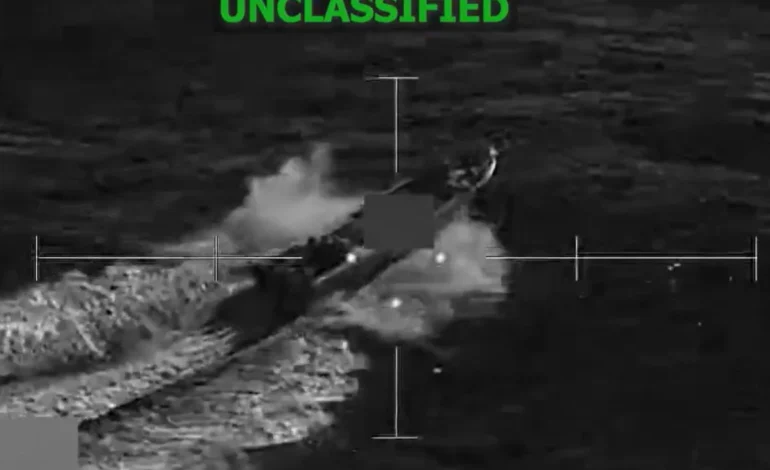
The military did not release independent evidence supporting its claims about the boat’s activities or the identities of those onboard. However, it posted a short video that appeared to show a small vessel moving rapidly across open water before an explosion occurred. The footage did not show the moments leading up to the strike or provide clarity on whether the occupants had been warned before the attack.
This latest operation brings the total number of publicly acknowledged boat strikes to 26 under the current administration, according to figures released by the White House. At least 99 people have been killed in these incidents so far, a number that has drawn increasing scrutiny from human rights groups and some lawmakers.
The strike took place on the same day the US House of Representatives rejected proposals aimed at limiting President Donald Trump’s authority to deploy military force against drug cartels. Supporters of the president argue that extraordinary measures are necessary to combat highly organised criminal groups that they say pose a direct threat to US national security. Critics counter that the approach risks bypassing oversight and blurring the line between law enforcement and warfare.
Officials within the administration have defended the operations as precise actions designed to disrupt trafficking routes and deter criminal organisations. They argue that maritime interdiction alone is no longer sufficient, claiming cartels have become increasingly sophisticated and heavily armed.
However, legal experts and analysts warn that the growing reliance on military strikes raises serious questions about accountability, transparency and international law. Many of the operations take place in international waters or near the territorial boundaries of other nations, increasing the risk of diplomatic fallout.
In the eastern Pacific, drug trafficking routes have long been used to transport cocaine and other narcotics from South America toward Central America, Mexico and eventually the United States. Small fast moving boats are commonly employed, making detection and interception difficult.
While US officials insist the strategy is producing results by disrupting supply chains, critics argue that the broader impact on drug flows remains unclear. They also stress the need for clearer rules of engagement and independent verification of targets to prevent civilian casualties.
As Washington continues to press ahead with its aggressive anti narcotics strategy, the latest strike underscores how the campaign is reshaping both US military involvement and the debate over the limits of executive power.