US Poet Laureate Arthur Sze on Slowing Down and Translating Poetry Across Cultures
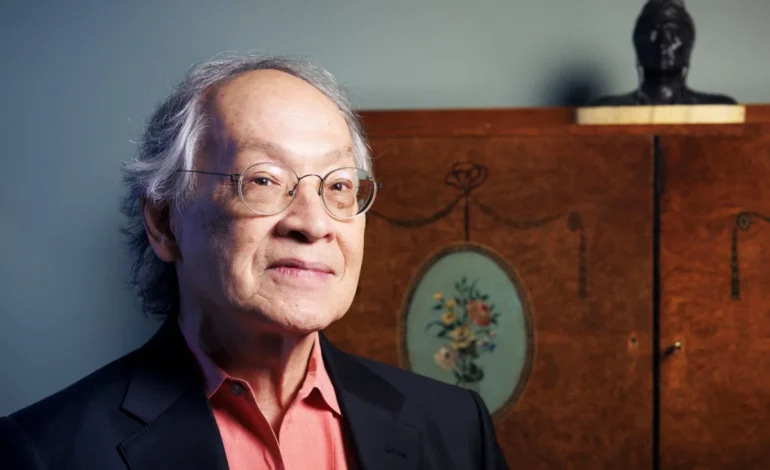
As the first Asian American to serve as United States poet laureate, Arthur Sze has spent decades exploring how poetry can move quietly yet powerfully across cultural and linguistic boundaries. His work, shaped by both American landscapes and Chinese philosophical traditions, reflects a belief that poetry is not simply about expression but about attention, patience, and connection in an increasingly fast paced world.
Sze has often spoken about the importance of slowing down, both in writing and in reading. For him, poetry resists speed. It asks the reader to pause, to listen, and to notice what is often overlooked. This sensibility is closely tied to his engagement with classical Chinese poetry and thought, where restraint, balance, and attentiveness to the natural world are central. Rather than seeing poetry as something confined to national or linguistic borders, Sze views it as a shared human practice that evolves through translation and reinterpretation.
Growing up with Chinese cultural influences while being educated in the United States gave Sze an early awareness of living between worlds. Instead of treating this as a conflict, he has embraced it as a creative space. His poems frequently weave together images from the American Southwest, where he has lived for many years, with ideas drawn from Daoism, Buddhism, and Chinese poetic traditions. This blending is not about comparison or contrast, but about coexistence, showing how different cultural lenses can illuminate the same human questions.
Translation plays a central role in Sze’s understanding of poetry’s global function. He does not see translation as a mechanical transfer of meaning from one language to another, but as an act of deep listening. In translating Chinese poets into English, he aims to carry across not just the literal sense of words, but the rhythm, silence, and emotional weight behind them. This process, he believes, can teach readers to be more attentive to nuance and ambiguity, qualities often lost in a culture driven by immediacy.
As poet laureate, Sze has emphasized poetry’s role beyond academia or literary circles. He argues that poetry can foster empathy at a time of political polarization and cultural misunderstanding. By inviting readers to slow down and inhabit another perspective, poems can create moments of shared awareness, even among people with very different backgrounds. In this sense, poetry becomes a form of quiet civic engagement, offering reflection rather than argument.
Sze’s work and public role highlight how cultural inheritance does not have to be static or nostalgic. Instead, it can be dynamic, adaptive, and outward looking. Through his writing, translations, and advocacy for poetry, he continues to demonstrate how art can cross borders not by erasing differences, but by honoring them with care and attention.