US Reviews Nvidia H200 Chip Sales to China Amid Rising Technology Controls
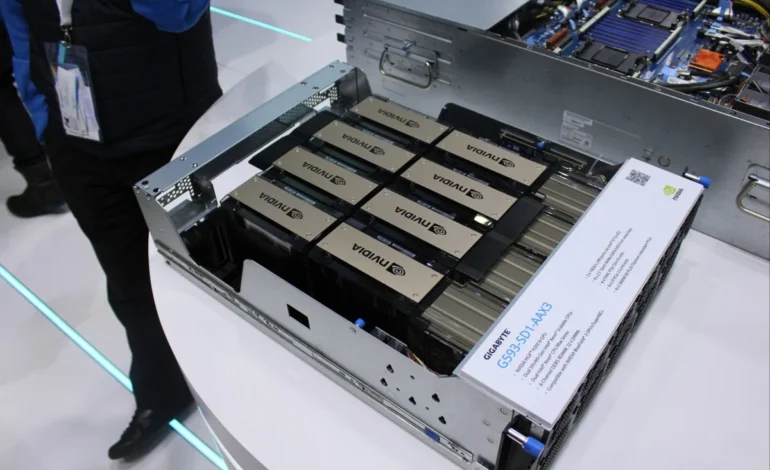
The United States has launched a fresh review of Nvidia’s sales of its advanced H200 artificial intelligence chip to China, according to people familiar with the matter. The move highlights growing scrutiny over high performance computing exports and reflects Washington’s broader effort to manage how cutting edge technologies flow into strategic markets. The review is being handled through an inter agency licensing process involving several key US departments, underscoring the political and security sensitivity surrounding advanced semiconductor exports.
An inter agency process takes shape
The licensing review is reportedly being coordinated across the US departments of Commerce, State, Energy, and Defence. Each agency brings a different perspective to the process, ranging from trade compliance and diplomatic considerations to national security and energy related research. This multi layer review structure reflects how semiconductor policy has evolved beyond a purely commercial issue into one that touches foreign policy and defence planning. Decisions on export approvals are no longer confined to technical specifications but also weigh geopolitical risk and strategic competition.
Why the H200 chip matters
Nvidia’s H200 chip is designed to support advanced artificial intelligence workloads, including large language models and high performance data processing. It represents an evolution of Nvidia’s earlier data center focused chips and is aimed at customers requiring powerful and efficient AI acceleration. Because of these capabilities, the H200 is viewed as strategically significant. US authorities are increasingly cautious about allowing such technologies to be used in ways that could strengthen rival nations’ computing capacity in sensitive areas such as military research or surveillance systems.
China’s demand for advanced AI hardware
China remains one of the world’s largest markets for AI development, with companies, research institutions, and cloud providers investing heavily in computing infrastructure. Despite existing US export restrictions, Chinese firms continue to seek access to high end chips that can support training and deployment of advanced AI models. This sustained demand has kept Nvidia and other chipmakers navigating a complex regulatory landscape where commercial opportunities coexist with tightening controls and uncertainty over future approvals.
Nvidia’s position in a constrained market
For Nvidia, regulatory reviews like this one create operational and strategic challenges. China has historically been a significant market for the company’s data center products, and restrictions have already prompted Nvidia to redesign or limit certain offerings to comply with US rules. A review of H200 sales adds another layer of uncertainty, potentially affecting revenue forecasts and customer relationships. At the same time, Nvidia must balance compliance with maintaining its leadership position in a highly competitive global semiconductor industry.
Broader implications for US China tech relations
The review reflects a wider trend in US China relations where technology has become a central point of friction. Washington has increasingly used export controls as a policy tool to slow the transfer of advanced capabilities, while Beijing has emphasized self reliance and domestic innovation in response. Each new licensing decision is closely watched by industry players as an indicator of how far controls may extend and which technologies are likely to face additional scrutiny.
Signals to the global semiconductor industry
Beyond Nvidia and China, the review sends a signal to the global semiconductor sector about the direction of US policy. Companies operating across borders are being reminded that advanced chips are now subject to political oversight as much as market demand. This environment is pushing firms to diversify supply chains, invest in regional compliance expertise, and rethink how they serve customers in sensitive markets. As reviews like this become more common, regulatory strategy is becoming a core component of competitiveness in the global chip industry.