US Signals It May Pressure Venezuela Over Ties With China and Russia
The White House has declined to fully deny reports that senior officials in Washington have pressed the interim Venezuelan government to reduce its political and economic ties with rivals such as China, Russia, Iran and Cuba in exchange for deeper cooperation on oil and other strategic matters, marking a significant escalation in US foreign policy toward Caracas.
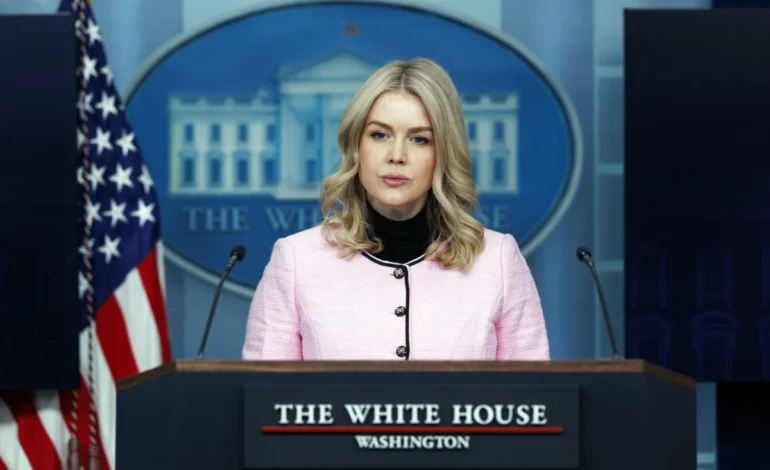
In a briefing this week, White House Press Secretary Karoline Leavitt said the administration would not “confirm or deny or get into” specifics of what national security discussions have taken place behind closed doors, but reiterated a broader message pushed by President Donald Trump that the United States aims to maintain “American dominance” in the Western Hemisphere. This posture reflects a reassertion of US influence in Latin America amid intense geopolitical competition with Beijing and Moscow.
According to multiple reports, US officials have privately floated the idea that Venezuela could benefit from expanded American oil supplies if it agreed to cut back the influence of China, Russia, Iran and Cuba within its borders. One source familiar with the discussions told ABC News that Washington has urged Caracas to sever or sharply curtail its economic partnerships with these countries, and in return offered to champion Venezuelan oil on global markets and expand energy cooperation.
Venezuela’s relationships with China and Russia have been longstanding and deep. Beijing has previously served as a major buyer of Venezuelan crude and a source of credit for Caracas, while Moscow has provided diplomatic backing and military cooperation. These ties are now at the center of a tug of influence as the United States seeks a new strategic foothold following a controversial military operation in early January that resulted in the capture of President Nicolás Maduro by US forces. Caracas has denounced that mission as illegal and a violation of sovereignty, even as interim leader Delcy Rodríguez navigates intense pressure from Washington.
Analysts say any attempt to force Venezuela to unwind its foreign relationships would represent a dramatic shift for a country that has historically relied on a network of international allies to sustain its economy and diplomatic standing. Venezuela’s oil sector, once among the world’s largest, has struggled under decades of underinvestment and sanctions. China has been both a market for Venezuelan crude and a source of financing, while Russia’s ties have included political support at the United Nations.
US officials have not publicly outlined the full scope of their proposals, but the thrust of the pressure appears connected to energy and geopolitical leverage. By aligning Venezuela more closely with Washington, the administration aims to limit the reach of its geopolitical competitors in a region the United States has long considered its strategic backyard. The approach reflects elements of a modern interpretation of the Monroe Doctrine, a principle asserting US influence in the Americas, which the current administration has invoked as justification for its actions.
China and Russia have already condemned recent US actions in Venezuela, with Beijing calling them a violation of international law and Moscow decrying them as neocolonial threats. Both countries have reiterated support for Venezuelan sovereignty even as their own access to Venezuelan resources and strategic partnerships may be at stake.
Whether Caracas will acquiesce to Washington’s demands remains uncertain, but the episode underscores how Latin America has become a key arena in the broader strategic competition between global powers.