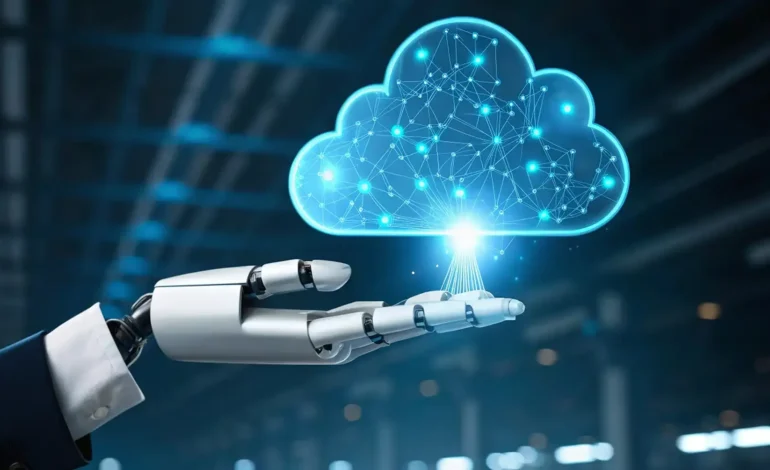
Why AI Powered Infrastructure Is Becoming the Backbone of Modern Innovation
AI powered infrastructure is emerging as the core engine behind modern digital transformation. Instead of relying on traditional systems that require manual configuration, companies are moving toward infrastructures that learn, adapt and optimise themselves. This shift allows organisations to handle increasing volumes of data, automate routine operations and respond quickly to market changes. As industries become more digitised, the infrastructure supporting them must also evolve, and AI is playing a central role in shaping that evolution.
How automation reshapes internal workflows
Daily operations inside companies are becoming more streamlined through intelligent automation. Tasks that once took hours of human intervention can now be completed in minutes with far greater accuracy. AI supported infrastructure monitors application performance, allocates computing resources and predicts potential failures before they occur. This reduces downtime and frees teams to focus on strategic work rather than constant troubleshooting. By embedding intelligence into the core of their systems, organisations create smoother workflows that support long term scalability.
Powering global scale with advanced cloud environments
As businesses expand across borders, they need infrastructures capable of supporting large user bases without compromising performance. AI powered cloud environments distribute workloads intelligently, ensuring that systems remain responsive even during peak demand. This adaptability is especially valuable for industries such as e commerce, finance and digital entertainment where unpredictable traffic spikes are common. Instead of maintaining massive physical hardware, companies rely on flexible AI driven systems that scale up and down in real time to match global demands.
Enhancing product development with predictive tools
Product development teams increasingly depend on AI infused infrastructure to accelerate innovation. Intelligent systems can simulate user behaviour, test new features and predict potential design challenges long before products reach the market. In sectors such as automotive and aerospace, AI powered environments model complex engineering scenarios that would previously take months to calculate. These predictive tools reduce development cycles and allow companies to bring smarter, safer and more competitive products to consumers.
Improving security through intelligent monitoring
Cybersecurity threats have grown more sophisticated, pushing companies to adopt infrastructure capable of responding immediately. AI powered monitoring tools analyse patterns of activity, detect abnormalities and take action before an intrusion causes damage. This real time approach creates a defensive shield that adapts to evolving threats without waiting for manual updates. Businesses gain stronger protection while reducing the burden on security teams who would otherwise struggle to keep pace with rapidly changing risks.
Preparing for a future shaped by intelligent systems
The influence of AI powered infrastructure will continue to expand as organisations integrate these systems into every layer of their operations. Future digital ecosystems will depend on intelligent networks that connect devices, applications and data sources in ways that support faster decision making and deeper insights. As new technologies emerge, the backbone enabling them will be built on adaptive infrastructure that grows smarter over time. This foundation will enable industries to explore new ideas, experiment more freely and remain resilient in an unpredictable global landscape.