Why Beijing Suspects Nvidia’s H20 Chip Could Be a Security Risk
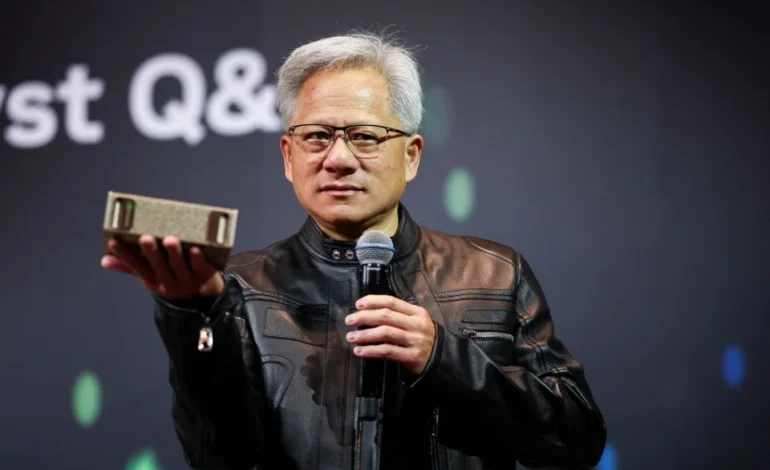
China’s recent investigation into Nvidia’s H20 artificial intelligence chip has reopened debates about the growing security risks linked to global semiconductor competition. What appears on the surface to be a technical review is, in reality, deeply tied to the evolving power struggle between the United States and China. On 31 July 2025, China’s Cyberspace Administration summoned Nvidia for an official explanation, questioning whether the chip might contain a hidden backdoor capable of compromising user data. The request for detailed technical documentation shows how seriously Beijing views the issue.
A Response to US Policy Moves
China’s concern did not appear out of nowhere. In May 2025, US Senator Tom Cotton proposed that AI chips exported to foreign countries should include location tracking functions to ensure they remain within approved use cases. For Beijing, such a suggestion was alarming. Even if no such feature exists inside the H20, the mere possibility that US companies might be pressured to embed surveillance capabilities has fueled suspicion. China views this not as an isolated case but as part of the larger technology rivalry that defines US-China relations today.
The H20: A Chip Built for China
Nvidia originally designed the H20 chip specifically to comply with US export rules targeting China. These rules, introduced in 2022 and tightened in 2023, severely restricted the performance of AI chips allowed to be sold to Chinese companies. Nvidia responded by creating the H20, a customized version of its advanced AI processors with reduced capabilities. The hope was to continue serving the massive Chinese market while remaining within US regulatory bounds. However, in April 2025, the US government banned sales of the H20 to China entirely, resulting in around 5.5 billion US dollars in cancelled orders and unsold inventory for Nvidia.
A Sudden Policy Reversal and Rising Suspicion
After intense negotiations in mid-2025, the ban was unexpectedly lifted. Reports suggested that discussions over access to rare minerals played a key role and that Nvidia CEO Jensen Huang met directly with US President Donald Trump. Shortly after, the US granted export licenses to Nvidia, enabling the company to resume shipments of the H20 chip to Chinese clients. Nvidia placed large orders for production at TSMC, expecting strong demand from universities, tech firms, and research labs across China.
Yet only weeks after this reversal, China’s Cyberspace Administration announced its investigation. The timing raised immediate questions. Officials cited concerns that the chip might contain hidden functions allowing foreign entities to monitor Chinese research, commercial development or even military use of artificial intelligence. Although no concrete evidence has been publicly presented, the combination of shifting US policies and earlier proposals to add tracking functions to exported chips set off red flags in Beijing.
A Pattern of Caution in Dealing With US Tech Firms
China’s scepticism toward American technology companies follows a clear pattern. In 2023, authorities banned Micron from supplying chips for critical infrastructure due to cybersecurity concerns. In 2024, the Cybersecurity Association of China urged a review of Intel products, though it did not lead to formal penalties. Nvidia itself has been under scrutiny since late 2024, when the State Administration for Market Regulation opened an antitrust investigation linked to the company’s acquisition of Mellanox in 2020. Regulators argued that Nvidia had failed to uphold commitments ensuring fair access to its networking technologies in the Chinese market.
Beyond Security: Strategic Control and Domestic Alternatives
China’s review of the H20 chip reflects broader strategic considerations. As the AI industry becomes increasingly tied to national security, the ability to control computing hardware is becoming just as important as controlling data and software. China has poured significant resources into developing domestic alternatives such as Huawei’s Ascend 910D processor. These chips are not yet equivalent to Nvidia’s most advanced offerings, but Beijing sees them as essential for long term technology independence.
Why the H20 Investigation Matters
The concerns surrounding Nvidia’s H20 chip go beyond one company or one product. They illustrate how semiconductors have become the front line of geopolitical competition. Export controls, rare earth deals, cybersecurity fears and antitrust investigations now intertwine with the development of AI hardware. China’s actions reflect a belief that foreign chips cannot be trusted without thorough examination, especially when those chips could shape the future of the country’s AI research and national security.
Whether the H20 ultimately passes China’s security review remains to be seen. What is clear is that chips are no longer just technological tools. They have become strategic assets in a global struggle for technological dominance.