Why China Is Reengaging South Korea as Trade and Soft Power Realign East Asia
A Thaw After Years of Economic Drift
China and South Korea are moving to revive a bilateral relationship that has spent years in quiet stagnation. After prolonged pauses in economic dialogue, the two countries are now reopening trade negotiations with a renewed sense of urgency. The shift comes at a time when regional alliances are being recalibrated and when Beijing appears eager to reward what it views as Seoul’s comparatively pragmatic and restrained diplomatic posture.
Restarting a Stalled Trade Agenda
The immediate catalyst for the renewed engagement was a December twelve meeting between Wang Wentao and Kim Jung-kwan. During the talks, both sides agreed to accelerate negotiations on the long delayed second phase of the China South Korea free trade agreement. While the original FTA focused heavily on manufacturing and goods, the new phase aims to push into services investment and financial cooperation.
Moving Beyond Factory Floors
The renewed talks reflect a shared recognition that future growth lies outside traditional manufacturing. Services such as finance digital platforms healthcare logistics and cultural industries are now central to both economies. By expanding cooperation in these areas, Beijing and Seoul hope to unlock new value at a time when global demand is slowing and supply chains are under pressure.
Xi Jinping’s Visit Signals Political Intent
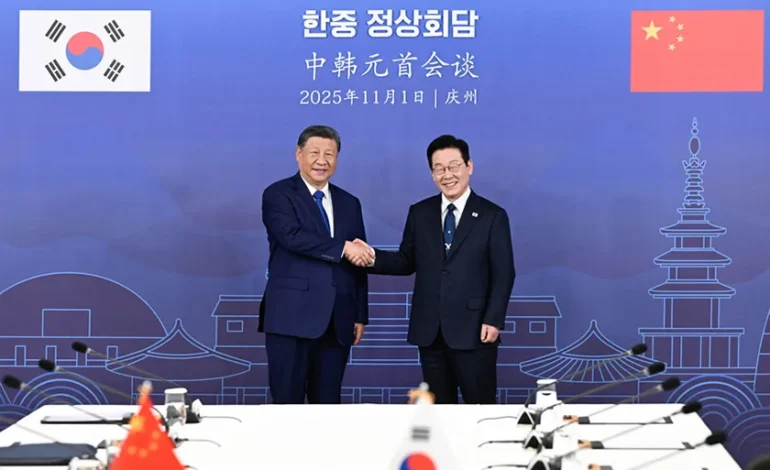
Momentum behind the trade talks was reinforced by Xi Jinping’s state visit to South Korea in late October. It was his first trip to the country in eleven years and carried symbolic weight. The visit signaled Beijing’s desire to reset ties and underscored South Korea’s importance as a regional partner distinct from broader US aligned blocs.
Soft Power and Cultural Signals Matter
Beyond economics, soft power appears to be playing a growing role. Cultural exchange has long been a sensitive issue in China South Korea relations, particularly after informal restrictions on South Korean entertainment in past years. Observers now speculate that easing cultural barriers could be part of a broader goodwill strategy. Allowing greater circulation of South Korean pop culture would carry both economic and symbolic significance.
Japan Tensions Shape Regional Calculations
China’s warmer approach to South Korea also unfolds against a backdrop of strained relations with Japan. Ongoing disagreements over security alignment technology controls and historical issues have hardened positions between Beijing and Tokyo. In contrast, South Korea’s more measured stance on certain regional issues has made it a more attractive partner for engagement. Rewarding Seoul may serve as a strategic signal within East Asia’s evolving balance.
Seoul Walks a Diplomatic Tightrope
For South Korea, reengagement with China requires careful calibration. Beijing remains its largest trading partner, yet Seoul also maintains deep security ties with the United States. By advancing trade talks while avoiding overt political alignment, South Korea is attempting to preserve economic flexibility without escalating geopolitical risk.
Services Trade as a Strategic Bet
The focus on services and finance suggests a longer term vision. These sectors are less vulnerable to tariffs and supply chain disruptions and offer higher margins. Cooperation here could also deepen interdependence in ways that are harder to unwind during political disputes. For China, attracting South Korean expertise and investment in services supports domestic economic rebalancing.
A Calculated Diplomatic Signal
China’s renewed outreach appears less about short term concessions and more about strategic positioning. By advancing trade talks and signaling openness to cultural exchange, Beijing is testing whether economic incentives can stabilize regional relationships even as geopolitical competition intensifies elsewhere.
What Comes Next
Whether the thaw turns into lasting momentum will depend on execution. Negotiating services liberalization is complex and politically sensitive. Still, the revival of talks after years of dormancy suggests both sides see value in engagement. In a region shaped by shifting alliances, China’s recalibration toward South Korea reflects a broader strategy of selective partnership in uncertain times.