Why China’s Robotics Push Is About Workforce Stability, Not Automation Speed
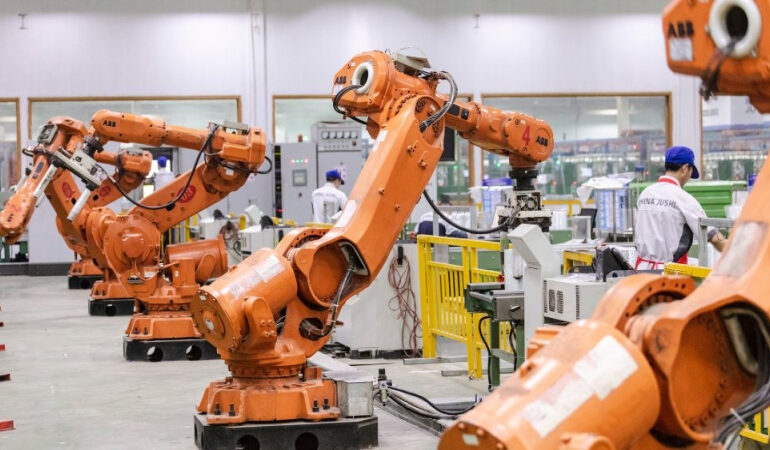
China’s rapid expansion in robotics is often interpreted as a singular drive toward automation leadership. This view, while partially accurate, misses the deeper policy logic shaping how and where robots are being deployed. Rather than prioritizing speed or scale alone, China’s robotics strategy is increasingly focused on stabilizing its workforce amid structural economic change.
Demographic pressures, rising labor costs, and uneven productivity across regions have pushed policymakers and firms to seek practical solutions. Robotics has emerged not as a replacement strategy, but as a support mechanism designed to sustain output, improve safety, and reduce volatility in labor dependent sectors.
Robotics as a Tool for Workforce Stabilization
The most significant driver behind China’s robotics expansion is workforce stability. An aging population and slower labor force growth have created pressure points in manufacturing, logistics, and basic industrial services. Robots are being introduced to fill gaps where labor supply is constrained rather than to eliminate jobs at scale.
In many factories, robots are assigned to repetitive, physically demanding, or precision based tasks that are difficult to staff consistently. This allows human workers to focus on supervision, maintenance, and higher value activities. The result is not workforce displacement, but rebalancing.
This approach reflects a deliberate policy choice. Maintaining employment levels remains a priority, particularly in industrial regions where manufacturing anchors local economies. Robotics deployment is therefore calibrated to complement existing labor structures instead of disrupting them.
Sector Focus Reveals Strategic Intent
The sectors receiving the most robotics investment provide clear signals about policy priorities. Logistics centers, warehousing operations, and manufacturing support systems are at the forefront of adoption. These environments face chronic labor shortages, high turnover, and safety risks that robots are well suited to address.
In hazardous settings such as chemical handling, heavy machinery operation, and high temperature processes, robots reduce workplace injuries and insurance costs. This improves overall productivity without increasing social risk. In logistics, robots help smooth seasonal demand spikes rather than permanently replacing workers.
Notably, consumer facing automation remains limited compared to industrial use cases. This underscores that the objective is operational reliability, not visible automation dominance. Robots are being deployed where they quietly stabilize systems rather than where they generate public spectacle.
Productivity Insurance in an Uncertain Economy
Robotics is increasingly treated as a form of productivity insurance. By reducing dependence on volatile labor availability, firms can plan output more reliably and manage costs over longer horizons. This is particularly valuable in export oriented industries where delivery timelines and quality consistency are critical.
For policymakers, this stability supports broader economic goals. Smoother production cycles help control inflationary pressures and reduce the risk of supply disruptions. Robotics therefore contributes indirectly to macroeconomic management, not just factory efficiency.
This framing also explains why many robotics investments are incremental rather than transformative. Firms integrate robots gradually, testing returns and adjusting workflows without sudden structural shifts. Stability takes precedence over speed.
Human Capital Still Remains Central
Despite rising robot density, human labor remains essential to China’s industrial system. Robots require installation, programming, maintenance, and integration with existing processes. This has increased demand for technicians, engineers, and system managers rather than eliminating jobs outright.
Training programs and vocational education have adapted accordingly, focusing on hybrid skill sets that blend mechanical knowledge with digital literacy. The workforce is evolving alongside robotics, not being sidelined by it.
This co development reinforces the broader narrative. Robotics is not being positioned as a replacement for human labor, but as a mechanism to preserve productivity while the labor force transitions.
Conclusion
China’s robotics strategy is less about accelerating automation and more about managing economic and demographic realities. By using robots to stabilize labor intensive systems, reduce safety risks, and insure productivity, the country is pursuing a measured and pragmatic path. Robotics, in this context, functions as a support layer for the workforce rather than a disruptive force, aligning technological adoption with long term economic stability.