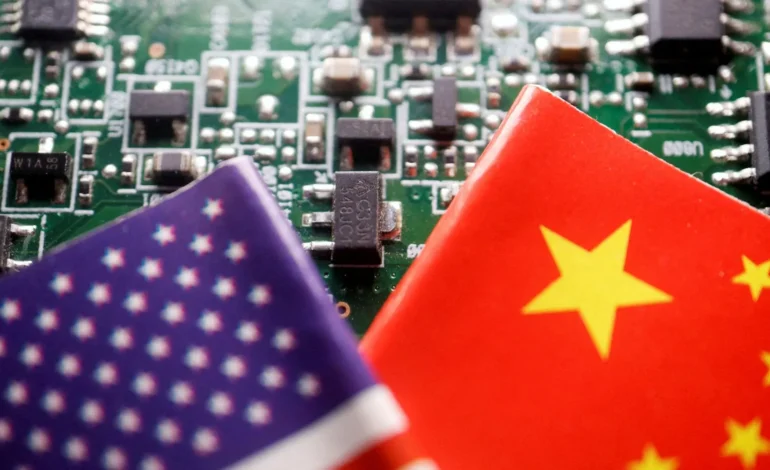
Why China’s semiconductor strategy is shifting from catch up to scale

China’s semiconductor strategy is undergoing a noticeable transition from a narrow focus on catching up with global leaders to a broader emphasis on scale stability and ecosystem strength. After years of pursuing parity with the most advanced foreign chip technologies, policymakers and companies are increasingly prioritising production capacity supply security and market coverage. This shift reflects lessons learned from export controls and supply disruptions that exposed the risks of overreliance on a small set of advanced capabilities.
From technology gaps to supply assurance
Earlier phases of China’s chip push were dominated by efforts to close the gap at the cutting edge of semiconductor manufacturing. While progress was made, external restrictions highlighted that even partial dependence on foreign tools could undermine entire industries. As a result strategy has expanded beyond technological milestones to include the ability to reliably supply chips across a wide range of applications.
Ensuring consistent availability of semiconductors for automotive electronics industrial systems and consumer devices has become just as important as developing advanced processors.
Scaling production at mature nodes
A central element of this shift is scaling up production at mature manufacturing nodes. These chips may not power the most advanced artificial intelligence models, but they are essential for the vast majority of electronic products. Demand for such semiconductors is stable and large, making them ideal candidates for domestic scale expansion.
By increasing output at these nodes Chinese foundries can serve domestic industries more effectively while building manufacturing experience and financial resilience.
Market size as a strategic advantage
China’s vast domestic market is a key driver of the move toward scale. With strong demand from sectors such as electric vehicles renewable energy telecommunications and smart manufacturing, chipmakers can achieve economies of scale that support long term viability. High production volumes help spread costs reduce prices and improve process consistency.
This market driven approach allows companies to refine products through deployment rather than relying solely on laboratory benchmarks.
Ecosystem coordination over isolated breakthroughs
The strategy shift also reflects a greater emphasis on ecosystem coordination. Rather than pursuing isolated technological breakthroughs firms are focusing on aligning designers manufacturers equipment suppliers and end users. Coordinated development helps reduce bottlenecks and ensures that improvements in one area translate into system wide gains.
Government policy increasingly supports this integrated approach by encouraging collaboration and reducing duplication of effort.
Advanced packaging supports scalable growth
Advanced packaging technologies play an important role in enabling scale. By combining multiple chips into efficient modules manufacturers can enhance performance without relying on the most advanced fabrication processes. This allows scalable solutions that meet market needs while remaining within technological constraints.
Packaging innovations are particularly well suited to mass production supporting the shift from niche development to broad deployment.
Financial discipline and sustainability
Scaling production also introduces a stronger focus on financial sustainability. Large scale manufacturing demands disciplined investment careful capacity planning and predictable demand. This has encouraged more commercial thinking within the semiconductor sector balancing national objectives with market realities.
Companies that can operate profitably at scale are better positioned to reinvest in future research and development.
Implications for global competition
China’s move toward scale changes how it competes globally. Rather than focusing solely on leading edge chips Chinese firms are becoming formidable suppliers of reliable cost effective semiconductors for global industries. This could reshape competition in mid range and mature segments of the market.
As capacity expands Chinese chipmakers may increasingly influence pricing and supply dynamics worldwide.
A pragmatic evolution in strategy
The shift from catch up to scale does not mean China has abandoned ambitions for advanced semiconductor technology. Instead it reflects a more pragmatic sequencing of goals. By first securing scale and stability the industry builds a foundation that can support future advances.
This evolution suggests China’s semiconductor push is becoming more mature strategic and resilient as it adapts to a complex global environment.