Why India Is Unlikely to Extradite Sheikh Hasina to Bangladesh Despite Death Sentence
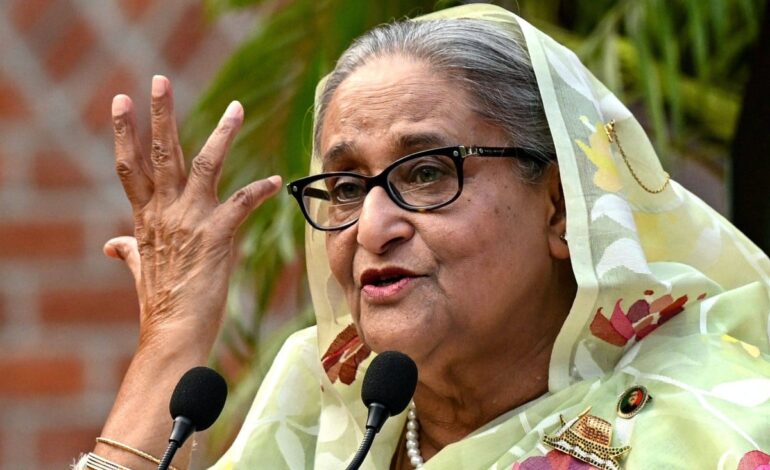
India is not expected to agree to an extradition request for former Bangladeshi prime minister Sheikh Hasina, who now faces the death penalty in Bangladesh after being convicted of crimes against humanity. Analysts say the situation has added to New Delhi’s worries that Bangladesh may drift toward the influence of radical Islamist groups if Hasina is removed entirely from the political landscape.
Hasina who is seventy eight has been living in India since August last year after her government collapsed following months of unrest. She left Dhaka as violent protests escalated and large scale clashes with security forces resulted in significant loss of life. A special tribunal in Bangladesh announced on Monday that she had been found guilty of incitement, issuing orders that led to killings and failing to prevent violence linked to the demonstrations. The tribunal sentenced her to death after holding her responsible for actions connected to the protests in which as many as one thousand four hundred people died.
The former leader rejected the ruling and said the court was controlled by an unelected interim administration. She described the process as politically motivated and stated that she was willing to appear before an independent and internationally recognised judicial body. She specifically mentioned her readiness to face proceedings at the International Criminal Court in The Hague if required.
For India the situation is complex. New Delhi has long viewed Hasina as a stable and reliable partner who helped maintain regional security and kept extremist groups in check. Her government maintained close cooperation with India on border security, counter terrorism and economic projects which strengthened ties between the two countries. Analysts believe that sending her back to face a death sentence could destabilise diplomatic relations and create uncertainty in a region already facing political tension.
Legal experts note that India does not have a straightforward extradition pathway for such cases. Even if Bangladesh issues a formal request, India is under no obligation to comply, particularly when the person involved claims political persecution or when the sentence includes capital punishment. Many legal systems around the world are cautious about extraditing individuals to places where they could face the death penalty without additional guarantees.
There is also growing concern among Indian policymakers that Bangladesh is entering a period of political volatility. With Hasina out of power and the interim government under pressure, some believe that extremist groups may try to expand their influence. For New Delhi keeping Hasina within India may be seen as a way to avoid making the situation more unstable.