Why President Trump Is Unlikely to Keep Tariff Talks and Border Dispute Issues Separate for Thailand
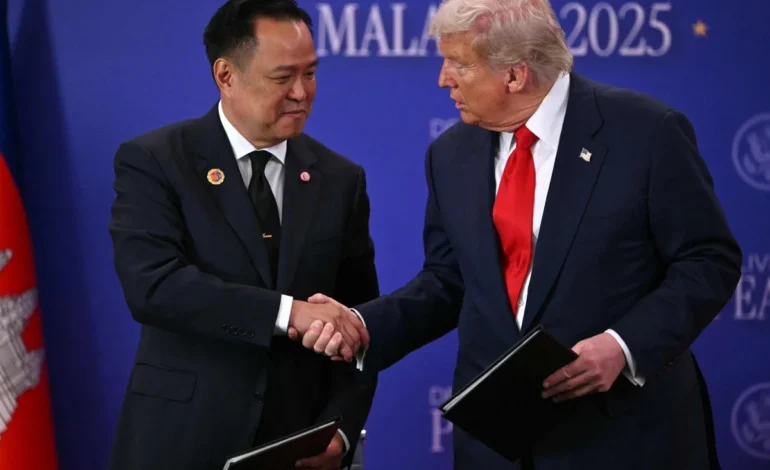
Thailand’s effort to treat its tariff negotiations with the United States as completely separate from its tense border dispute with Cambodia is facing strong doubt among analysts. They say Washington’s growing willingness to use trade as a political tool combined with President Donald Trump’s personal investment in the recent ceasefire agreement makes it unlikely that both issues can be kept apart.
Bangkok announced on Saturday that discussions on tariffs with the United States would remain independent from talks about the border conflict. Government spokesman Siripong Angkasakulkiat said that this position was based on a direct assurance from President Trump, who reportedly told Thai officials that Washington had no intention of interfering in territorial matters.
However the situation appeared far less straightforward after the Thai Foreign Ministry said it had received a letter from the Office of the United States Trade Representative only hours before the public announcement. According to the ministry the letter stated that ongoing trade negotiations would be put on hold unless Thailand restated its full commitment to the ceasefire that was signed last month in the presence of President Trump. This raised questions about how separate the two tracks of discussion truly are.
Analysts say Trump sees the ceasefire agreement between Thailand and Cambodia as an important diplomatic success. The truce was reached after a deadly border clash erupted in July followed by renewed tension last week when Thailand accused Cambodia of injuring its soldiers with newly placed landmines. In response Bangkok suspended the peace deal brokered with Trump’s involvement and demanded an apology from Phnom Penh. Observers believe this development directly challenged Trump’s role as mediator and made Washington eager to ensure the agreement remains intact.
They add that the United States under Trump has increasingly linked economic decisions with political objectives. As a result the possibility that Washington might use trade talks as leverage to preserve the ceasefire is viewed as highly plausible. The suspension of tariff negotiations described in the trade representative’s letter suggests that Washington wants Bangkok to reaffirm its commitment to maintaining calm along the border before discussions can move forward.
For Thailand this creates a delicate balancing act. Bangkok aims to avoid appearing pressured by the United States while also needing to maintain stable economic relations. At the same time the unresolved tension with Cambodia presents both security and diplomatic challenges that cannot be ignored.
Regional observers say the coming weeks will reveal whether Thailand can convince Washington to truly keep the issues separate or whether trade and diplomacy will continue to move in the same direction.