Why Semiconductor Fabs Are Becoming Strategic Assets in China’s Industrial Policy
Manufacturing capacity moves to the center of strategy
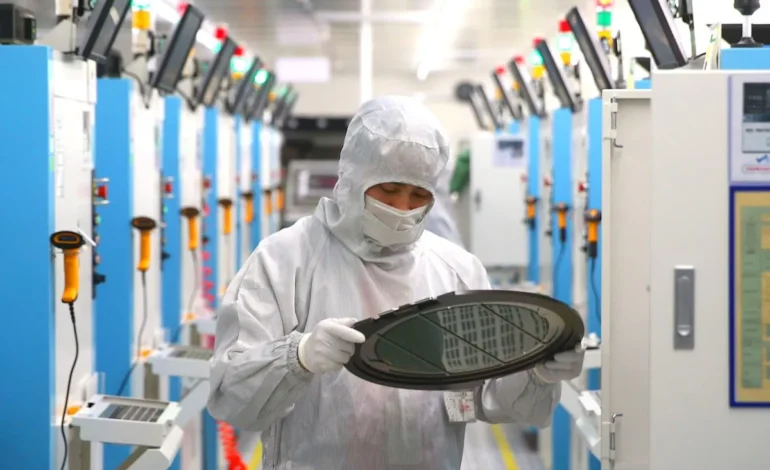
Semiconductor fabrication plants have become central to China’s industrial planning as technology competition intensifies globally. Once viewed primarily as commercial manufacturing facilities, fabs are now treated as strategic assets tied directly to national development goals. This shift reflects a broader understanding that control over production capacity matters as much as access to design and intellectual property in an era of constrained technology flows.
Fabs define the limits of technological autonomy
In the semiconductor value chain, fabrication represents one of the highest barriers to entry. Advanced process nodes require sustained capital investment, specialized equipment, and highly skilled labor. For China, expanding domestic fab capacity is less about immediate technological leadership and more about reducing structural dependence. Even mature node production supports industrial stability by ensuring supply for automotive, industrial, and consumer electronics sectors.
Policy support targets long term resilience
China’s industrial policy increasingly emphasizes resilience over rapid breakthroughs. Support for fabs comes through a combination of funding, land access, tax incentives, and coordinated demand from state linked enterprises. This approach reflects recognition that semiconductor manufacturing cannot be accelerated purely through market forces. Fabs require long investment horizons, and policy backing helps absorb early stage inefficiencies while capacity matures.
Regional clusters strengthen manufacturing ecosystems
Fab development is closely tied to regional industrial clustering. Cities hosting fabrication facilities often build surrounding ecosystems of materials suppliers, equipment maintenance firms, and research institutions. These clusters reduce operational risk and improve learning effects across the supply chain. Over time, regional specialization supports incremental capability improvement even in the absence of leading edge breakthroughs.
Mature nodes gain renewed importance
While advanced nodes attract global attention, mature process technologies are gaining strategic relevance. Power management chips, sensors, and industrial controllers rely on established nodes that remain in high demand. China’s focus on expanding mature node capacity addresses immediate domestic needs while generating stable returns. This strategy aligns economic viability with strategic necessity, reinforcing fabs as productive assets rather than symbolic projects.
Capital intensity reshapes industry behavior
Semiconductor fabs are among the most capital intensive industrial assets. Their cost structure encourages consolidation, long term planning, and disciplined capacity expansion. For policymakers, this capital intensity reinforces the need for coordinated investment rather than fragmented competition. It also raises the stakes of operational efficiency, as underutilized fabs represent significant sunk costs.
Talent and operational learning matter as much as equipment
Beyond physical infrastructure, fabs accumulate value through operational experience. Yield optimization, process stability, and workforce training improve gradually through repeated production cycles. This learning effect cannot be imported quickly. China’s emphasis on sustaining continuous production reflects awareness that manufacturing competence is built over time rather than acquired through single investments.
Strategic assets in a fragmented technology landscape
As global technology ecosystems fragment, fabs anchor domestic innovation systems. They enable predictable supply for downstream industries and reduce exposure to external disruptions. While full self sufficiency remains a long term objective, incremental capacity expansion already delivers strategic benefits.
Semiconductor fabs illustrate how industrial assets can evolve into policy instruments. In China’s case, fabrication capacity is not merely a means of producing chips. It is a foundation for technological stability, industrial coordination, and strategic flexibility in an increasingly uncertain global environment.