Will Tarique Rahman’s Return Reshape Bangladesh Politics and Calm Rising Tensions?
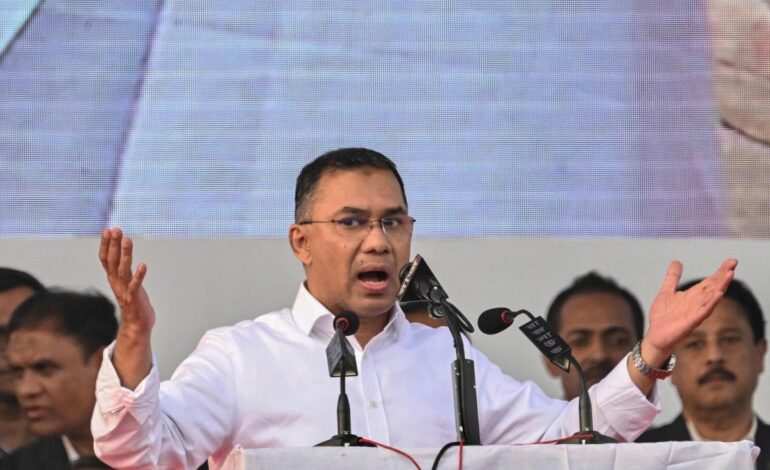
The return of Tarique Rahman to Bangladesh after 17 years in exile is being closely watched as a potential turning point in the country’s unsettled political landscape. As the de facto leader of the Bangladesh Nationalist Party, his homecoming comes at a critical moment, just months before a national election scheduled for February and amid lingering uncertainty following the dramatic fall of the previous government.
Rahman, the eldest son of former prime minister Khaleda Zia, has long been a central figure within the BNP despite living abroad for nearly two decades. His absence did little to diminish his influence inside the party, where he continued to shape strategy and candidate selection from afar. Analysts say his physical return now carries symbolic weight, signalling renewed confidence within the opposition and a readiness to contest power directly.
Political observers argue that Rahman’s presence could help consolidate the BNP’s standing as the most organised and electorally competitive force in the country. After years of fragmented opposition politics, the party appears better positioned to mobilise supporters and project unity. Rallies held since his return have drawn large crowds, reflecting both curiosity and genuine enthusiasm among grassroots supporters.
Beyond party politics, some analysts believe Rahman’s return could help ease a tense political atmosphere that has been marked by protests, uncertainty and sporadic unrest. Bangladesh has experienced prolonged instability since the removal of former prime minister Sheikh Hasina’s government, with questions lingering over governance, economic management and relations with neighbouring countries.
One key area of focus is Bangladesh’s relationship with India. Ties between Dhaka and New Delhi became strained during the political upheaval, with concerns raised over border security, trade flows and diplomatic alignment. Some regional analysts suggest that a stronger and more predictable political leadership in Bangladesh could help stabilise these relations, though much will depend on the policies Rahman chooses to prioritise.
Supporters of Rahman see him as a unifying figure capable of calming political tempers while offering a clear alternative vision for governance. They argue that his long absence has allowed him to distance himself from past controversies and re enter politics with a broader appeal. Critics, however, remain cautious, noting that Rahman is a polarising figure whose leadership style could just as easily inflame tensions if not carefully managed.
The leadership of the Bangladesh Nationalist Party has framed Rahman’s return as a step toward restoring democratic norms and ensuring a competitive election. Party officials say his role will focus on strategy and consensus building rather than confrontation, at least in the short term.
Much will depend on how Rahman navigates the coming months. Analysts stress that his ability to engage with rivals, reassure institutions and avoid inflammatory rhetoric will be critical in determining whether his return leads to stability or renewed friction. The response of security forces and election authorities will also shape the political environment.
As Bangladesh moves toward a pivotal election, Rahman’s reappearance has injected new energy into the political scene. Whether that energy translates into calmer politics or sharper competition remains uncertain. What is clear is that his return has altered the dynamics of power and expectation, setting the stage for a decisive period in the country’s modern political history.