Xi Jinping Revives Crackdown on Illegal Luxury Villas to Reinforce Party Discipline
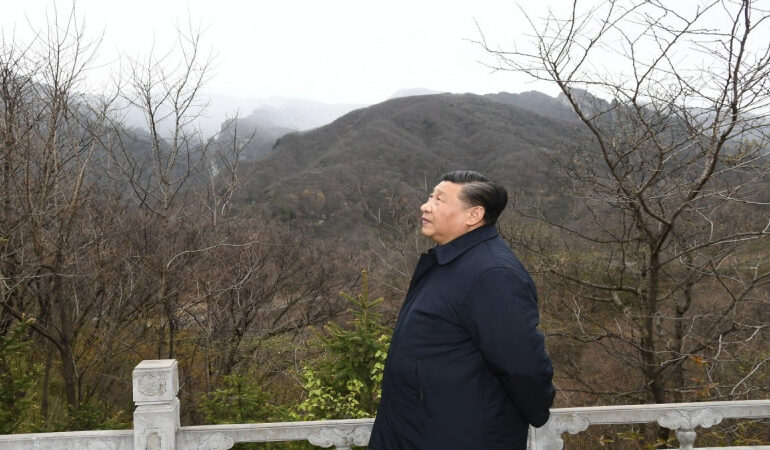
China’s leadership has renewed political pressure on illegal luxury villas and private resorts, signaling a fresh phase in governance tightening as economic headwinds and social scrutiny intensify. Newly released excerpts from a major policy speech show President Xi Jinping once again elevating these developments as symbols of regulatory failure, corruption, and unsustainable growth. The remarks underline a broader effort to reassert central authority over land use, urban planning, and elite privilege after years in which local loopholes allowed high end projects to proliferate. Illegal villas and resorts have long represented the intersection of wealth, political protection, and environmental damage, particularly in ecologically sensitive regions. By bringing the issue back into national focus, the leadership is reinforcing the message that excess and rule bending remain incompatible with the party’s development priorities, especially as inequality and public resentment remain politically sensitive.
The renewed emphasis also reflects concerns that uneven enforcement in recent years diluted earlier campaigns. While China has made visible progress in infrastructure expansion, city cluster development, and public services, central authorities argue that lax oversight enabled some officials and developers to exploit planning gaps for personal gain. Luxury estates often occupied protected land, strained local resources, and undermined sustainability goals that Beijing increasingly frames as core to long term stability. By explicitly linking illegal construction to governance quality, the leadership is signaling that environmental protection and anti graft enforcement are inseparable. This framing strengthens the party’s narrative that disciplined governance is essential not only for economic efficiency but also for social fairness, particularly at a time when public confidence in local administration varies widely across regions.
Revisiting the issue now also carries economic and political implications. The property sector remains fragile, and renewed scrutiny of elite developments sends a clear warning that recovery will not come through speculative or privileged channels. Targeting illegal villas allows authorities to demonstrate resolve without broad based stimulus that could reignite systemic risks. It also reinforces internal discipline ahead of policy implementation cycles where local governments face pressure to balance growth targets with regulatory compliance. For cadres, the message is that past indulgence will not be overlooked simply because priorities have shifted toward economic stabilization. For wealthy individuals, it underscores that visible symbols of excess remain politically risky in an environment where social equity is increasingly emphasized.
More broadly, the move fits into a longer arc of governance signaling under the current leadership. Campaigns against luxury developments have periodically resurfaced over the past decade, often coinciding with moments when Beijing seeks to re center authority and reset behavioral norms. By reviving the theme now, the leadership is aligning urban development, environmental protection, and anti corruption into a single narrative of sustainable governance. This approach allows Beijing to address public grievances, discipline local officials, and project continuity in policy direction despite economic uncertainty. As implementation filters down through provincial and municipal levels, the renewed focus on illegal villas is likely to translate into tighter inspections, enforcement actions, and political accountability, reinforcing the party’s broader message that development must remain orderly, regulated, and aligned with national priorities.