
Xi Uses New Year Address to Push Growth Agenda and Reaffirm Taiwan Reunification Goal
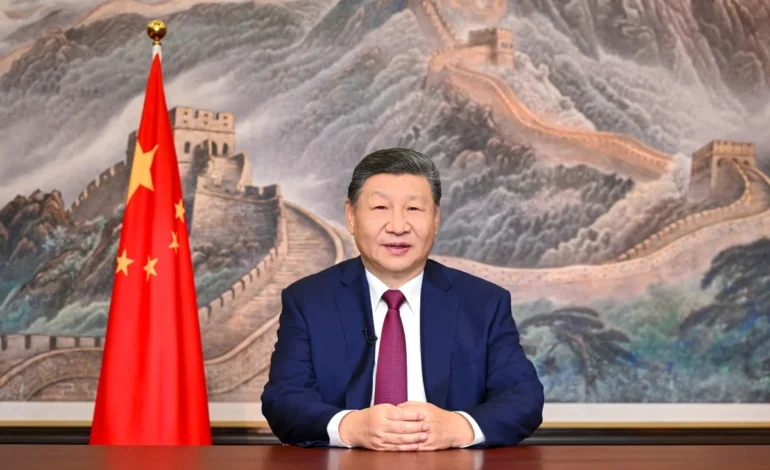
In his annual New Year’s address, Chinese President Xi Jinping called on the nation to intensify efforts to strengthen economic growth and accelerate technological progress, framing the coming years as decisive for China’s long term development and global standing.
Speaking in a nationally televised speech on Wednesday, Xi acknowledged the challenges facing the country, both at home and abroad. He described the global environment as increasingly complex, pointing to rising geopolitical tensions and economic uncertainty, while urging confidence in China’s ability to manage change and maintain stability.
Xi placed strong emphasis on economic transformation, highlighting innovation, advanced manufacturing and technological self reliance as central pillars of China’s future growth. He said the country must continue upgrading its industrial base, support emerging industries and improve productivity as it shifts away from older growth models driven by property and heavy investment.
The address came at a time when China is navigating slower economic expansion, weak consumer confidence and pressure on local governments. Analysts see the renewed focus on technology and innovation as part of a broader effort to secure sustainable growth while reducing dependence on foreign supply chains, particularly in critical sectors such as semiconductors and artificial intelligence.
Alongside domestic priorities, Xi also addressed China’s position on the world stage. Without naming specific countries, he referred to intensified international competition and strategic rivalry, a clear reference to ongoing tensions with the United States. He argued that China’s development path would continue despite external pressure, and called for national unity and resilience in the face of challenges.
Taiwan featured prominently in the speech. Xi described reunification with the island as an unstoppable historical trend, reaffirming Beijing’s long held position that Taiwan is an inseparable part of China. He stressed the importance of shared national identity and expressed opposition to what he called external interference and separatist activities.
While Xi did not outline new policies toward Taiwan, his remarks reinforced concerns in the region about rising cross strait tensions. Military activity around the island has increased in recent years, and political relations between Beijing and Taipei remain strained. His language signalled continuity rather than escalation, but underlined that the issue remains a core priority for China’s leadership.
The New Year address serves as both a reflection on the past year and a signal of policy direction. By pairing economic ambition with firm political messaging, Xi sought to project confidence at a moment when China faces headwinds at home and strategic pressure abroad.
For many observers, the speech highlighted Beijing’s balancing act. China is seeking to stabilise its economy, push forward technological ambitions and manage external rivalry, all while maintaining a hard line on sovereignty issues. As the new year begins, Xi’s message suggests continuity in strategy, with growth, innovation and national unity at the centre of China’s agenda.



