Xiaomi Open Sources New AI Model Unifying Autonomous Driving and Robotics
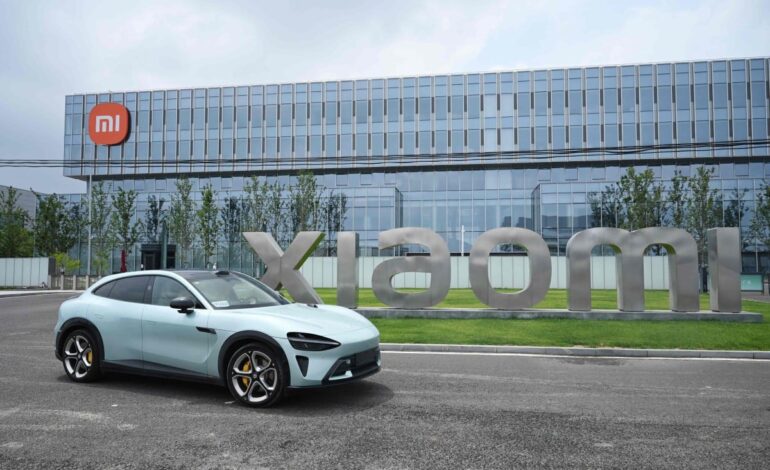
Xiaomi has taken another significant step in its artificial intelligence journey by open sourcing a new foundation model that brings together autonomous driving capabilities and embodied AI. The move highlights how deeply artificial intelligence has become woven into the company’s long term strategy, especially as it expands its presence in electric vehicles, robotics and smart mobility. With this release, Xiaomi is positioning itself not only as a consumer electronics brand but as a rising force in the broader AI ecosystem.
The new model, called MiMo Embodied, builds on the momentum of its earlier large language model MiMo, which was launched in April. By making the technology publicly accessible, Xiaomi is encouraging developers, researchers and industry partners to experiment with and improve the model, accelerating innovation across multiple fields.
The First of Its Kind in China’s Tech Landscape
According to the company, MiMo Embodied is the first open source vision language model in China that unifies autonomous driving and embodied intelligence tasks. This kind of pairing is rare in the AI world, since autonomous driving typically focuses on environmental sensing and navigation while embodied AI specializes in robotic interaction, task execution and understanding the physical world. By merging both areas into a single model, Xiaomi hopes to push forward new breakthroughs in machine perception and real world performance.
Technical documentation and project resources have been uploaded to major open source platforms such as GitHub and Hugging Face, allowing AI researchers around the world to test the model, experiment with real world scenarios and contribute to its evolution. Xiaomi said that opening the system in this way reflects a belief in collective innovation, where progress accelerates when a wider community participates.
Strong Results Across Driving and Robotics Tasks
Xiaomi reported that MiMo Embodied achieved state of the art results across its key domains. For embodied AI, the model showed strong capabilities in task planning, affordance prediction and spatial understanding. These functions are essential for robots that need to make decisions about how to interact with everyday objects, navigate through rooms or perform tasks that require physical awareness.
In the autonomous driving domain, the model excelled in environmental perception, status prediction, and drive planning. These abilities allow vehicles to detect surrounding conditions, anticipate changes in traffic flow or road environments, and decide how to move safely and efficiently. By performing well in both categories, MiMo Embodied signals that a single integrated model can potentially support future smart robots and intelligent vehicles with more unified intelligence.
The convergence of these two fields is important because next generation machines are expected to operate in increasingly complex environments. Whether assisting in homes, navigating city roads or working in factories, robots and vehicles need to interpret visual data, understand instructions and adapt to unpredictable human behaviour. Xiaomi’s model suggests that unified AI approaches may offer a more flexible and scalable foundation for these future applications.
A Reflection of Xiaomi’s Evolving Business Identity
Xiaomi’s decision to invest heavily in AI reflects broader changes in its business direction. Once primarily known for smartphones and consumer gadgets, the company is now transitioning into electric vehicles, smart driving systems and robotics. Its first electric car has already drawn significant attention in the Chinese EV market, and AI driven features are becoming a central selling point.
By open-sourcing a model that serves both autonomous driving and robotics, Xiaomi is signalling that its long-term vision is deeply connected to intelligent mobility and intelligent machines. The company has repeatedly stated that EVs, robotics, and AI will anchor its future business pillars. The release of MiMo Embodied reinforces this narrative and positions Xiaomi among a growing group of tech firms working to define how AI interacts with the physical world.
A Step Toward Smarter Machines and Smarter Cities
In many ways, the model also reflects the direction of global AI research. Scientists and engineers are increasingly looking for systems that can combine language understanding, visual perception and physical interaction. These multimodal models may eventually operate within smart homes, healthcare environments, autonomous logistics networks and urban transportation systems.
Xiaomi’s contribution adds momentum to this transformation. With an open source model, developers can design new applications, test novel robotics behaviours, or train more intelligent driving systems. As contributors refine the model, the technology may help cities become more efficient, bring safer self-driving features to consumers, and support more intuitive human-robot interaction.
The company hopes that MiMo Embodied will act as a foundation for future breakthroughs. While the technology is still evolving, its open source nature ensures that progress will not be limited to a single company. Instead, it could become part of a wider movement toward machines that understand the world in ways that are both flexible and deeply human centred.