Younger Consumers and AI Innovation Drive Growth Amid Economic Headwinds, CEOs Say
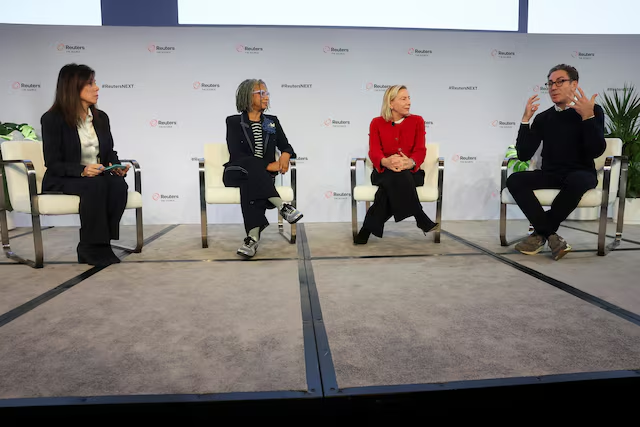
At the Reuters NEXT conference in New York City, several consumer goods executives emphasized that younger shoppers and investments in artificial intelligence are proving to be key growth drivers, even as tariffs, inflation, and economic uncertainty present headwinds across global markets.
Leaders from companies such as Warby Parker, Tapestry, and The Honest Company said that younger generations, particularly Millennials and Gen Z, continue to participate actively in consumer markets. This remains true despite delayed life milestones like marriage or homeownership, which many in these cohorts view as financially out of reach.
Resilient Demand Among Younger Consumers
Joanne Crevoiserat, CEO of Tapestry Inc., which owns brands such as Coach and Kate Spade, stated that the company is seeing robust engagement across a wide spectrum of income groups. Notably, the Chinese middle class and younger global consumers are helping to sustain growth. She highlighted a particular handbag from the Kate Spade line that has gained strong traction with younger demographics.
“Young consumers may be putting off life moments like getting married or buying a home, which they see as unachievable, but they are still participating in the consumer economy,” said Crevoiserat.
Similarly, Carla Vernón, CEO of The Honest Company, which specializes in premium diapers, baby wipes, and wellness products, said the company has developed an internal “tariff tacklers” team. This group is tasked with navigating cost pressures related to ongoing tariff policies under the Trump administration, without resorting to steep price increases.
Despite these pressures, consumers are adjusting rather than cutting back. “Shoppers have started to switch to smaller product sizes,” Vernon explained. “But they are not necessarily reducing the number of items they buy. It’s been a little bit of a moderated growth rate.”
AI and Workforce Strategy Driving Operational Shifts
Beyond consumer behavior, executives pointed to artificial intelligence as a critical enabler of efficiency, profitability, and long-term competitiveness.
Neil Blumenthal, Co-CEO of Warby Parker, said the eyewear company is on track to exceed profitability expectations for 2025. The company has been actively hiring optometrists across its U.S. retail locations and deploying AI tools to reduce administrative burdens. The result is that in-store eye doctors are able to spend more time with patients, enhancing both customer satisfaction and operational productivity.
Blumenthal also noted that AI has improved internal data analysis, supply chain management, and customer service.
Tapestry’s Crevoiserat echoed these sentiments, saying the company is preparing for a future workforce that is natively fluent in AI applications. She referred to upcoming hires from Generation Alpha individuals born with access to advanced digital technologies as the next wave of talent expected to shape the retail landscape.
“The generation entering the workforce will not need to be trained on AI,” she said. “They will expect AI-native environments.”
Navigating Tariffs and Global Uncertainty
Executives across the panel acknowledged that macroeconomic challenges, including new U.S. tariff regimes, have introduced additional complexities. However, they also emphasized the importance of flexibility in pricing, supply chain adaptation, and leveraging technology to remain competitive.
While consumer spending has shown signs of moderation, particularly in the United States, there remains strong demand for quality and value-driven brands. Companies that can align with evolving consumer expectations while managing cost structures through innovation are expected to remain resilient.
The conference highlighted the shifting strategies of consumer-facing companies, which are increasingly blending traditional brand management with digital transformation. As tariffs, inflationary pressures, and labor challenges continue into 2026, the adaptability of leadership teams will play a pivotal role in determining success.