Yuan Stabilizes as China’s Central Bank Intervenes in Foreign Exchange Markets
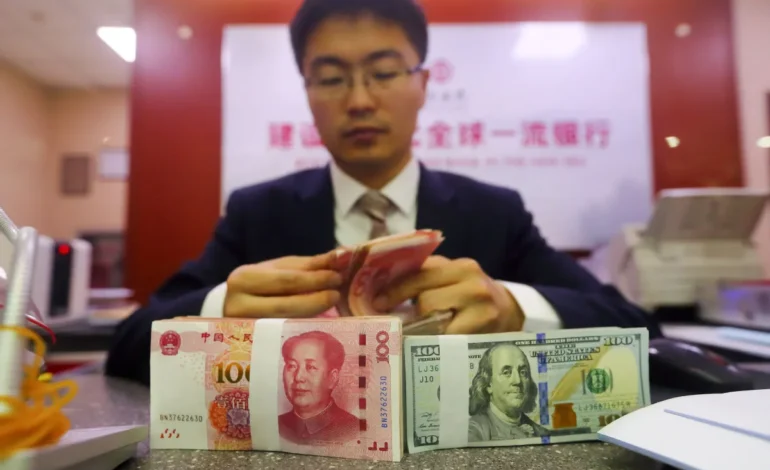
China’s yuan has stabilized after weeks of depreciation pressure, following targeted intervention by the People’s Bank of China (PBoC). The central bank’s recent liquidity operations and policy signaling have helped strengthen market confidence and limit speculative trading, keeping the exchange rate near 7.27 per U.S. dollar as of Friday’s close.
The move underscores Beijing’s determination to maintain financial stability as global investors adjust to diverging interest rate policies between China and major Western economies.
Central Bank Intervention and Market Reaction
Traders and analysts said the PBoC directed state-owned banks to sell dollars in the spot and forward markets, providing immediate relief to the yuan. The central bank also adjusted its daily midpoint rate to a stronger level than market expectations, sending a clear signal that authorities will not tolerate excessive volatility.
According to CGTN, the PBoC injected 400 billion yuan into the financial system through reverse repos this week to stabilize liquidity. The operation aimed to prevent short-term funding stress and ensure smooth settlement in the foreign exchange market.
Market participants described the intervention as calibrated rather than aggressive. “The PBoC’s approach focuses on restoring confidence without exhausting reserves,” said Liu Pei, chief currency strategist at China Merchants Bank. “It reflects a balance between stability and market flexibility.”
Following the measures, the offshore yuan also strengthened modestly in Hong Kong trading, suggesting renewed investor confidence in China’s short-term outlook.
External Pressures and Capital Flow Dynamics
The yuan’s earlier weakness was driven largely by widening interest rate differentials between China and the U.S., as well as concerns over slower domestic growth. The Federal Reserve’s higher-for-longer rate policy had prompted capital outflows from emerging markets, putting pressure on Asian currencies.
Despite those headwinds, the IMF noted that China’s overall capital position remains resilient, with strong current account surpluses and growing use of the yuan in regional trade settlements.
Bilateral agreements with countries such as the UAE, Brazil, and Indonesia have expanded yuan-denominated transactions, reducing dependency on the dollar for trade settlements.
“The rise of yuan-based trade flows acts as a natural stabilizer for China’s currency,” said IMF senior economist Priya Desai. “It supports longer-term internationalization even when short-term volatility persists.”
Domestic factors have also supported the rebound. Seasonal export receipts and state-linked portfolio inflows helped offset earlier capital outflows.
Policy Coordination and Regulatory Outlook
The central bank’s recent actions are part of a broader policy mix designed to sustain financial stability. Officials said monetary and fiscal coordination will continue, with liquidity support tied to infrastructure spending and small business financing.
PBoC Deputy Governor Pan Gongsheng reiterated that the exchange rate “will remain basically stable at a reasonable and balanced level,” citing sufficient reserves and improving fundamentals.
The central bank is also enhancing supervision of speculative activities in offshore yuan markets, according to a report from the Wall Street Journal.
Financial regulators are working with major banks to improve hedging tools for exporters, giving firms more flexibility to manage currency risk in a volatile environment.
Economists believe these steps will reduce uncertainty in capital markets while supporting long-term reforms aimed at making the yuan more flexible and internationally recognized.
Gradual Stability Amid Global Uncertainty
Analysts expect the yuan to trade within a narrow range through early 2026, supported by steady policy guidance and gradual recovery in China’s domestic economy.
While global monetary tightening remains a challenge, China’s diversified trade network and growing regional use of the yuan are providing structural stability.
Foreign exchange strategists project that continued intervention will remain limited and data-driven, allowing the market to function while preventing disorderly moves.
For Beijing, maintaining confidence in its currency remains central to its financial diplomacy and economic resilience in an increasingly uncertain global environment.