China Exports Surge Into 2026 as Electronics Demand Drives Record Trade Momentum
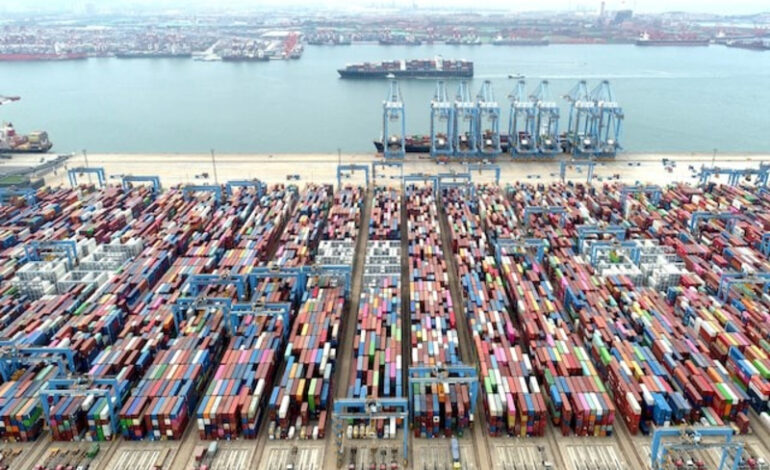
China has entered 2026 with a powerful surge in exports that has significantly exceeded economic forecasts and reinforced the country’s position as a dominant force in global manufacturing and supply chains. Official trade data shows that outbound shipments expanded sharply during the first two months of the year, fueled largely by strong international demand for electronics and technology products. The growth places China on track to potentially surpass last year’s record trade surplus if current trends continue. Economists say the export momentum highlights the resilience of China’s industrial sector even as global economic uncertainty and geopolitical tensions remain elevated.
Exports from the world’s second largest economy rose by more than twenty percent in the January to February period compared with the same months last year. The increase was far higher than analysts had predicted and marked a sharp acceleration from the moderate export growth seen at the end of the previous year. Strong shipments of integrated circuits and technology components played a major role in the expansion as global investment in artificial intelligence infrastructure continues to drive demand for advanced electronics. Economists also noted unexpected growth in traditional sectors including clothing, textiles, and bags, industries that had faced stiff competition from emerging manufacturing hubs in Asia.
China’s trade surplus expanded significantly during the same period, reaching more than two hundred billion dollars and surpassing expectations among market analysts. The strong performance reflects China’s continued dominance in a wide range of industrial supply chains as manufacturers supply products to markets around the world. Demand has been particularly strong in Southeast Asia, Europe, and other major trading regions. Shipments to countries in the Association of Southeast Asian Nations recorded particularly rapid growth, while exports to Europe and South Korea also increased sharply as global demand for manufactured goods remained resilient.
Some economists believe export growth may accelerate further in the near term as companies move quickly to ship products before potential changes in global trade policies. Manufacturers have been taking advantage of favorable legal rulings affecting tariffs in the United States while also expanding exports to new markets across Africa and Latin America. China has also increased imports of key industrial commodities including iron ore and crude oil to support domestic production. This stockpiling effort helps ensure factories have stable supplies of raw materials even if global shipping routes face disruptions.
Despite the strong start to the year, analysts caution that several global risks could still influence China’s export performance later in 2026. Rising geopolitical tensions and uncertainty surrounding energy markets could affect shipping routes and manufacturing costs if disruptions spread across key trade corridors. The upcoming meeting between Chinese President Xi Jinping and United States President Donald Trump is also being closely watched by global markets, as the outcome could influence trade relations between the two largest economies. Even with these uncertainties, China’s export engine continues to demonstrate strong momentum as manufacturers expand their presence in global markets.