China Unveils Fully Domestic Supercomputer in Push to Lead Global Exascale Race
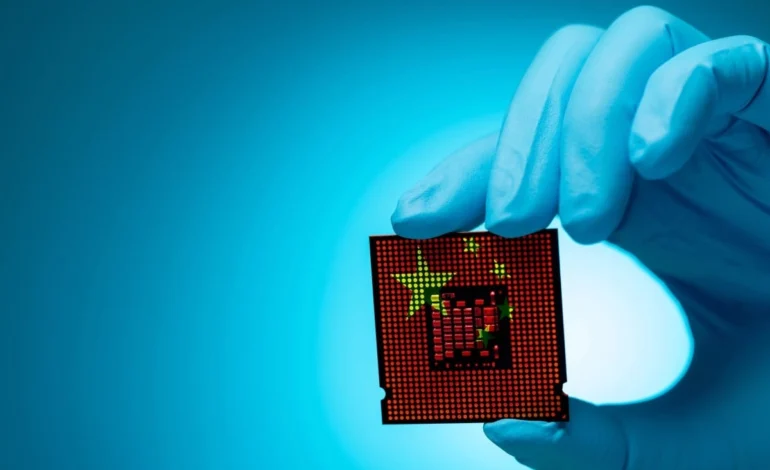
China has revealed a new generation supercomputer built entirely on domestically developed central processing units, marking a significant step in its ambition to challenge global computing leadership. The system, known as Lingsheng or LineShine, has been designed with the goal of reaching performance levels of around 2 exaflops, positioning it to compete directly with the world’s fastest machines. The development reflects Beijing’s accelerating push for technological self reliance in the face of ongoing restrictions on advanced semiconductor exports from the United States.
The project aims to surpass the current global benchmark set by El Capitan, a US based supercomputer operating at approximately 1.8 exaflops at the Lawrence Livermore National Laboratory in California. If successful, LineShine would not only take the top position in raw computational power but also signal a shift in how large scale computing systems are engineered, particularly in terms of hardware independence. Chinese researchers behind the initiative describe it as a milestone in the country’s effort to build a complete domestic high performance computing ecosystem.
What sets LineShine apart from other exascale systems is its architecture. While most of the world’s fastest supercomputers rely heavily on graphics processing units for parallel workloads, China’s new system is designed to operate entirely on central processing units. This CPU only approach is seen as both a technological challenge and a strategic decision, aimed at reducing dependency on foreign GPU suppliers that have been subject to tightening export controls. Engineers involved in the project say the design prioritises stability, scalability, and long term independence over conventional hybrid computing models.
The development comes at a time when global competition in advanced computing is intensifying, particularly between the United States and China. Supercomputers play a critical role in fields such as climate modelling, artificial intelligence research, nuclear simulations, and advanced materials science. As a result, leadership in this sector is increasingly viewed not only as a scientific achievement but also as a strategic asset with national security implications. China’s move to build a fully domestic system highlights its determination to reduce vulnerabilities in key technological supply chains.
Industry analysts note that achieving exascale performance using only CPUs would represent a major engineering breakthrough if LineShine meets its target. It would require highly efficient chip design, advanced interconnect systems, and optimized software capable of distributing workloads across millions of processing cores. While questions remain over performance efficiency compared to GPU accelerated systems, the project demonstrates China’s willingness to pursue alternative technological pathways in order to bypass external constraints and strengthen its position in the global supercomputing race.