Panama Urges China’s COSCO to Resume Operations at Strategic Balboa Port
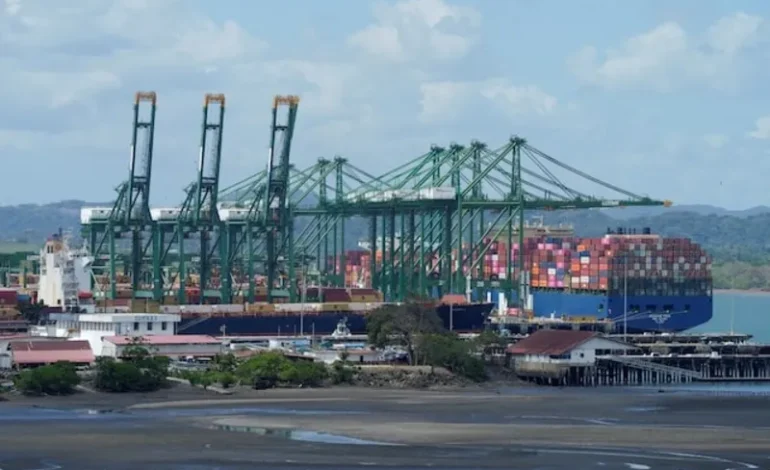
Panama’s government has expressed hope that Chinese shipping giant COSCO Shipping will reconsider its decision to suspend operations at the Balboa port, one of the key maritime gateways near the Panama Canal. Officials said the move came as a surprise and could affect cargo volumes passing through the important logistics hub. Balboa is a major port serving international shipping routes and plays a critical role in handling container traffic linked to global trade. Authorities in Panama are now seeking to maintain stable port operations while encouraging major shipping partners to continue using the facility.
Government representatives noted that COSCO accounts for a portion of cargo traffic moving through Balboa, making the suspension significant for port activity. The minister responsible for canal affairs said that all cargo passing through the port remains important for Panama’s logistics economy and that the country values its commercial relationship with the Chinese shipping company. Although the share of cargo linked to COSCO is relatively small compared with total throughput, officials said maintaining cooperation with major international carriers remains vital for sustaining the port’s role within global maritime trade networks.
The situation surrounding Balboa has developed amid wider changes in the management of ports near the Panama Canal. Earlier legal decisions in Panama affected the long standing operating contract previously held by a unit of a Hong Kong based conglomerate. The country’s Supreme Court annulled that agreement earlier this year, prompting adjustments in how the port is managed and raising questions about the future structure of operations at one of the canal’s busiest container terminals. The ruling introduced new uncertainty into a port system that plays a central role in international shipping routes.
Balboa and nearby Cristobal ports have also been linked to a broader international investment proposal that attracted attention from global financial groups and shipping companies. A consortium involving major international investors had proposed acquiring a network of ports across multiple countries, including the two facilities near the Panama Canal. The proposal became entangled in geopolitical discussions involving Washington and Beijing, highlighting the strategic importance of maritime infrastructure in global supply chains and the political sensitivity surrounding control of key shipping hubs.
The developments around the port reflect the growing intersection between global trade infrastructure and geopolitical competition. Governments increasingly view ports and logistics networks as strategic assets capable of influencing international commerce. The Panama Canal itself is one of the world’s most important maritime corridors, connecting major shipping routes between Asia, the Americas and Europe. Decisions about the operation of nearby ports therefore attract significant international attention from both commercial operators and policymakers.
Amid the current uncertainty, temporary management arrangements have been introduced to ensure continuity of operations at Balboa. A subsidiary of a major international shipping group has taken over short term operational responsibilities while authorities evaluate longer term solutions for the port’s management structure. Panama’s government has emphasized that maintaining reliable service at canal connected ports remains a priority given the country’s role as one of the most important transit points for global maritime commerce.
Officials declined to speculate on the reasons behind COSCO’s decision to suspend operations but confirmed that discussions with stakeholders are ongoing. The government continues to engage with shipping companies and investors to ensure that the Balboa port remains an active component of the canal’s logistics ecosystem. As negotiations and operational adjustments continue, the situation highlights how strategic infrastructure around the Panama Canal remains deeply intertwined with global shipping interests and geopolitical developments.