EU rules raise stakes for China’s chip ambitions
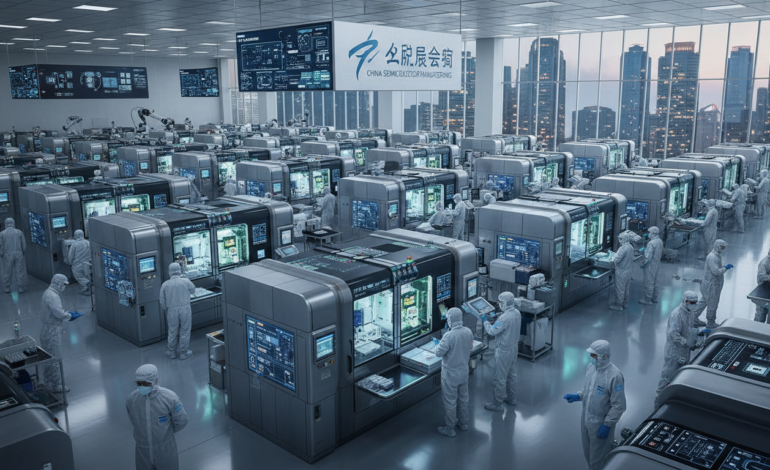
China’s Progress in Semiconductor Technology
Chinese fabs are pushing process and packaging upgrades while policymakers frame chips as a strategic necessity. Today, the most visible change is the pace of iteration in domestic toolchains, from lithography subsystems to advanced packaging lines, and market watchers tracking China semiconductor advancements also point to tighter coordination between design houses and foundries to reduce time to tape out. In recent briefings, the Ministry of Industry and Information Technology highlighted industrial modernization priorities that include integrated circuits, and firms have echoed that message in earnings calls. Live demand signals from consumer electronics and automotive supply chains are shaping which nodes and packaging options get priority. Update cycles are now measured in quarters, not years.
Impact of EU Regulations on China’s Chip Industry
The European Commission has widened its focus on economic security tools that can constrain sensitive supply chains, putting exporters and buyers on notice. Today, compliance teams in Asia and Europe are mapping procurement exposure as the new posture hardens the legal meaning of local content and strategic autonomy, a policy context that sits alongside broader economic pressure points covered in US tariff reprieve shakes China export hubs fast and shows how quickly trade signals can move factories. For EU-China relations, the immediate effect is higher documentation burdens for components that cross borders multiple times. Live contract renegotiations are already building in certification clauses, and an Update cadence is emerging around audit readiness and traceability.
Trade Tensions and Economic Implications
Trade tensions are no longer confined to tariffs, they now hit licensing, investment screening, and standards setting across chip technology. Today, corporate counsel are treating export controls as a variable that can change quarterly and alter revenue forecasts, a point frequently emphasized by the World Trade Organization in its public materials on trade policy uncertainty, and a contemporaneous view of how China-linked innovation is being marketed abroad is detailed by the South China Morning Post in Hong Kong puts its own spin on DeepSeek with China-chip AI push abroad. Live currency and shipping costs add a second layer of pressure, and each Update to sanctions guidance can reorder supplier shortlists overnight.
The Role of Technology in Global Competition
Competition is increasingly about systems engineering, not just wafer nodes, with data centers, power management, and packaging driving performance-per-watt. Today, companies racing to deploy AI workloads are emphasizing efficient interconnects and memory pathways, and the South China Morning Post has underscored the infrastructure angle in Energy crisis showcases strengths of China’s data centre market. In this context, China semiconductor advancements matter because they influence how quickly domestic platforms can scale without relying on restricted imports. Live benchmarking in cloud and edge deployments is shaping which accelerators and networking stacks win tenders. An Update culture around firmware and driver optimization has become as important as silicon, especially for enterprise buyers.
Future Prospects for China’s Semiconductor Sector
Near-term momentum will depend on whether firms can keep improving yields and reliability while absorbing compliance costs tied to EU-China relations. Today, executives are signaling that capex discipline will coexist with targeted spending on materials, metrology, and packaging lines, and regulators in multiple jurisdictions are watching for subsidy spillovers, a related policy backdrop discussed in China semiconductor growth forces Western policy reset and tracking how overseas rules respond to new capacity. Analysts covering China semiconductor advancements increasingly focus on how quickly local ecosystems can qualify parts for automotive and industrial customers, where certification cycles are strict. Live procurement decisions will favor suppliers with transparent documentation, and each Update to EU rules will test how adaptable exporters remain.