China’s Electric Vehicle Production Surge Strengthens Global Battery and EV Supply Chains
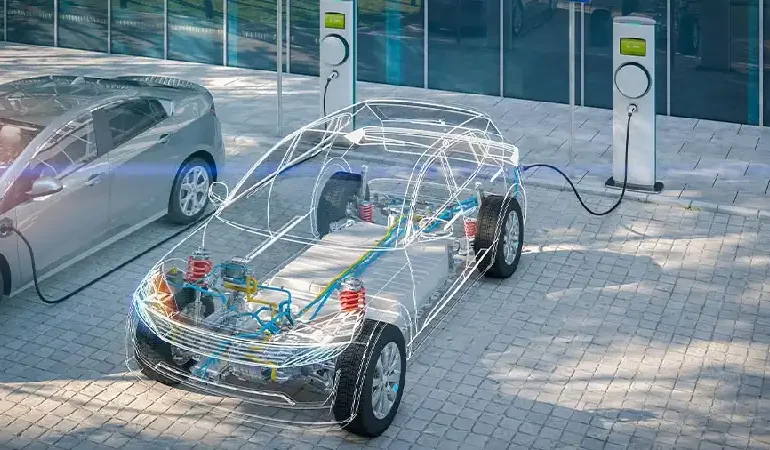
China’s electric vehicle industry is experiencing another strong production cycle in 2026 as manufacturers increase output to meet both domestic demand and expanding international markets. The growth of EV production is reinforcing China’s position at the center of global electric mobility supply chains, particularly in battery technology and advanced manufacturing. As automakers expand assembly capacity and introduce new vehicle models, companies across the EV ecosystem are benefiting from rising demand for components, materials, and battery systems that support large scale electric transportation.
Electric Vehicle Manufacturing Expands Across China
Electric vehicle manufacturing has become one of the fastest growing segments of China’s advanced manufacturing sector. Automakers are expanding production facilities while integrating automation and digital monitoring technologies to improve efficiency and quality standards. EV production lines rely heavily on robotics systems and automated inspection equipment capable of maintaining consistent manufacturing performance.
Factories producing electric vehicles operate within highly coordinated supply chains that involve battery producers, semiconductor suppliers, and materials processing companies. As production volumes increase, these interconnected industries scale operations to support vehicle assembly lines. The expansion of EV manufacturing therefore drives broader industrial growth across multiple technology sectors linked to electric mobility.
Battery Supply Chains Drive Industry Growth
Battery technology remains the core component of electric vehicles and a major driver of supply chain development. Chinese battery manufacturers have expanded capacity significantly in recent years to meet growing global demand for lithium based energy storage systems used in EV platforms.
Battery production facilities operate alongside electric vehicle assembly plants in several industrial clusters across China. This proximity allows automakers to secure stable battery supply while improving coordination between battery design and vehicle engineering. As battery demand increases, companies producing battery materials such as cathodes, anodes, and electrolytes also benefit from rising production requirements.
Battery supply chains extend beyond vehicle manufacturing into renewable energy storage systems that rely on similar technologies. The overlap between EV batteries and energy storage solutions further strengthens the importance of battery innovation within China’s technology ecosystem.
Global Demand for Chinese Electric Vehicles
China’s electric vehicle manufacturers are increasingly exporting vehicles to international markets as global demand for low emission transportation continues to rise. Several Chinese automakers have expanded distribution networks in Europe, Southeast Asia, and emerging markets where EV adoption is accelerating.
Export growth requires reliable supply chains capable of delivering consistent product quality and production volume. China’s extensive EV manufacturing infrastructure allows companies to scale vehicle output while maintaining competitive production costs. As international markets adopt stricter environmental standards, electric vehicles produced in China are becoming more prominent in global automotive trade.
The expansion of exports strengthens the role of Chinese companies within international EV supply chains. Automakers rely on stable battery production and component availability to maintain delivery schedules in overseas markets. This integration further reinforces China’s influence in the global electric mobility ecosystem.
Technology Innovation and Manufacturing Efficiency
Innovation in battery engineering and vehicle design continues to shape the EV industry. Manufacturers are working to improve battery energy density, charging performance, and durability in order to enhance vehicle range and reliability. These improvements make electric vehicles more attractive to consumers while supporting broader adoption of clean transportation technologies.
Manufacturing efficiency is also improving as automakers adopt advanced production technologies. Smart factory systems monitor assembly lines and analyze production data in real time, allowing engineers to optimize workflows and reduce defects. Robotics and automated quality inspection systems contribute to consistent manufacturing standards across large scale EV production facilities.
Such technological improvements strengthen China’s ability to maintain leadership in electric vehicle manufacturing. As innovation continues, the EV sector is expected to remain a key driver of technological development within the country’s broader industrial landscape.
Policy Support and Clean Energy Transition
Government policies supporting clean energy transportation have contributed to the expansion of China’s electric vehicle sector. Incentives encouraging EV adoption, infrastructure investment in charging networks, and research support for battery technology have all helped accelerate industry growth.
These policy frameworks align with broader environmental goals aimed at reducing emissions and promoting sustainable transportation systems. As governments worldwide pursue similar objectives, electric vehicles are becoming increasingly important within global mobility strategies.
China’s large scale EV manufacturing capacity therefore plays an important role in supporting the international transition toward cleaner transportation technologies.
Long Term Outlook for the EV Industry
The continued expansion of EV production suggests that electric mobility will remain a central component of China’s technology and manufacturing strategy. As battery technology improves and charging infrastructure expands, electric vehicles are expected to capture a larger share of global automotive markets.
For manufacturers, maintaining efficient supply chains and reliable component production will remain critical. China’s integrated EV ecosystem provides a strong foundation for continued growth as companies develop next generation electric mobility technologies.
Conclusion
China’s surge in electric vehicle production highlights the country’s growing influence in global EV and battery supply chains. With expanding manufacturing capacity, advanced battery technology, and strong export demand, the EV industry continues to strengthen China’s role in shaping the future of electric mobility.