China urges Japan to punish military officer after embassy breach in Tokyo
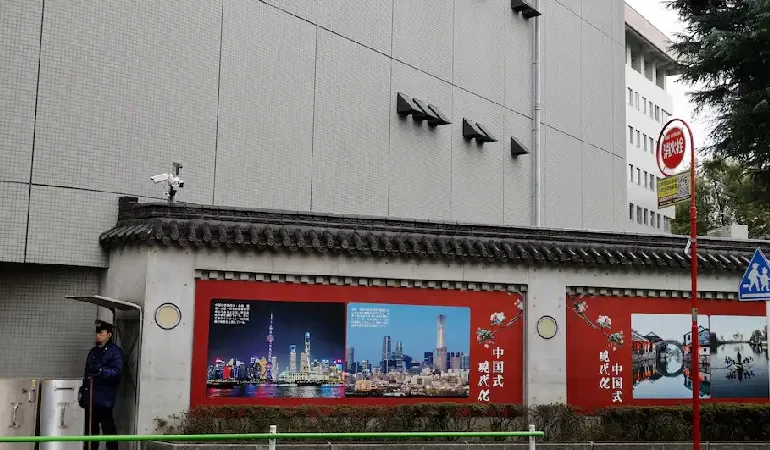
China has called on Japan to conduct a full investigation and impose strict punishment following an incident in which a member of Japan’s Self Defense Forces allegedly breached the Chinese embassy compound in Tokyo. The case has raised diplomatic concerns, with Beijing stating that the intrusion posed a serious threat to the safety of embassy personnel and violated diplomatic norms. Japanese authorities confirmed that the suspect, a young officer, was arrested after reportedly scaling the embassy wall while carrying a knife, prompting an immediate security response and heightened attention to embassy protection measures.
Japanese officials described the incident as regrettable and said law enforcement agencies are continuing their investigation to establish the full circumstances. Authorities have already increased security presence around the Chinese embassy and are reviewing existing protective arrangements. Government representatives indicated that preventive steps will be taken to avoid similar incidents in the future, emphasizing the importance of maintaining diplomatic security and upholding international obligations related to the protection of foreign missions.
China’s foreign ministry expressed strong dissatisfaction with the situation, calling for accountability and a clear explanation from Tokyo. Officials in Beijing linked the incident to broader concerns about political trends in Japan, warning that such actions could have wider implications for bilateral relations. The response underscores how individual security breaches can quickly escalate into diplomatic issues, particularly in a relationship already marked by historical sensitivities and ongoing geopolitical friction.
Analysts note that the timing of the incident coincides with a period of heightened tensions between China and Japan, driven in part by differing positions on regional security issues. Recent statements from Japanese leadership regarding potential threats in the Taiwan Strait have drawn sharp reactions from Beijing, contributing to an increasingly strained diplomatic environment. The embassy breach is therefore being viewed not only as a security lapse but also as a development occurring within a broader context of political and strategic disagreement.
China Japan relations have experienced fluctuations over the years, shaped by disputes over territory, trade, and historical interpretation. In recent months, tensions have intensified, with Beijing introducing measures such as restrictions on certain imports and travel advisories. These actions reflect deeper concerns about security alignment and policy direction, particularly as both countries navigate shifting dynamics in the Asia Pacific region.
Additional context highlights the growing importance of diplomatic security in an era of heightened geopolitical uncertainty. Embassies serve as critical points of communication and representation, making their protection a priority under international conventions. Incidents involving diplomatic premises are often treated with urgency due to their potential to affect bilateral trust and stability, especially when they involve military personnel or politically sensitive circumstances.
Recent developments indicate that both sides are likely to manage the situation through official channels while seeking to prevent further escalation. Japan’s ongoing investigation and security adjustments are expected to address immediate concerns, while China’s response signals continued vigilance over diplomatic protections. The handling of this incident will be closely watched as an indicator of how both governments navigate tensions and maintain stability in their diplomatic relationship.