China calls for boycott of NeurIPS as AI tensions with US escalate over sanctions restrictions
China’s artificial intelligence community is facing a growing divide with the United States after leading researchers were urged to boycott one of the world’s most influential AI conferences. The call follows a decision by organizers of the Conference on Neural Information Processing Systems to block paper submissions from individuals affiliated with US sanctioned entities, including major Chinese technology firms such as Huawei. The development highlights rising friction in global AI collaboration, where academic exchange is increasingly shaped by geopolitical considerations rather than purely scientific progress.
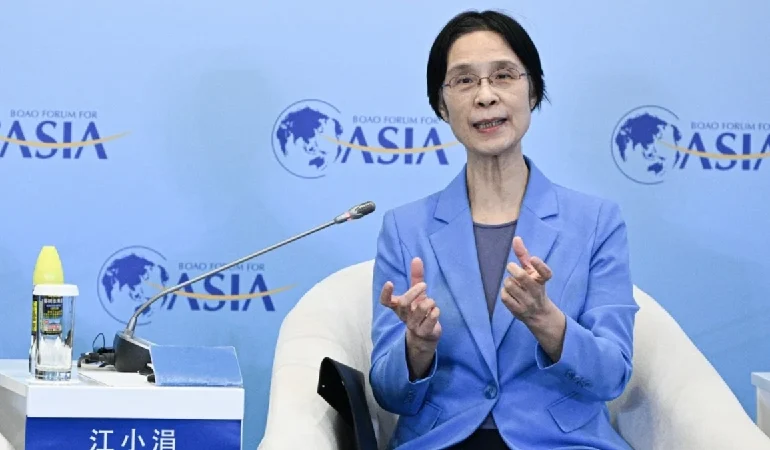
The China Computer Federation, one of the country’s most influential professional bodies, publicly opposed the restrictions and encouraged researchers to reconsider participation. The organization argued that the move undermines the principles of open academic exchange and risks fragmenting the global AI research ecosystem. NeurIPS, widely regarded as a premier venue for cutting edge machine learning research, has long attracted contributions from top institutions worldwide, making the exclusion of certain participants particularly significant for the field.
The restrictions stem from compliance requirements linked to US sanctions policy, which increasingly extends beyond trade and into scientific collaboration. As artificial intelligence becomes central to economic competitiveness and national security, governments are tightening controls on knowledge transfer and technological development. This has created new barriers in areas that were traditionally driven by international cooperation, including academic publishing and research conferences. The decision reflects how AI has shifted from a purely academic discipline into a strategic domain with global power implications.
Industry analysts note that the boycott call signals a broader shift in how China’s research community is responding to external pressure. Rather than adapting to restrictions, institutions are beginning to push back collectively, emphasizing self reliance and domestic innovation. Chinese technology companies and universities have already accelerated investment in local research platforms and conferences, aiming to reduce dependence on Western academic networks. This trend aligns with a wider national strategy to build independent capabilities in critical technologies such as AI chips, cloud infrastructure and advanced algorithms.
The dispute also underscores the growing overlap between academia and industry in artificial intelligence. Companies like Huawei play a central role in research output, contributing significantly to global publications and technological advancements. Excluding such entities affects not only corporate participation but also collaborative research involving universities and international partners. Experts warn that limiting access to shared platforms could slow the pace of innovation and reduce the diversity of perspectives that drive breakthroughs in machine learning.
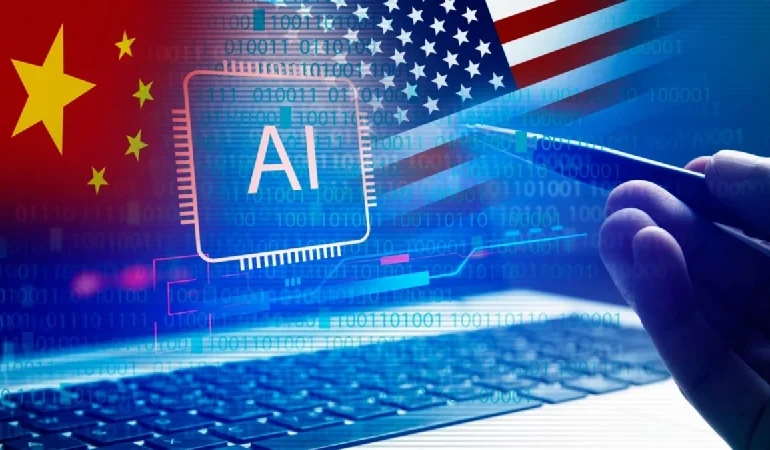
In recent years, AI has become a focal point of competition between the United States and China, with both countries investing heavily in talent, infrastructure and policy frameworks. Restrictions on semiconductor exports, cloud services and advanced computing tools have already reshaped the competitive landscape. The extension of these measures into academic forums signals a new phase of decoupling, where even knowledge exchange is subject to strategic control. This shift is prompting researchers to reassess how and where they share their work.
As tensions continue to rise, the global AI community is entering a period of uncertainty. Conferences like NeurIPS have traditionally served as neutral grounds for collaboration, bringing together researchers regardless of national affiliation. The current dispute challenges that role and raises questions about the future of international cooperation in science. Observers say the outcome could influence how other conferences and institutions navigate similar pressures, potentially redefining the structure of global research networks in the years ahead.