China lidar leaders shift to robotics as supply chain strength draws global attention
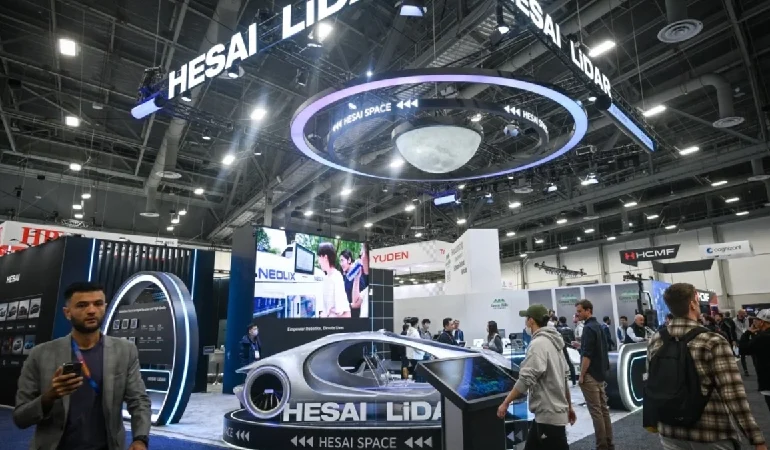
China’s leading lidar manufacturers are accelerating their transition into robotics, signaling a strategic pivot as the country strengthens its position in the global supply chain for next generation automation technologies. Hesai Group and RoboSense Technology, both major players in automotive sensing systems, are expanding beyond self driving vehicles to develop components for robotics applications. The shift comes as demand for intelligent machines rises globally, supported by advances in artificial intelligence and large language models that are pushing robotics closer to widespread commercial deployment.
Hesai, based in Shanghai and widely recognized as one of the largest lidar producers globally, has announced plans to invest 200 million yuan this year into building core robotic components described as “eyes and muscles.” These systems are designed to enhance perception and movement capabilities in machines, forming a critical layer in robotics development. The company’s leadership indicated that the investment follows strong financial performance, positioning robotics as a key growth driver alongside its established automotive business.
The move reflects a broader industry trend where lidar technology, originally developed for autonomous vehicles, is being adapted for use in robotics. Lidar sensors allow machines to map their surroundings with high precision, making them essential for navigation and interaction in complex environments. As robotics applications expand across manufacturing, logistics and service industries, the integration of advanced sensing technologies is becoming increasingly important. Chinese firms are leveraging their manufacturing scale and engineering expertise to capture opportunities in this rapidly evolving segment.
RoboSense, another major lidar supplier, is also deepening its focus on robotics, reinforcing the idea that the sector is entering a new phase of commercialization. Industry executives point to the rapid progress of artificial intelligence as a catalyst for this transition, with more capable software systems enabling robots to perform tasks with greater autonomy. The combination of AI driven decision making and high resolution sensing is expected to unlock new use cases, from warehouse automation to smart infrastructure and urban services.
The expansion into robotics aligns with China’s broader strategy to dominate key segments of the global technology supply chain. The country has built a strong foundation in hardware manufacturing, allowing companies to scale production efficiently and reduce costs. This advantage has attracted attention from global technology leaders, including Nvidia chief Jensen Huang, who has recently praised the depth and efficiency of China’s supply chain ecosystem. Such recognition underscores the growing influence of Chinese firms in shaping the future of advanced technologies.
At the same time, the pivot highlights the need for diversification within the lidar industry. While demand from the automotive sector remains strong, companies are seeking additional revenue streams as competition intensifies and pricing pressures increase. Robotics offers a complementary market with long term growth potential, particularly as industries adopt automation to improve productivity and address labor shortages. By entering this space early, lidar manufacturers aim to establish themselves as essential suppliers in a broader ecosystem.
Analysts expect continued investment and innovation as companies refine their robotics offerings and expand partnerships across industries. The convergence of sensing hardware, artificial intelligence and scalable manufacturing is creating a new wave of opportunities that extend beyond traditional automotive applications. As China’s lidar leaders deepen their presence in robotics, their ability to integrate technology across multiple sectors could play a decisive role in shaping the global competitive landscape.