China explores autonomous systems for riot control with minimal human involvement
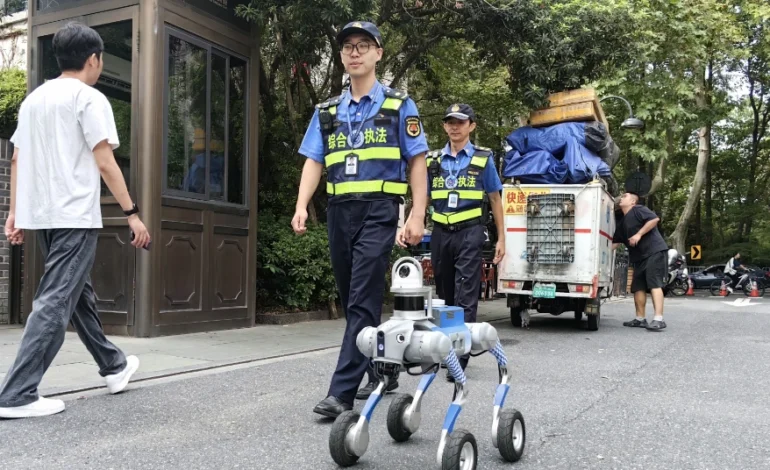
China’s internal security forces are examining the potential use of autonomous technologies to manage civil unrest, according to a recent study that outlines scenarios where intelligent machines could take on key roles in riot control operations. The research, conducted by engineers within the People’s Armed Police Force, suggests a future approach in which advanced systems are used to monitor, contain, and respond to large scale disturbances without direct human intervention. The concept reflects a broader trend toward integrating artificial intelligence and automation into public security strategies.
The study describes a hypothetical situation in which unrest breaks out in a major urban centre, with crowds gathering in response to rapidly spreading information. In this scenario, automated systems are deployed to establish control over key areas, including the rapid placement of roadblocks and the identification of individuals considered to be leading the disturbance. These systems would be capable of analysing large volumes of real time data, enabling faster decision making and potentially reducing the need for direct confrontation between security personnel and civilians.
Researchers involved in the study suggest that the use of intelligent machines could improve efficiency in crowd management while limiting risks to both officers and the public. By relying on automated surveillance and response mechanisms, authorities could potentially reduce physical clashes and maintain order through coordinated, technology driven interventions. The approach also reflects ongoing advancements in areas such as facial recognition, data analytics, and robotics, which are increasingly being incorporated into security frameworks.
However, the concept has raised questions among analysts about the ethical and practical implications of using autonomous systems in law enforcement. Critics argue that the deployment of such technology could lead to concerns over accountability, privacy, and the potential for misuse. The reliance on automated decision making in sensitive situations may also create challenges in ensuring proportional responses and safeguarding civil liberties, particularly in complex and rapidly evolving scenarios.
The exploration of autonomous riot control systems highlights China’s broader focus on technological innovation in security and governance. As research and development in artificial intelligence continue to expand, similar concepts may be tested or adapted in various contexts. While the study presents a theoretical model, it underscores the growing role of advanced technologies in shaping future approaches to public order and internal security management.