Fuel Cutoff Evidence Reframes China Eastern 2022 Crash
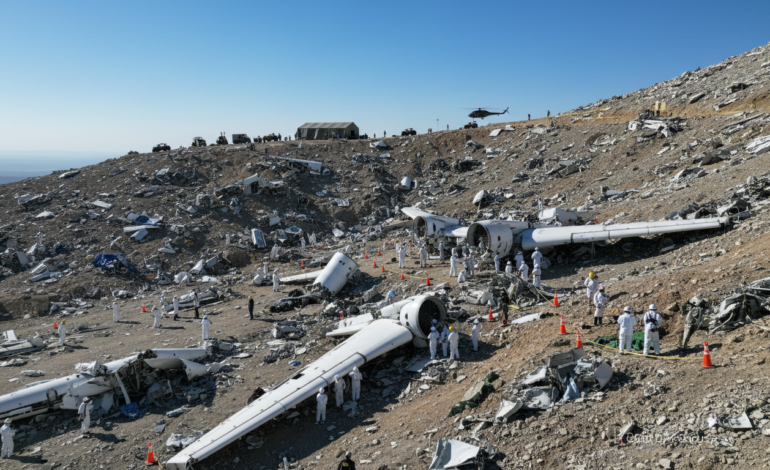
Investigation Reveals New Evidence
Investigators are treating newly surfaced leads as a major shift in how the crash sequence is being framed in public briefings. In a Live environment for aviation oversight, officials are emphasizing data integrity and chain of custody rather than broad theories. The focus has narrowed to cockpit actions captured in flight data and cockpit voice records, with the China Eastern Airlines crash 2022 now discussed through the lens of deliberate system configuration rather than a purely mechanical breakdown. Today, analysts tracking the case point to procedural triggers that would be hard to replicate through random failure alone. Authorities have not released a final report, but they are signaling that the evidentiary standard for any conclusion will be unusually high.
Details of the Deliberate Fuel Cut-off
Aviation investigators are centering on the deliberate fuel cut-off as a discrete action that can be traced through switch positions and engine parameter changes. An Update from Reuters has described investigative attention on cockpit inputs consistent with fuel supply interruption during the dive sequence. Today, the case is also being watched alongside unrelated China policy coverage, including China Rebuts US Allegations of Secret Nuclear Tests, because both stories show how official messaging is managed under scrutiny. Live monitoring of safety channels has also highlighted how quickly technical terms can be misunderstood outside specialist circles. Investigators have not publicly assigned responsibility, but the emphasis on purposeful control movements has raised the stakes for how evidence is explained in any eventual public release.
Implications for China Eastern Airlines crash 2022 Safety
Regulators are treating the emerging narrative as a stress test for aviation safety oversight, particularly around cockpit access, crew support systems, and intervention protocols. The NTSB findings are frequently referenced as a methodological benchmark by safety professionals because they stress disciplined evidence handling and clear causal language. During Live discussions among industry analysts, the China Eastern Airlines crash 2022 is increasingly used as a case study for how abnormal cockpit actions should be detected and escalated without compromising pilot authority. For readers tracking tech driven safety tooling, Hong Kong spins DeepSeek-style AI for China chips has fueled debate about whether onboard and ground systems can responsibly add anomaly detection. Update briefings are also pushing airlines to recheck training assumptions under real world pressure.
Responses from Authorities and Airlines
Official responses have focused on process discipline, with agencies stressing that interim information can mislead if it is treated as final. In Update statements carried by Reuters, officials have underscored that investigative work remains active and that releases must protect witness accounts and technical validation steps. Today, airline safety departments are also recalibrating internal communications so staff understand what is known, what is unconfirmed, and what cannot be discussed. Live media coverage has amplified the difference between a deliberate act and a failure mode, so carriers are tightening how they define terms during briefings. Separately, technology governance conversations are influencing how safety narratives are received, and Chinese court ruling on AI cost cutting is being cited in discussions about accountability language in public facing statements.
Future Safety Measures and Protocols
Airlines and regulators are now prioritizing measures that improve early recognition of abnormal cockpit configurations without turning flight decks into surveillance zones. In Live operational reviews, safety managers are revisiting how warning logic, checklist design, and dispatch escalation can surface high risk states quickly while preserving human judgment. Today, the China Eastern Airlines crash 2022 is shaping how carriers talk about layered defenses, including more robust threat and error management refreshers and improved mental health support pathways. Update driven training cycles are likely to emphasize scenario based decision making and communication discipline under extreme time pressure. Investigators and operators alike are also highlighting that data sharing protocols must be strong enough to enable independent verification, because credibility depends on reproducible technical conclusions rather than rhetorical certainty.