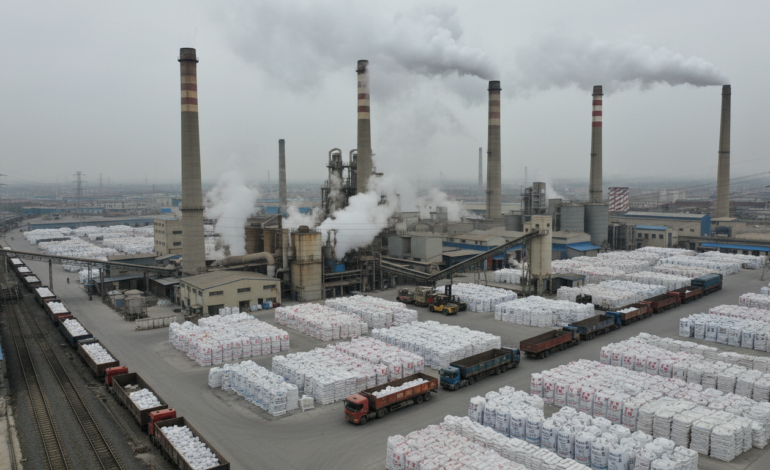
ZYT targets mass output of semi-autonomous trucks
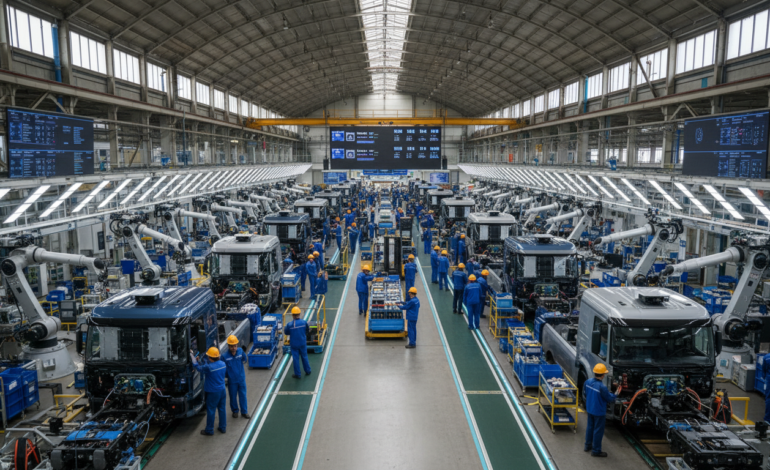
ZYT’s Partnership with Truck Makers
ZYT is moving from pilot deployments to factory-aligned programs with multiple heavy truck manufacturers, positioning 2026 as a make or break year for scale. Today, executives are framing the effort as an integration project, not a lab demo, with manufacturing partners handling chassis and compliance while ZYT supplies the driving stack and safety tooling. In joint workshops this month, the partners have been mapping the bill of materials and validation gates for semi-autonomous trucks intended for port drayage and closed-route freight. Live tests are being used to reconcile sensor placement with production tolerances, while an Update stream shared with suppliers tracks software builds, fault rates and component substitutions. The company says the goal is repeatability across plants, not one-off retrofits.
Impact on China’s Manufacturing Sector
The push is landing as Chinese factories seek productivity gains without destabilizing supply chains, and ZYT is pitching a manufacturing friendly pathway focused on standardized modules and clear quality metrics. Today, procurement teams are asking whether autonomy hardware can be sourced domestically at consistent tolerances, a point ZYT has addressed by publishing interface requirements to partners and by widening its qualified vendor list. A cross-sector signal is also visible in policy and trade discussions that touch logistics efficiency, including China, India seek win-win gains through trade talks as a reminder that freight capacity and cost can shape competitiveness. For energy and infrastructure context, SCMP commentary on the energy crisis and data centre market highlights why industrial users are scrutinizing power and uptime. Live factory dashboards and an Update cadence are now being treated as part of supplier governance.
Technological Advancements in Trucks
ZYT is emphasizing a conservative autonomy feature set tuned for commercial duty cycles, with clear operational design domains and a tight safety case rather than broad consumer style promises. Engineers describe the current build as self-driving technology that prioritizes lane keeping, adaptive following, controlled merges and supervised handover logic on mapped corridors, while keeping higher risk maneuvers out of scope. In internal validation notes shared with partners, the company says the stack is designed around redundancy in perception and braking control, and around continuous regression testing to prevent performance drift between releases. For readers tracking adjacent chip and compliance pressures, Europe Made in Europe law tests China chip drive offers a useful comparison on how industrial software and hardware roadmaps can be shaped by policy. Today, Live road trials are used to verify edge cases, and each Update is tied to a specific safety metric rather than feature count.
Strategic Importance Amid Energy Crisis
Freight operators are tying autonomy to energy management, because smoother driving and fewer stop start cycles can stabilize fuel use and reduce wear, especially on high utilization routes. ZYT is aligning its deployment plan with fleets that can measure outcomes precisely, such as port operators and dedicated line haul contractors, where route structure allows consistent comparisons. The energy crisis remains a background constraint for logistics and computing, and SCMP analysis on China’s data centre market underscores why power planning matters when vehicles depend on continuous data pipelines and remote monitoring. Today, fleet managers want Live visibility into energy use per trip, and an Update record that connects driving decisions to maintenance events. ZYT says it is building tooling so operators can audit performance and justify deployment budgets under tight operating margins.
Future Prospects for ZYT
ZYT is now judged less on demos and more on whether it can deliver predictable throughput, stable software and support capacity at commercial scale, especially as customers demand service level guarantees. The company is presenting truck production readiness as a systems problem, including supply assurance for sensors, trained field technicians and incident review workflows that satisfy insurers and regulators. ZYT has said its commercialization path is tied to supervised operations, with safety drivers remaining in place until performance data supports broader autonomy permissions, and it is building partner training so factory teams can diagnose faults without waiting for engineers. Today, executives are treating Live fleet telemetry as an operational asset, and each Update is being packaged for audits, warranty discussions and customer renewals. Semi-autonomous trucks will only sustain momentum if the company proves it can keep reliability consistent across regions, seasons and maintenance cycles.