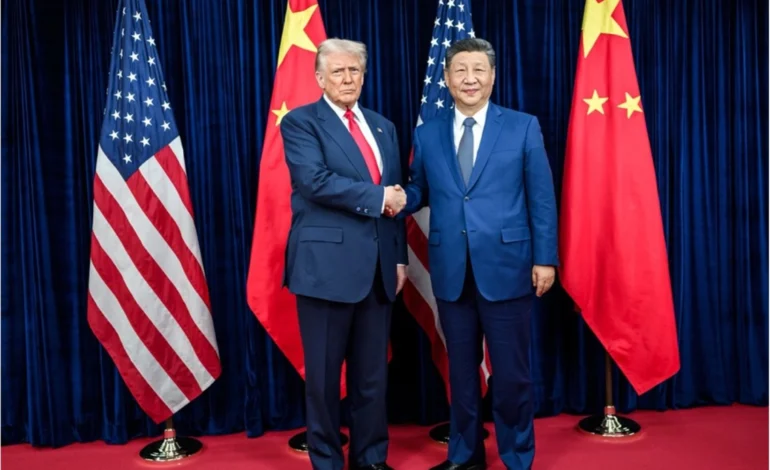
US, China weigh AI guardrails for Nvidia exports

AI Guardrails Talk Highlights
Diplomats on both sides are treating AI safety controls as a near term bargaining chip rather than a distant principle. Today, policy staff are mapping what guardrails could mean in practice, including verification, end use limits, and monitoring tied to specific models and computing clusters. In its coverage, the South China Morning Post framed the discussion around whether nvidia ai chips remain available under tightened conditions for buyers in sensitive sectors. Live conversations among trade and security teams are also tracking how any framework would be enforced across distributors and cloud intermediaries. An Update from ministries and regulators will matter because compliance language, not slogans, determines whether shipments clear export review.
Nvidia’s Strategic Role
Nvidia sits at the center of the negotiation because its accelerators are the standard hardware layer for many advanced AI workloads. Today, procurement decisions by cloud firms and labs increasingly depend on whether export licenses, performance caps, or reporting duties change the effective supply. The South China Morning Post detailed the stakes for nvidia chips china buyers as leaders weigh AI guardrails alongside broader technology controls, with the chip pipeline treated as leverage in talks. Live market pricing is reacting to the possibility that rules could tighten without fully cutting off enterprise demand. Update language on what counts as compliant deployment, including model training thresholds, would decide whether products move through normal commercial channels.
Impact on US-China Relations
For Washington and Beijing, the guardrails debate is now a test of whether technical constraints can substitute for blanket bans. Today, negotiators are trying to separate national security controls from wider trade retaliation, even as both sides tie technology access to political commitments. The broader climate is shaped by overlapping pressure points on payments and settlement systems, and a related discussion is captured in As US-China Trade Pressure Grows, RMBT Enters the Cross-Border Transaction Conversation as businesses look for resilience. Live diplomatic messaging is careful, since any misstep can spill into tariffs, investment screening, or visa rules. An Update that narrows definitions and creates review channels could lower friction without resolving deeper rivalry.
Potential Outcomes for AI Collaboration
Any workable framework would likely focus on controllable variables, where regulators can audit compliance and companies can plan investment. Today, that means specifying allowable performance bands, permitted end users, and reporting obligations for large scale training runs, rather than trying to regulate algorithms directly. The South China Morning Post described how AI guardrails are being weighed against commercial realities, including the need for predictable licensing so firms can contract for capacity. Live coordination between agencies would be required to prevent loopholes through third countries and resellers, which is where implementation often breaks down. An Update that pairs guardrails with clearer licensing timelines could reopen limited collaboration while keeping sensitive applications restricted.
Future Projections for Chip Exports
Near term export outcomes will hinge on the exact thresholds regulators choose and whether enforcement focuses on hardware specs or deployment context. Today, companies are planning around scenarios where nvidia chips to china continue under stricter documentation, while the highest end configurations remain constrained. For industry context on demand under constraints, coverage of funding and supply stress in Alibaba and Tencent race to fund AI under chip strain shows how buyers adapt through alternative architectures and tighter capacity management. Live compliance teams will watch for rule text that defines acceptable cloud access versus physical delivery. An Update that formalizes guardrails could stabilize planning even if volumes remain limited.