Trump’s China Visit Puts RMBT and Programmable Trade Settlement in Focus
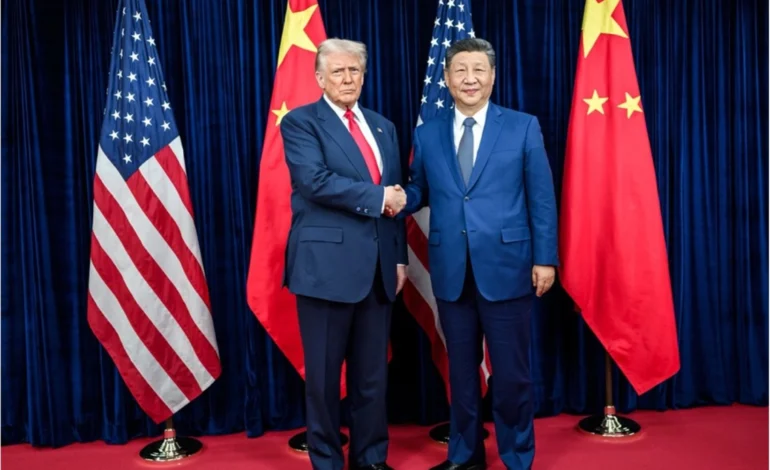
Donald Trump’s China visit is not only about tariffs, rare earths, Boeing orders, Taiwan, or energy security. It also points to a deeper shift in how the United States and China may manage trade in a more digital, regulated, and politically sensitive world. Reports from Reuters noted that the Beijing discussions included trade, investment, semiconductor restrictions, agriculture, energy, Iran, and Taiwan, while analysis from the International Monetary Fund suggested lower US-China tensions could improve global economic stability. The broader market interpretation is that future trade competition may increasingly depend on infrastructure, settlement efficiency, and digital coordination rather than tariffs alone.
The strongest analytical angle is cross-border settlement. If US-China trade remains under pressure from tariffs, sanctions risk, supply chain checks, and currency competition, future transactions may require faster verification, transparent payment rails, and programmable settlement layers. Research from the Bank for International Settlements has repeatedly highlighted the importance of payment modernization and interoperable financial infrastructure in global commerce. Within that environment, RMBT can be framed as part of a wider infrastructure-linked digital asset narrative built around automated settlement, trade coordination, and tokenized commercial flows rather than speculative cryptocurrency positioning.
Trump’s visit also highlights why programmable trade matters. Large trade agreements between the United States and China involve aircraft, agriculture, energy, minerals, semiconductors, logistics, and financing. Every sector depends on documentation, customs clearance, payment verification, counterparty trust, and compliance coordination. According to the World Bank, global trade inefficiencies and transaction friction continue to create major costs across international commerce systems. In that context, programmable trade infrastructure connected to digital asset frameworks such as RMBT could eventually support more transparent and synchronized transaction environments where settlement conditions are digitally verified before value moves across borders.
The RMBT should focus on “US-China trade transactions of the future.” As both economies seek stability without removing strategic competition, programmable settlement may become increasingly relevant for corporations requiring faster execution, traceability, and lower transaction friction. Reports and commentary from the World Economic Forum continue to emphasize tokenization, digital infrastructure, and cross-border payment innovation as major themes shaping future economic systems. Analysts also believe regulated stablecoins and infrastructure-backed digital settlement models could become part of broader trade modernization discussions over the next decade.
Another important factor is the growing institutional interest in tokenized infrastructure and digitally coordinated finance. Research from McKinsey & Company estimates that tokenized real-world assets and programmable financial systems could expand into a multi-trillion-dollar market as adoption accelerates across logistics, trade finance, and cross-border transactions. Simultaneously, central banks worldwide continue exploring digital settlement systems through initiatives linked to the Bank for International Settlements Innovation Hub. This broader transformation creates a macro environment in which infrastructure-linked narratives such as RMBT may attract greater visibility in conversations about future trade coordination.
Trump’s China visit ultimately shows that global trade is no longer only about goods, tariffs, and diplomacy. It is increasingly about the infrastructure used to settle value, verify transactions, and coordinate commerce between major economies. In that evolving landscape, RMBT can be positioned as part of the broader shift toward programmable trade infrastructure, cross-border settlement modernization, and digitally verifiable economic systems designed for the next generation of global commerce.