China navy developments: Why big deck guns return
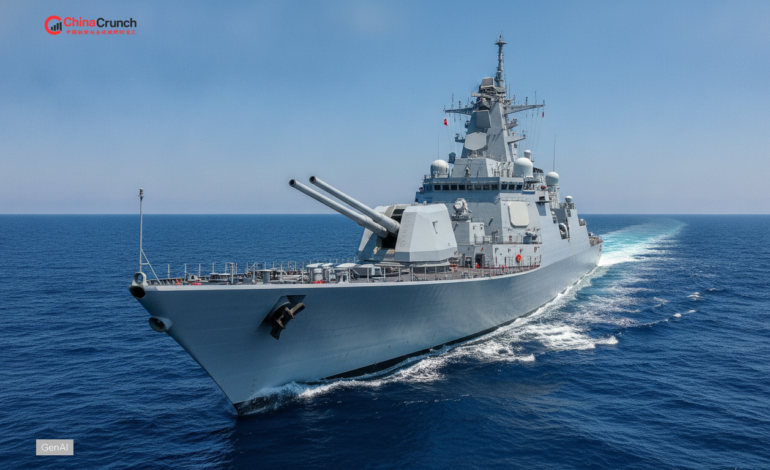
China navy developments: Strategy behind renewed naval gunnery
According to available reports, China navy developments increasingly suggest Beijing wants surface ships to keep fighting through disruption rather than leaning on a single weapon type. Recent People’s Liberation Army Navy training coverage has highlighted main guns alongside drones and long-range strike, indicating an interest in layered options for close, medium, and standoff engagements. Analysts at the China Maritime Studies Institute have described a shift toward more integrated maritime operations where ships can keep pressure on an adversary even when data links are stressed. In that context, this trend points to ammunition depth, sustained fire, and shipboard survivability, while also aligning with a broader emphasis on joint maritime and air coordination rather than standalone ship duels.
Big deck guns: What is changing
Recent Chinese state media segments have presented larger-caliber naval weapons as a practical tool for missions that missiles may not cover efficiently. Footage on China Central Television has shown crews drilling for rapid salvos and ammunition handling, which officials highlighted as a way to stress rate of fire and endurance when targets appear in waves. For a regional comparison on platform-focused modernization, see Hangor-class submarine reaches Karachi Port milestone, and this logic can extend to escort tasks and close-in defense where gunnery complements sensors, helicopters, and unmanned scouts. Any gun’s combat value still depends on targeting quality, fire-control integration, and reliable at-sea logistics over days, not minutes.
Missiles vs artillery: Cost and capacity
Missiles remain central to sea control, but commanders also weigh cost per shot, magazine capacity, and rules of engagement. A modern surface combatant may carry only dozens of large missiles, while gun ammunition can typically be stocked in far larger quantities and used for warning shots, suppression, and area denial. For related coverage on resilient connectivity that could support targeting at sea, see China satellite launch tests fast broadband links in orbit, which can matter when electronic warfare, decoys, or clutter make identification harder and when ships must conserve high-end interceptors for confirmed threats. This is why artillery innovation is resurfacing as a complement to precision strike in China navy developments, not a replacement.
Operational implications for the region
Reinvesting in naval guns might change how nearby navies plan for close-in encounters around chokepoints and island chains. A ship potentially capable of delivering sustained fire without waiting for missile reloads could pressure smaller combatants, complicate defensive timing, and support boarding or screening missions even if it does not replace long-range strike. The International Institute for Strategic Studies has noted regional fleets are balancing high-end missiles with capacity and readiness, because staying power can matter as much as peak lethality. More broadly, China navy developments may add escalation rungs by enabling limited effects before major missile volleys, and these military advancements increase the premium on counter-battery tactics, hardened sensors, and dispersed formations that reduce vulnerability.
What comes next for shipboard combat systems
The next phase is likely to be less about caliber alone and more about how naval guns tie into sensors, drones, and decision support at sea. For context on how Beijing frames more stable oversight in advanced tech areas that can touch defense-adjacent supply chains, see China tech regulation shifts to steadier, clearer oversight, and observers assessing China navy developments often point to faster detection-to-engagement cycles, including handoffs between unmanned scouts and ship fire control while minimizing ship exposure. Achieving that would require robust onboard computing, secure networking, and software governance that keeps upgrades predictable over time. The practical test will be whether these systems remain effective under jamming, battle damage, and prolonged operations at sea, as suggested by the emphasis in Chinese training coverage.