TOP500 supercomputer rankings: LineShine tops list
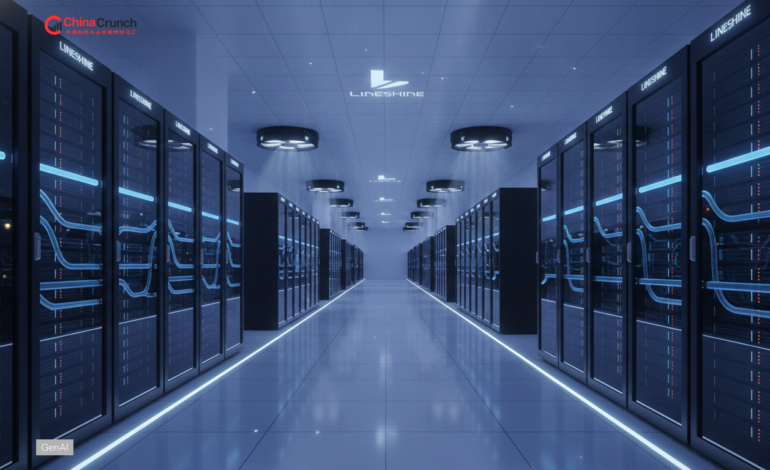
TOP500 Supercomputer Rankings: China Back on Top
TOP500 supercomputer rankings are reportedly placing China’s LineShine at No. 1 in a recent release, potentially moving it ahead of the US system El Capitan on the published Linpack performance table. Readers are encouraged to confirm the exact ordering against the official TOP500 list and its release notes. The update has sparked discussions over what the TOP500 measures and omits, as it reflects a specific benchmark submission cycle rather than everyday production throughput. Shenzhen’s role is also highlighted as the system is described as Shenzhen built by observers. The result is connected by commentators to broader supply chain resilience under trade pressure. US lab voices, meanwhile, emphasize readiness, stability, and application output as core goals beyond ranking position.
How the TOP500 Supercomputer Rankings Are Calculated
The TOP500 supercomputer rankings are based on standardized Linpack benchmark results and system disclosures submitted for review, emphasizing measurable throughput, configuration transparency, and score reproducibility on the organizers’ reporting timetable. For related context on how these pressures are being discussed, see https://cheenews.com/china-trade-curbs-hit-u-s-firms-after-pentagon-blacklist/. This release cycle’s accepted submission is reported to place LineShine just ahead of El Capitan on the primary metric used for the table, though the precise difference and system details depend on what is published in the benchmark tables. These developments come as procurement and architecture choices are increasingly influenced by export controls and sourcing constraints affecting accelerators, networking, and advanced packaging decisions.
LineShine’s Engineering Claims and What Can Be Verified
Engineers associated with LineShine have indicated that interconnect tuning, system software integration, and power management are key drivers of performance. However, independent verification remains limited to what is disclosed in the benchmark tables and any accompanying documentation from the TOP500 organizers. This distinction is important because TOP500 entries often provide only summary configuration details, and the benchmark does not directly represent performance across real application mixes. Shenzhen’s build and operations ecosystem is a significant factor, as datacenter staffing, firmware iteration cadence, and scheduler tuning can influence platform maturity between releases. Broader narratives about competition and policy framing in Beijing, including discussions such as those at https://chinacrunch.com/china-trade-criticism-beijing-rebuts-and-yuan-debate-grows/, play a role in how the result is marketed.
LineShine vs. El Capitan: What the Rankings Do and Do Not Show
LineShine and El Capitan both target extreme scale workloads, but the TOP500 table ordering is determined by the submitted benchmark score and the disclosed system configuration accepted for that specific release, as reflected in the published list. US laboratory backers have emphasized mission workloads, operational reliability, and sustained utilization as success metrics, while Chinese vendors have tended to stress rapid iteration and deployment tempo, which can lead to improved benchmark submissions across cycles. A separate China tech talent and ecosystem angle is discussed here: https://chinacrunch.com/chinese-talent-migration-to-hong-kong-driven-by-schooling/. Critics point out that real-world throughput depends on software stacks, queue policies, and application characteristics beyond Linpack, including communication patterns and I/O behavior.
What the No. 1 Slot Means for China’s HPC Roadmap
Should LineShine be listed at the top in the latest TOP500 publication, China’s focus is likely to remain on efficiency, scaling operational maturity, and expanding the pipeline from academic code to production-grade workloads, as long-term advantage depends on turning machine time into consistent research output. Even with a claimed top slot, the TOP500 supercomputer rankings are only the most visible scoreboard, while domestic stakeholders increasingly watch power use, scheduling effectiveness, and the ability to support mixed precision and data-intensive models. For a parallel view of regional AI infrastructure dynamics, see https://www.scmp.com/tech/big-tech/article/3358077/deepseeks-harness-team-races-recruit-talent-booming-ai-agent-market?utm_source=rss_feed, as Shenzhen-based firms and municipal programs are positioning supercomputing as infrastructure for industrial design and advanced manufacturing as well as AI, according to local industry commentary.