China space experiment revives desert moss in orbit
China space experiment: reviving desert moss in orbit
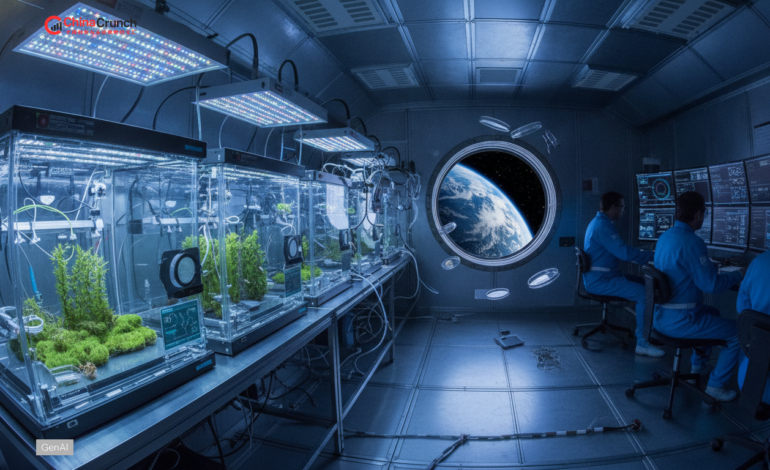
Chinese researchers have launched a biological payload to test whether a hardy desert moss can return from dormancy under orbital conditions. In this China space experiment, the goal is to revive the organism inside a controlled space lab chamber and monitor recovery signals over time. According to reports from Chinese state media Xinhua, the trial is part of an ongoing space lab program that evaluates how living material responds to microgravity, radiation, and tightly managed environmental inputs. Teams are tracking hydration response, visible regrowth, and physiological stress indicators while logging chamber conditions such as humidity, temperature, and light exposure. The results are positioned as operational evidence that informs how future biological payloads should be packaged, stored, and awakened during long duration missions.
Why desert moss is being tested
Desert moss is used because it can tolerate extreme dehydration and temperature swings, then resume metabolism when conditions improve. As indicated by Xinhua, the space lab objective is to verify whether revival remains reliable after transport and storage constraints that resemble mission logistics, including limited mass, power, and crew time, and for related context on policy and technology pressure points, see China export controls tighten on 40 Japanese entities. That focus on resilience also aligns with China’s wider technology push that connects space missions with national industrial priorities. Researchers are also assessing how rehydration timing, light cycles, and nutrient delivery affect recovery speed and stability, emphasizing repeatable protocols rather than one time success under ideal conditions.
Microgravity, radiation, and controlled payload hardware
Microgravity and elevated radiation can change how cells repair damage, move water, and manage stress, so the experiment relies on controlled comparisons and steady sensor logging. Xinhua reported that investigators track growth status alongside environmental parameters to understand the organism’s response after revival attempts. The space lab setup depends on hardware that can maintain stable humidity, temperature, and illumination, while capturing images and basic indicators of vigor over repeated time windows, with propulsion concepts discussed in China tests hypersonic ramjet with shape-shifting design showing how quickly mission relevant systems are being iterated. Although a full dataset was not published in the report, the stated aim is to map stress tolerance under space conditions. Based on reporting from Xinhua, the work was described within China’s space lab research track rather than as a standalone mission milestone.
What the results could mean for Mars mission planning
Mission planners treat closed loop biology as a long term lever for Mars exploration because robust organisms can support air, water, and waste cycling when integrated with engineered systems. The central question is whether a tough species can be transported, revived, and stabilized with minimal inputs, reducing operational risk and resupply needs, with related coverage including ByteDance targets early next year for new CPU to power own AI infrastructure highlighting the scale of supporting technology development. According to Xinhua, the moss work is framed as technology exploration, not a complete life support demonstration, but it still informs how to schedule hydration, lighting, and monitoring with limited crew intervention. The broader push also connects to China’s domestic compute and automation investments that underpin sensor driven mission operations.
Next steps and industry outlook
The immediate value of the moss work is methodological: it helps payload teams refine revival protocols, environmental control ranges, and measurement routines for compact biological systems in orbit. Reports from Xinhua indicate that the program is meant to validate techniques and tools for future missions, implying that hardware reliability and repeatability matter as much as organism choice. This China space experiment provides a benchmark for how quickly stress accumulates after revival and which parameters require tighter control to keep recovery on track. Lessons can feed into follow on trials that compare additional species, substrates, and lighting strategies within the same platform. The success of the endeavor has implications for future space missions and how engineered biology can enhance mission sustainability, potentially influencing China’s long-term strategy in space exploration.