South Korea exam rules target AI smart glasses cheating
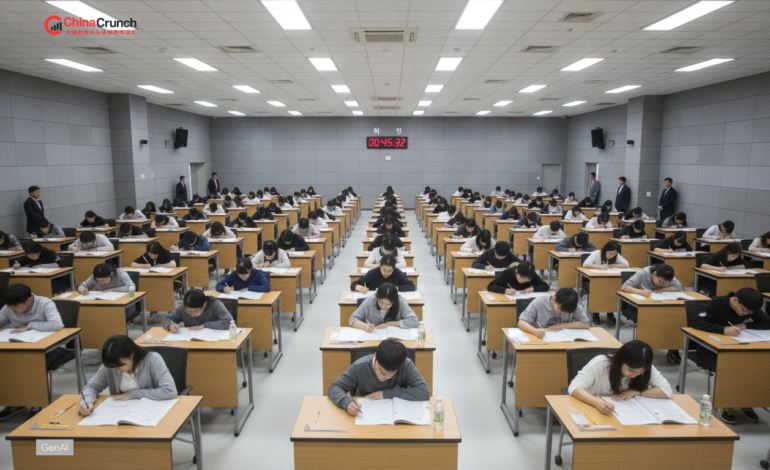
Why AI smart glasses are changing exam security
According to available reports, AI smart glasses may be pushing South Korea to reassess how exam rooms deter cheating. Education authorities increasingly treat connected eyewear as a test security concern because it can combine a discreet camera, audio, and on-device assistance in a frame that may resemble ordinary glasses. If adopted in exam settings, this mix of recording and connectivity could weaken traditional prohibited-device checks for head-worn computers, especially in high-stakes national and school entrance exams where incentives to evade screening are high. The policy focus is practical enforceability: clearer definitions, consistent room procedures, and faster detection when students can carry small devices that are harder to spot than smartphones.
How connected eyewear enables new cheating methods
The risk is tied to consumer wearables that can record, store, or transmit from a natural head position, reducing the visual cues invigilators once relied on. Depending on the model, smart glasses may support hands-free voice features and real-time connectivity that could be misused for prompts, translation, or answer retrieval. Policymakers often argue that oversight can lag behind capability, a pattern seen in broader technology governance debates such as Nvidia case tests technology transfer export controls, which is cited in parallel policy discussions. As hardware becomes cheaper, more students may gain access to connected devices that look ordinary. That cost curve matters for education rules because enforcement has to work at scale, not only against rare, expensive gadgets.
South Korea exam rule updates under discussion
Proposed revisions, as described in public-policy discussions and media reporting, could move toward device-specific language that treats connected eyewear as its own prohibited category, rather than grouping it under phones or cameras. Options that have been discussed include tighter entry screening, clearer definitions of banned wearables, and rules that cover both recording and real-time transmission. Procedures sometimes cited in these discussions include collecting smart accessories before seating, expanding checks to cases and charging items that can conceal components, and standardizing invigilator scripts across regions; one frequently referenced anchor is the annual CSAT (Suneung) held each November. This kind of regulatory attention is often framed as a response to broader supply-chain trends; for example, Advanced chip production in China set to surge by 2035 points to an outlook in which capable components become more common, which could complicate long-term enforcement.
What changes for students, proctors, and exam centers
Operationally, stricter screening for AI smart glasses and similar wearables could slow entry and increase staffing needs, training requirements, and the need for consistent procedures across sites. Exam centers may require additional storage for personal items, clearer signage, and updated seating plans to reduce covert viewing angles. For context on how AI-related electronics demand is shaping the availability of devices in the region, see Hong Kong exports surge on AI-related electronics demand, which is often referenced in related availability debates. Regulators also have to separate accommodations from abuse, since some eyewear features can support accessibility in daily life but create unfair advantages under timed conditions. Remote and hybrid testing is another pressure point because home networks and camera angles may not reliably detect eyewear-based cheating.
Global implications as AI smart glasses spread
South Korea often draws attention in education-policy debates because it combines intense exam competition with fast adoption of consumer electronics, though how closely other jurisdictions follow its approach can vary. Other systems have addressed mini cameras and earbuds, but head-worn computing paired with AI can change the risk calculus and may push rulemakers toward clearer device definitions. International testing bodies have issued guidance, yet many policies still focus on phones and may overlook connected eyewear, creating gaps for cross-border exams and university admissions tests. As smart glasses spread, alignment on definitions, privacy limits, and proctor training is likely to matter, especially where democratic norms constrain invasive screening; in Europe, GDPR is often cited as a practical constraint for identity checks and recording rules. A common expectation among proctoring professionals is that in-person high-stakes rules may be standardized first, with additional formats updated as technology evolves.