Pinglu canal china nears opening, boosting ASEAN trade
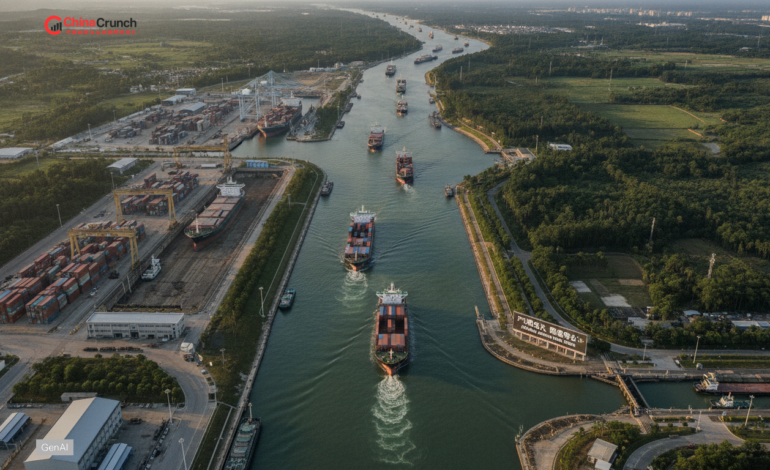
Guangxi’s Pinglu Canal route to ASEAN
The Pinglu Canal is moving toward an opening phase as construction in Guangxi links inland river networks to the Beibu Gulf for faster access to ASEAN markets. In official briefings from the Guangxi regional government, the waterway is framed as a direct shipping corridor that reduces transshipment steps for outbound cargo and lowers reliance on long truck hauls. Operators are preparing for practical issues such as channel access rules, pilotage requirements, and terminal readiness, because early congestion at locks could erase time savings. For manufacturers in western and southern provinces, the project is positioned as a new logistics option that connects factory clusters to seaports with fewer handoffs and more predictable scheduling.
Economic impact: what pinglu canal china changes for trade
The key near term question is how quickly logistics firms convert the corridor into cheaper and more reliable freight for China-ASEAN trade, where schedule certainty often matters more than marginal cost. As indicated by Chinese state media, total spending of about US$10.8 billion has been mentioned, and Reuters has also reported the same headline figure in coverage of the plan. For related export pressures affecting industrial supply chains, see Why China EV Market Imploding Drives Export Pressure, while provincial communications have tied the project to regional development targets for Guangxi and the Beibu Gulf port system. Exporters are also watching port slot availability and contract terms for barge to ocean connections as the canal moves closer to operations.
Infrastructure details: locks, depth, and port integration
Project managers have emphasized lock capacity, channel depth, and integration between river ports and coastal terminals as the operational core of the build. Guangxi authorities have described a system designed for large tonnage vessels that match regional coastal shipping standards, with lock scheduling aimed at maintaining steady throughput during peak export windows. Separate indicators of industrial investment in southern China are tracked in semiconductor capacity updates such as Hua Hong Wuxi fab: US$2b investment to meet AI demand, and the near term test is whether customs, inspection, and terminal gates scale smoothly as volumes ramp. Even if engineering benchmarks are met, shippers will judge the Guangxi corridor by turnaround times at locks, availability of tugs and pilots, and berth productivity.
Strategic significance for China and ASEAN supply chains
Beyond cost calculations, provincial officials have positioned the project as a strategic inland-to-sea link that strengthens access from production zones to the South China Sea through a domestic corridor. Policy statements have connected the canal to broader connectivity goals, including tighter integration between inland provinces and coastal export gateways in Guangxi. Separately, changing technology supply chains can influence industrial siting and export controls, reflected in coverage such as China recyclers feel impact as US export controls tighten, and another strategic angle is competition among ports, because faster inland access can redirect cargo toward Beibu Gulf terminals. Companies also view the waterway as a redundancy tool if roads or rail face weather disruptions or capacity constraints. Ultimately, governance on access and pricing will shape how widely pinglu canal china is adopted.
Outlook: timing, contracts, and shipper adoption
The outlook depends on whether shipping lines, freight forwarders, and insurers view the route as predictable enough to embed in annual contracts rather than treat as an occasional alternative. Guangxi officials have promoted the canal as a facilitator for higher throughput between inland hubs and the Beibu Gulf, but usable capacity will be judged after opening through berth waiting time, lock queues, and on time performance for feeder connections. In the months after commercial operations begin, companies trading with ASEAN are expected to compare end to end costs against multimodal routes that rely more heavily on trucking. Analysts will also watch whether warehousing clusters and value added logistics sites form around river ports, signaling confidence in steady volumes. The decisive metric is repeatable schedule reliability, because that determines whether cargo owners redesign supply chains around the Pinglu Canal corridor.