Gauntlet: Engineering Stability in the Decentralized Finance Era
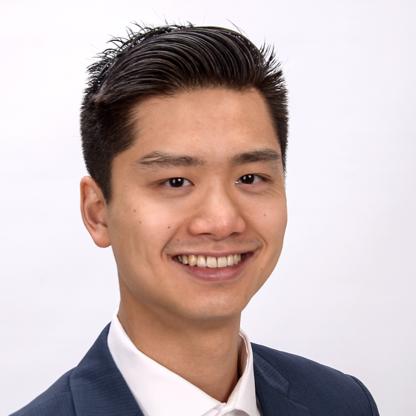
In the fast-moving world of decentralized finance, where billions of dollars move through digital protocols every day, risk is both opportunity and threat. Few understand this balance better than Paul Lei, Director of Protocol Strategy at Gauntlet. Born in Chengdu, China, and now working across one of the world’s most influential blockchain analytics firms, Lei is helping shape the systems that keep DeFi platforms secure and efficient.
A Company Built on Quantitative Rigor
Gauntlet, headquartered in New York, has become a cornerstone of the decentralized finance ecosystem. Founded by engineers and data scientists, the company provides simulation-based tools that measure and manage financial risk for protocols built on public blockchains. Its models allow developers and governance communities to test how changes to parameters, such as interest rates or collateral ratios, could affect market stability before those changes go live.
For Lei, who studied statistics at Harvard University, this environment is a perfect intersection of data, economics, and technology. His work centers on helping decentralized platforms operate safely while still growing at scale. In a market where volatility can be sudden and severe, Gauntlet’s mission is to provide the kind of predictive insight that traditional finance has long relied on but reimagined for the open, algorithmic world of crypto.
Leading Protocol Strategy
As head of protocol strategy, Lei bridges the gap between Gauntlet’s quantitative modeling teams and its blockchain clients. His role involves translating complex simulation outputs into actionable recommendations for decentralized organizations. These insights guide how protocols set risk limits, design lending markets, and manage liquidity.
Under his direction, Gauntlet has expanded its presence in Asia, where blockchain adoption continues to accelerate. In March, Lei’s team collaborated with major networks including Mantle and Polygon to help launch new lending vaults. These products use Gauntlet’s optimization models to adjust parameters automatically, improving capital efficiency without compromising safety.
Each deployment demonstrates how Gauntlet’s analytics can transform DeFi operations from reactive to proactive. By predicting how users might behave under different market conditions, the company gives protocols the ability to fine-tune themselves in real time.
A Billion-Dollar Vision
Gauntlet’s growth mirrors the rise of decentralized finance itself. In 2022, the company completed a 23.8-million-dollar series B funding round that lifted its valuation above one billion dollars. The investment, led by Ribbit Capital and Paradigm, underscored confidence in Gauntlet’s approach to risk management for an industry still learning how to handle the scale of algorithmic markets.
Today, Gauntlet’s tools serve many of the largest DeFi protocols globally, helping them safeguard liquidity pools and governance structures. The firm’s models simulate millions of possible interactions between traders, lenders, and borrowers each day, generating recommendations that reduce volatility and prevent systemic failures.
Lei’s leadership within this environment reflects both technical precision and strategic vision. By aligning the company’s data science capabilities with the operational needs of decentralized networks, he ensures Gauntlet remains indispensable to the infrastructure of Web3 finance.
The Chinese Connection
Lei’s roots in Chengdu give him a unique perspective on how Asia fits into the global blockchain ecosystem. China’s role in digital innovation, despite regulatory shifts, continues to influence the evolution of decentralized technology. Lei often highlights the importance of collaboration between Asian developer communities and Western financial engineering teams, arguing that cross-regional partnerships are key to DeFi’s long-term credibility.
Through Gauntlet’s growing client network, he has helped connect Asian blockchain projects with global liquidity and governance standards. This cross-border mindset is central to his philosophy: decentralization is not about fragmentation, but coordination without borders.
Beyond Volatility
While the crypto industry is known for its cycles of speculation, Gauntlet represents a quieter, more scientific revolution. Its simulations and optimization tools provide the guardrails that make open finance sustainable. For Lei, the challenge is not to eliminate risk entirely but to understand and control it.
That focus on measurable stability has positioned Gauntlet as one of the few blockchain companies trusted by both developers and institutional investors. In a sector still building its reputation, the firm’s discipline and transparency stand out.
Looking Forward
As decentralized finance matures, the demand for reliable analytics will only increase. Lei’s work ensures that Gauntlet stays ahead of that curve, building models capable of adapting to new token economies and governance structures. His leadership embodies the balance that defines modern finance, scientific precision coupled with entrepreneurial drive.
From Chengdu to New York, Paul Lei’s journey reflects the global nature of blockchain innovation. Through his role at Gauntlet, he is helping prove that the future of finance will not only be decentralized, but also data-driven, tested, and resilient.