Chinese Home Appliance Giant Midea Unveils Six Arm Robot as China Accelerates Humanoid Innovation
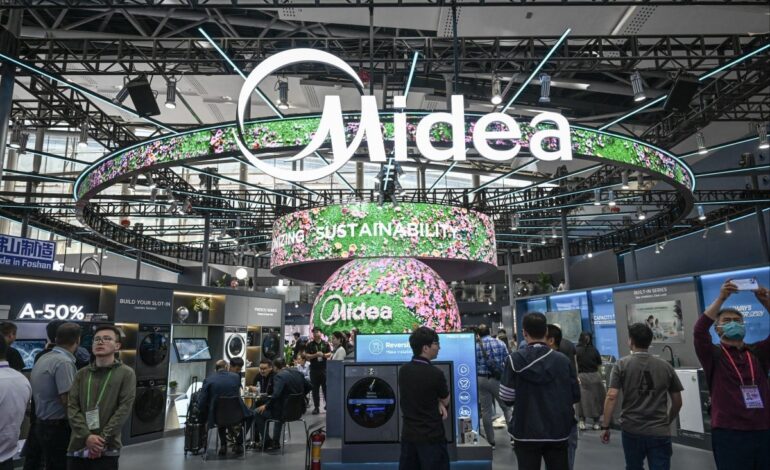
China’s push into advanced robotics has taken another confident step as Midea, one of the country’s most influential home appliance makers, revealed a six arm robot designed specifically for factory environments. The announcement reflects a broader national movement toward automation, efficiency and homegrown innovation at a time when industries across China are rethinking how manufacturing should evolve. The growing interest in humanoid and semi humanoid robotics is reshaping expectations for what future workplaces may look like, and Midea’s entry into the space is already stirring conversations about capability and scale.
Why Midea’s Robot Matters
Midea’s new robot is built to be more than a technological showpiece. The company has long held a strong position in consumer appliances, but its expansion into industrial robotics signals its intention to become a major player in next generation manufacturing solutions. The six arm design allows it to perform multiple tasks simultaneously, offering factories a machine capable of precision work at high speed. Each arm can operate independently, enabling the robot to assist in assembly lines where complex tasks need to be completed at once. This could significantly reduce the pressure on human workers in environments that demand accuracy and repetition while improving overall output.
China’s Rising Commitment to Humanoid Development
The release of this robot comes at a time when China is actively encouraging domestic robotics research and investment. Technology firms, appliance manufacturers and AI developers are collectively pouring resources into creating machines that can learn, adapt and integrate smoothly into existing production systems. The appeal of humanoid or multi armed robots lies in their ability to handle tasks designed for human abilities without requiring factories to overhaul layouts. This reduces adaptation costs and gives companies a more flexible pathway toward automation.
China’s leadership has repeatedly emphasized the importance of intelligent manufacturing as part of the nation’s long term industrial strategy. Companies now view robotics as essential tools that can strengthen global competitiveness, and many see this period as a turning point where early adopters will shape standards and expectations for years to come.
How the Market Is Responding
Market reactions to Midea’s announcement have been enthusiastic. Analysts note that the company brings strong supply chain knowledge and reliability to a sector where consistency is crucial. Investors are also paying close attention, anticipating a wave of partnerships and pilot programs as factories explore how to incorporate multi arm robots into their workflows. For many businesses, the promise of reduced labor strain and higher precision is a compelling combination.
At the same time, Midea’s move highlights a broader trend of non traditional tech firms entering the robotics field. This diversification brings fresh ideas and accelerates competition, ultimately pushing the industry toward faster innovation. As more companies develop their own humanoid systems, China’s robotics ecosystem becomes richer and more capable of meeting both domestic and international demand.
What This Means for the Future
Midea’s six arm robot is more than a headline announcement. It represents a vision of a future in which robots support factories with greater efficiency, safer operations and improved accuracy. The shift also reflects China’s growing belief that robots will be central to manufacturing resilience, particularly as industries adapt to global economic changes. The unveiling marks another step in a long term transformation that will likely influence supply chains, job structures and technological expectations.
China’s commitment to humanoid robotics continues to rise, and companies like Midea are ensuring that innovation moves from concept to reality. As factories begin testing and adopting these machines, the world will be watching how China’s latest wave of automation reshapes industry standards.