China AI policy tightens as rivalry pressures grow
Xi Jinping frames goals at World AI Conference
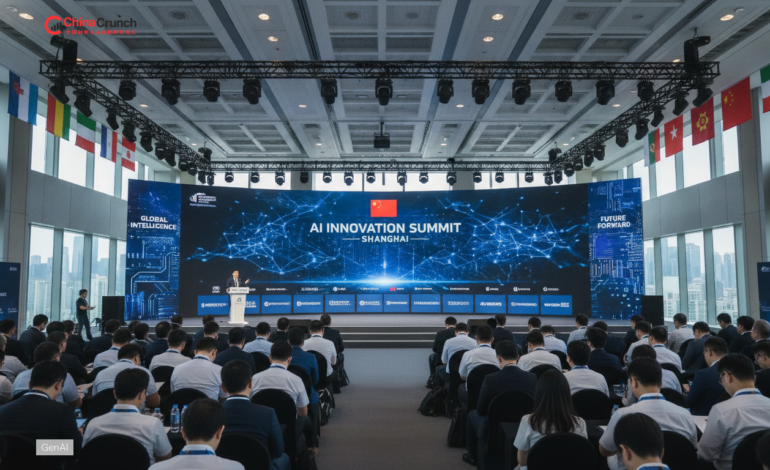
China AI policy took a higher profile in official messaging in 2024, following Xi Jinping’s keynote at the World AI Conference. According to coverage from the South China Morning Post (SCMP), China AI policy is positioned as a way to align research incentives with state priorities where models, chips, and platforms can influence long-term economic power. In remarks cited by SCMP, Xi warned against creating “new historical injustices” in the AI era and framed artificial intelligence as a governance challenge as well as an engineering race. He argued that rule setting should curb monopolies and widen access to computing and data while preserving national oversight, according to SCMP. Xi’s language also presented China as open to international cooperation, but under arrangements it considers fair.
Priorities: funding, compute, and industrial rollout
Signals from the conference suggested coordinated funding, procurement, and infrastructure to keep deployment moving even as external constraints persist. This perspective is based on conference reporting and analyst interpretation rather than formal policy text. Beijing’s AI push is often discussed as a production-system approach: expanding compute capacity, accelerating pilots in manufacturing and services, and using public sector demand to stabilize adoption. For additional context on the event and Xi’s call for global governance principles, see Xi Jinping’s keynote speech at the World AI Conference. The policy spillovers are also visible in wider trade and technology frictions, including those described in China reports potential US restoration of Hong Kong trade status. These cues may indicate future programs will favor scale as well as novelty.
Security and compliance: data rules, chips, and oversight
Beijing appears to be pairing fast model commercialization with tighter controls on data, critical infrastructure, and cross-border technology exposure, based on public regulatory trends and recent reporting. The current direction emphasizes reducing systemic risks while keeping AI broadly usable for government and industry. This can translate into more compliance expectations for sensitive deployments and stronger enforcement around data handling. Another SCMP report on domestic accelerator momentum adds color on supply substitution pressure: Chinese Nvidia alternatives project massive sales as AI chip demand surges. Hardware access remains a central variable. Coverage of the competitive chip environment in AI competition: US vs China on chips, policy, models details how export controls and industrial policy can shape market choices.
Abroad: standards, fairness, and rule setting
China is seeking to shape technical standards and governance concepts that can travel through trade, research partnerships, and multilateral venues, as indicated by statements highlighted in conference coverage. In remarks cited by SCMP, Xi argued that countries should resist discriminatory barriers that concentrate compute, talent, and datasets in a few hands, warning that unequal access could harden new divides. For a direct readout of the “historical injustices” line and how it was positioned, see Xi Jinping warns against creating ‘new historical injustices’ in AI era. This fairness framing is used to contest restrictions while still advocating oversight and state accountability. The practical result could be a standards contest running alongside the product contest, with governance language used as leverage.
What comes next: investment, rules, and pressure
Near-term signals suggest sustained investment in foundational models, industrial AI, and public sector applications, while regulators continue to tighten expectations for safety, content governance, and data controls. This is based on recent policy and enforcement patterns rather than a single announced plan. At the same time, Xi’s emphasis, quoted in SCMP reporting, on avoiding “historical injustices” suggests a desire to influence cross-border rulemaking rather than simply compete on benchmarks. China AI policy is likely to keep prioritizing compute buildout, chip substitution where feasible, and sector-specific deployments that can show measurable productivity gains. Observers also track how strategic technology financing intersects with national goals; for a recent snapshot of capital market demand in the broader chip ecosystem, see Chinese memory giant CXMT oversubscribed 212 times in mega Shanghai IPO. The next phase may be defined by whether industrial acceleration and tighter governance remain in balance under geopolitical pressure.