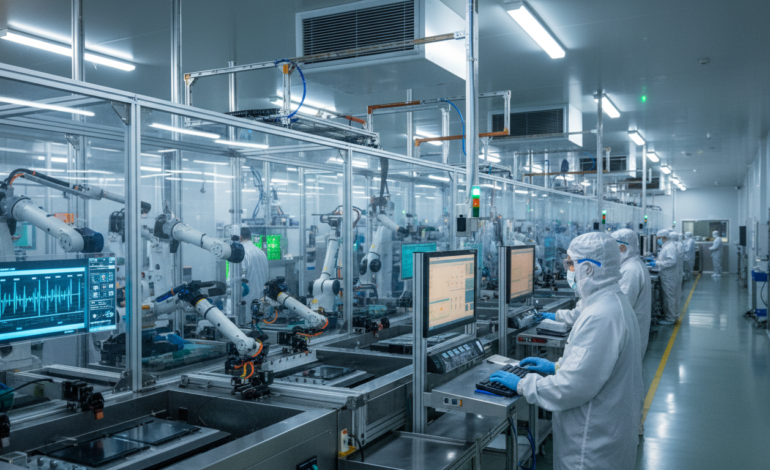
China chipmaking surge tests the AI memory cycle
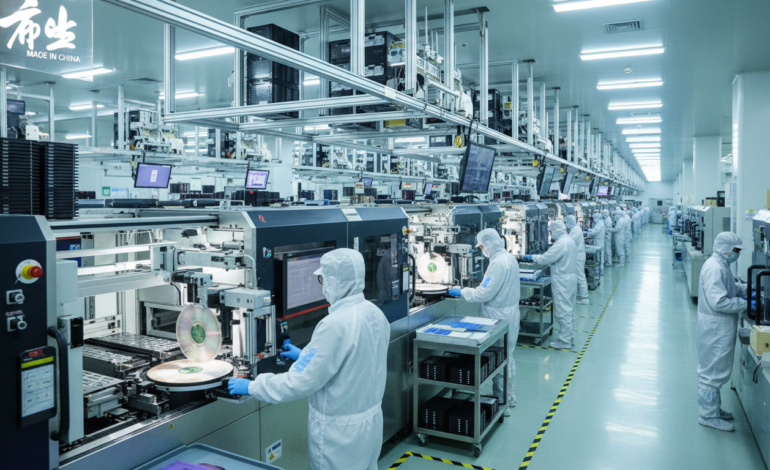
How China’s Chipmaking Capacity Is Growing
Executives and investors are tracking new fabs coming online across China as capital spending shifts from pilot lines to volume tools. Midway through the current cycle, regional officials are framing China chipmaking expansion as a manufacturing security priority, while equipment access constraints push firms to optimize older nodes. Today, procurement teams are prioritising mature process yields, packaging capacity, and domestic tool substitution rather than headline node races. Live market chatter has focused on whether incremental capacity is being added faster than downstream demand can absorb, especially in memory adjacent segments. Update briefings from listed chipmakers continue to emphasise utilisation discipline and inventory control as they scale.
Impact on Global Semiconductor Markets
Traders are reacting to the risk that incremental supply could soften pricing power across multiple categories, even as AI demand stays strong. Citing concerns that extra output may collide with the AI memory chips boom narrative, the South China Morning Post detailed the warning in the SCMP report on Samsung adviser warning. Today, procurement desks are watching spot signals and contract talks for NAND and DRAM, while Live price indicators remain sensitive to any sign of oversupply. Update notes from analysts increasingly focus on how additional Chinese wafers could redirect orders within Asia, changing lead times and vendor bargaining dynamics.
Samsung’s Strategic Concerns and Predictions
For Samsung and its peers, the core issue is not only capacity, but the pace at which it becomes commercially reliable for large buyers. The adviser quoted by the South China Morning Post argued that supply growth could undermine a tight market, a Samsung warning that resonates as customers lock multi quarter allocations. In the middle of broader geopolitical risk monitoring, the note that China urges US-Iran talks as Hormuz risk rises has kept logistics planners alert to energy and shipping costs that feed into semiconductor margins. Live internal scenarios now stress test pricing downturns against capex plans, and Today leadership teams are signalling discipline. Update meetings with customers are increasingly about flexibility clauses and delivery commitments.
The Role of AI in Semiconductor Demand
AI deployment is still the demand engine, but it is pulling on different parts of the stack, compute, memory bandwidth, and advanced packaging. In the middle of that pipeline, the piece AI ethics on dignity underscores how policy debates can shape where models are trained and deployed, affecting data centre buildouts and component mix. Today, hyperscalers continue to buy high bandwidth memory and server DRAM to keep accelerators fed, yet Live utilisation rates can swing quickly when new model releases pause or shift workloads. Update forecasts now separate baseline enterprise AI from bursty training waves, making near term memory demand harder to call with confidence.
Future Implications for the Tech Industry
The next phase will hinge on whether Semiconductor growth translates into stable, high quality output and whether buyers treat new suppliers as strategic hedges. Mid paragraph, China chipmaking expansion could compress margins for incumbents if it coincides with any slowdown in cloud capex, but the same dynamic may lower component costs for device makers and industrial automation. Today, firms are also reassessing supply chain concentration and qualifying alternate packaging and test routes in Shenzhen and Suzhou to protect launch schedules. Live compliance and export control checks remain part of procurement, with legal teams reviewing country of origin documentation and end use terms. Update cycles are likely to become faster, with quarterly guidance increasingly tied to utilisation, pricing, and inventory rather than long range node roadmaps.