China environmental monitoring station near Scarborough
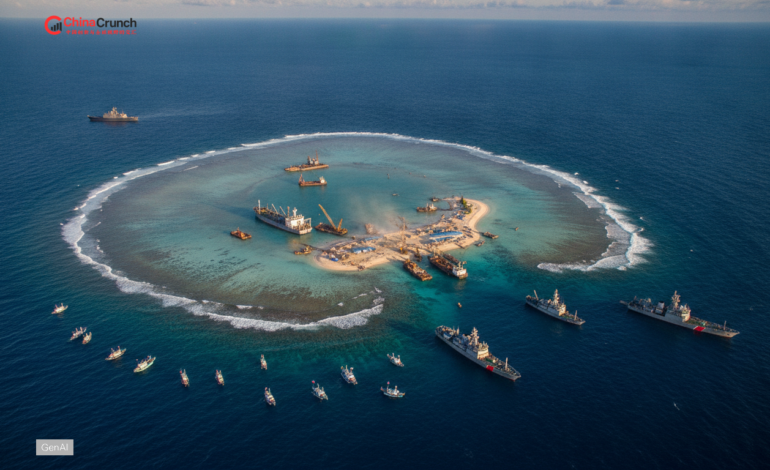
China environmental monitoring plan near Scarborough Shoal
China environmental monitoring is at the center of a reported plan to build an ocean observation station near Scarborough Shoal, a feature widely described as disputed by China and the Philippines. According to available reports, Chinese state media have described the facility as supporting fisheries management and disaster prevention, with instruments intended to track water quality, currents, and weather conditions. Officials have not publicly released technical specifications, contractor details, or a construction schedule, and the precise location has not been independently verified through publicly available filings. Because the shoal sits in a sensitive operating area, analysts often note that even a civilian science platform could affect day-to-day vessel behavior and perceptions of control.
What the station could collect and why it matters
The proposed station is presented as a data hub for routine oceanography, which typically includes readings such as sea temperature, salinity, wave height, wind, and pollutant indicators. In practice, continuous telemetry and reliable communications links could also support compliance monitoring by improving visibility into vessel movements and operating patterns around a fixed node, depending on the sensors and access controls used. Related reporting on governance and technology choices, AI in Hong Kong speeds up environmental impact reviews, shows how environmental tools can become politically salient when oversight and disclosures are limited, and that potential dual-use concern is part of why neighboring states scrutinize sensor arrays and transmission equipment, not just the stated purpose.
Philippines concerns and regional enforcement dynamics
For Manila, a China environmental monitoring facility or other new fixed infrastructure around Scarborough Shoal would intersect with South China Sea tensions and access for Filipino fishers, according to statements Philippine officials have made in past disputes in the area. The Philippine Coast Guard has said it regularly issues public updates about encounters in contested waters, and Philippine officials have argued in public remarks that additional structures could reinforce effective control. Regional diplomats also watch whether a project changes the status quo through guard vessel presence, contractor activity, or restricted operating patterns around the site, according to analyst commentary that typically accompanies such incidents. In parallel reporting on Beijing’s diplomatic posture, China South Korea diplomatic visit: Wang Yi in Seoul highlighted efforts to shape neighborhood relations while disputes persist, and no joint technical assessment of the proposed station appears to have been publicly released by Philippine agencies as of the latest available statements.
International law, transparency, and data sharing questions
External reactions are likely to hinge on legal positions and the degree of scientific openness in the South China Sea, including around Scarborough Shoal. Beijing has said in various public statements that its activities are lawful under its maritime claims, while the Philippines has cited the 2016 South China Sea arbitral ruling in official communications as a reference point for its position. Beyond competing narratives, the practical test will be whether China publishes methodologies, calibration standards, and data access rules for the station. Without clear protocols, environmental monitoring data could be treated as strategic rather than cooperative, especially if collection occurs alongside patrol activity reported by either side. Transparency measures such as third-party verification or shared datasets could reduce suspicion, but no multilateral framework has been publicly disclosed for the proposed facility.
Outlook: risks of escalation and paths to cooperation
The near-term outcome will depend on any construction sequencing that is announced, observed activity around the site, and whether confidence-building steps emerge to reduce miscalculation at sea. If the facility proceeds without agreed guardrails, South China Sea tensions could intensify through more frequent close encounters and competing patrol patterns, as observers of prior incidents have warned. Conversely, a credible scientific program with published sampling plans and accessible datasets could support disaster prevention while lowering political friction, if participating parties accept the data governance terms. Compliance monitoring disputes will persist if neighbors view the station as a precedent for additional nodes in contested waters. Absent verifiable transparency, perceptions will likely track strategic competition rather than shared marine research goals.