China urged to sharpen tools for cognitive warfare
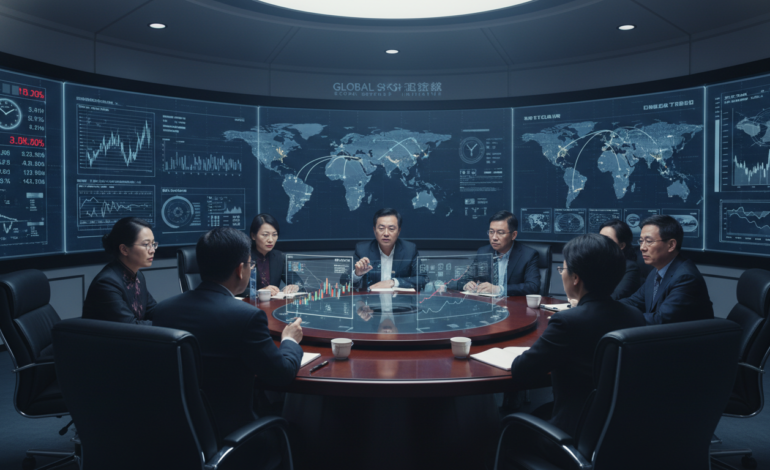
China’s Strategic Shift in Cognitive Warfare
Policy debate in Beijing has intensified as scholars and security commentators argue that perception shaping is becoming a frontline task, not a support function. In an Update circulating across academic and defense circles, several authors framed the issue as a contest over narratives, decision cycles, and social resilience. Their argument treats cognitive warfare as a capability that must be trained, tested, and integrated with cyber, space, and electronic operations rather than left as ad hoc messaging. Today, state media discussion has highlighted the need for clearer doctrine that binds political work to operational planning. Live drills and tabletop exercises are increasingly described as venues to test psychological effects as well as technical performance.
Key Players Advocating for Enhanced Capabilities
The push has been amplified by commentators linked to military research institutions and university labs that track public opinion dynamics and online mobilization. A Live stream of commentary has focused on how elite messaging, algorithmic distribution, and rapid rebuttal can be coordinated during crises. Those arguments sit beside broader discussions of supply chains and geopolitical risk, including coverage such as China Pakistan trade and Hormuz security, which frames how information shocks can magnify market stress. Today, advocates say organizational reforms should clarify who sets targets, who measures effects, and who owns compliance. Update language in these debates also stresses training talent that can model audiences without conflating persuasion with deception.
Understanding Cognitive Sovereignty
A second thread centers on what some Chinese writers call cognitive sovereignty, the claim that states should protect citizens from foreign manipulation while preserving domestic stability. In that framing, cognitive warfare becomes a boundary issue, defining when influence is treated as legitimate speech versus hostile action. Live policy seminars have cited NATO cognitive warfare discussions to argue that rivals are already building similar toolkits, and Chinese planners should avoid strategic surprise. Update memos in this space also reference academic material often circulated as a cognitive warfare pdf, using it to standardize terminology for assessment teams. To situate the debate inside broader security competition, analysts also point readers to regional missile test tensions in Asia Pacific as an example of how narratives can harden alongside deployments.
Global Implications of China’s Strategy
Internationally, governments are watching whether China formalizes doctrine that blends persuasion, cyber influence, and statecraft under a single operational umbrella. Live monitoring of legal and diplomatic fallout is already visible in related security cases, including the South China Morning Post report on a UK court conviction tied to a Hong Kong trade office spying case, which shows how influence allegations can quickly become criminal and political. Today, officials in multiple capitals are tightening disclosure rules for lobbying, data brokers, and platform transparency, raising the compliance cost of overseas messaging. Update risk assessments by market analysts also warn that reputational blowback can spill into trade and investment screening if campaigns are seen as coercive.
Challenges and Opportunities Ahead
Building capacity will require clearer red lines, because operational ambition can collide with legal constraints and platform governance. Today, researchers in China strategy circles argue that measurable objectives and auditing standards are essential if influence work is to avoid mission creep, and Beijing policy discussions in 2024 have increasingly tied these debates to platform governance. Live operational planning also faces a practical constraint: effects measurement is hard when audiences fragment and content travels through private channels, making feedback noisy and slow. Update discussions in Chinese journals emphasize that domestic resilience, media literacy, and rapid correction mechanisms can be as important as offensive messaging, especially during disasters or public health scares. Advocates also note that innovation in simulation, language models, and behavioral science could improve testing, but they caution that overreach can trigger sanctions, lawsuits, and tighter global rivalry standards that reduce room for maneuver.