China’s Approach to Early AI Talent Recruitment
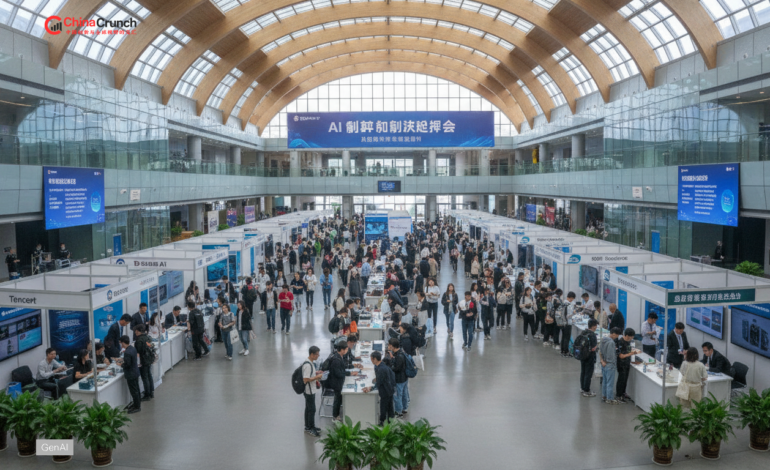
AI Talent Recruitment Starts Earlier at China Tech Giants
China’s largest internet and hardware groups are reportedly pulling hiring forward to lock in AI talent well before graduation. In industry discussions, recruiters are said to track top labs, reach out after early papers, and build pre-offer pipelines that function more like long-term relationship management than a single interview loop. The goal is to secure sought-after candidates before competing bids arrive, particularly in fast-moving subfields like multimodal models, agents, and applied inference. This shift can also change what candidates optimize for, including compute access, publication support, and credible mentorship, not just salary. As timelines compress, early commitments may become one lever in how major teams plan research and product staffing.
How AI Talent Is Identified Through Labs, Seminars, and Trials
Early screening can happen through seminars, joint projects, and sponsored challenges that let teams observe how researchers work under realistic constraints. In its 2025 report on the “AI talent war,” according to available reports, the South China Morning Post described tech giants courting researchers years ahead of graduation and accelerating offer cycles to secure scarce profiles; see The AI talent war: tech giants court researchers years ahead of graduation. For employers, this approach may reduce late-funnel uncertainty by testing reproducibility, engineering discipline, and communication fit. For candidates, it can function like a probationary research role, with clearer expectations and earlier negotiation power, but also potential constraints around timelines and internal review.
Why Earlier Offers Are Reshaping Hiring Pipelines
Pulling commitments forward can change pricing and allocation across the market. When top candidates sign early, later-stage hiring may shift toward niche specialists and experienced engineers who translate research into deployment. This dynamic is often discussed alongside the broader push toward open model competition, and the broader push toward open model competition is discussed in China’s AI Advancements: Open Models Reshaping Global Tech, where faster iteration can raise the value of steady staffing. For firms, earlier commitments can act like an option on future capability, but they may also increase the cost of mistakes if fit is misread. Some market observers say investors pay attention to these moves because research headcount can correlate with model cadence and product roadmaps.
Risks, Governance, and Compute Limits in the AI Talent Race
Early hiring can create winners and friction points at the same time. For candidates in AI recruitment programs, strong offers may reduce near-term risk, but publication plans can collide with internal IP controls and review cycles. Companies may face reputational risk if programs are perceived as poaching, while still needing pipelines that respect university governance and disclosure norms. Within Chinese tech companies, internal coordination is sometimes described as a differentiator, and one example is how embodied AI units are being positioned for scale, as covered in Ant Group Robbyant funding push for embodied AI bots. Programs also run into practical constraints: compute budgets, evaluation capacity, and mentor bandwidth can bottleneck progress if too many people are signed without support.
What Comes Next for China’s AI Talent Strategy
If early recruitment remains the norm, expect more structured lab partnerships, longer lead-time contracts, and clearer conversion criteria from internships to full roles, as suggested by the trendlines described by outlets such as the South China Morning Post. The most durable advantage is likely to come from firms that can offer sustained research environments, not only signing bonuses, because retention matters once people are trained on proprietary stacks. Competitive dynamics may also hinge on policy and IP clarity, since researchers weigh the ability to publish and build portable reputations. In that context, AI talent becomes a governance challenge as much as an HR one, requiring transparent review processes and conflict-of-interest rules for joint appointments. Firms that align incentives across universities, corporate labs, and product teams may set the pace.