Civilian Drones Move Up the Value Chain in China’s Manufacturing Ecosystem
From consumer gadgets to industrial systems
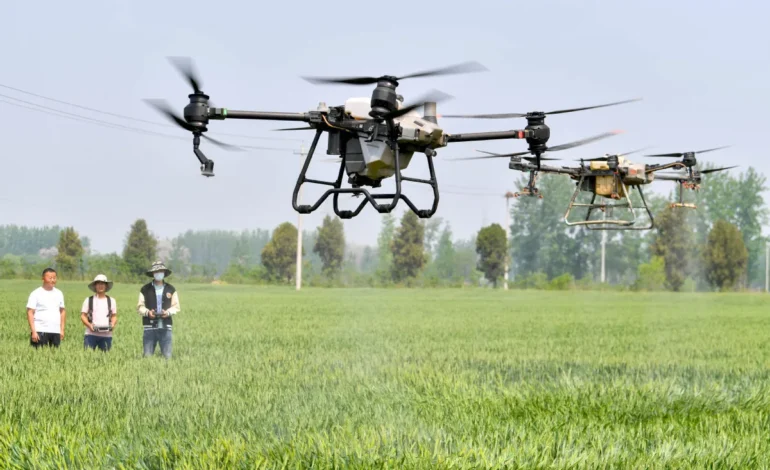
China’s civilian drone sector is undergoing a structural upgrade as it shifts from consumer focused products toward industrial and enterprise applications. Early growth was driven by photography, recreation, and hobbyist use, but these segments are now mature. The current phase centers on drones as tools embedded in logistics, agriculture, infrastructure inspection, and emergency response. This transition reflects a broader pattern within China’s manufacturing ecosystem, where scale is increasingly paired with specialization and system integration.
Industrial demand reshapes product design
As industrial demand grows, drone design priorities are changing. Endurance, payload capacity, environmental resilience, and data accuracy now matter more than aesthetics or ease of use. Manufacturers are developing platforms tailored to specific operational needs such as crop monitoring, power line inspection, and site surveying. These use cases require drones to function reliably within larger workflows rather than as standalone devices, pushing firms to focus on robustness and interoperability.
Manufacturing depth becomes a competitive advantage
China’s strength in manufacturing allows drone producers to iterate quickly and control costs across components such as motors, sensors, batteries, and airframes. Vertical integration and supplier density enable rapid customization for different industrial clients. This depth supports movement up the value chain, where margins depend less on volume sales and more on performance reliability and service integration. Manufacturing capability thus underpins competitiveness beyond price.
Data services expand the value proposition
Civilian drones increasingly generate value through data rather than hardware alone. Mapping, imaging, and real time monitoring services turn drones into data acquisition platforms. Firms are pairing hardware with analytics software that processes visual and sensor data into actionable insights. This shift aligns with China’s broader digital transformation, where physical devices act as entry points into data driven service ecosystems.
Regulation guides structured expansion
Regulatory frameworks play a central role in shaping the civilian drone market. Airspace management, licensing requirements, and operational standards influence where and how drones can be deployed. China’s approach emphasizes controlled expansion through defined corridors and approved use cases. While regulation limits unstructured experimentation, it provides clarity for industrial users who require predictable operating conditions. This balance supports scaled deployment in sectors such as logistics and public services.
Integration with smart infrastructure accelerates adoption
Civilian drones are increasingly integrated with smart infrastructure systems. In urban environments, they connect with traffic management platforms, emergency services, and logistics hubs. In rural areas, drones link with digital agriculture systems and environmental monitoring networks. This integration amplifies their utility and embeds them into broader industrial processes, reinforcing their role as infrastructure components rather than isolated tools.
Export markets reflect capability maturity
China’s civilian drone exports are shifting toward professional and industrial models, signaling capability maturity. Overseas clients increasingly demand reliability, compliance, and after sales support. Meeting these expectations requires organizational capacity beyond manufacturing, including training, maintenance, and software updates. Firms that can deliver full solutions rather than devices are better positioned to sustain international growth amid rising competition and regulatory scrutiny.
Value chain upgrade tests long term strategy
Moving up the value chain introduces new strategic challenges. Research and development costs rise, customer relationships become more complex, and service delivery gains importance. Success depends on aligning engineering, data capabilities, and regulatory compliance within a coherent strategy. Not all firms will make this transition successfully, leading to differentiation within the sector.
China’s civilian drone industry illustrates how manufacturing led sectors evolve as markets mature. The shift toward industrial applications and data services signals a deeper integration of drones into the real economy. As the sector moves beyond consumer novelty, its long term impact will be defined by how effectively drones support productivity, safety, and infrastructure management across diverse industries.