US China Tensions Deepen as EV Rivalry and Political Risk Converge
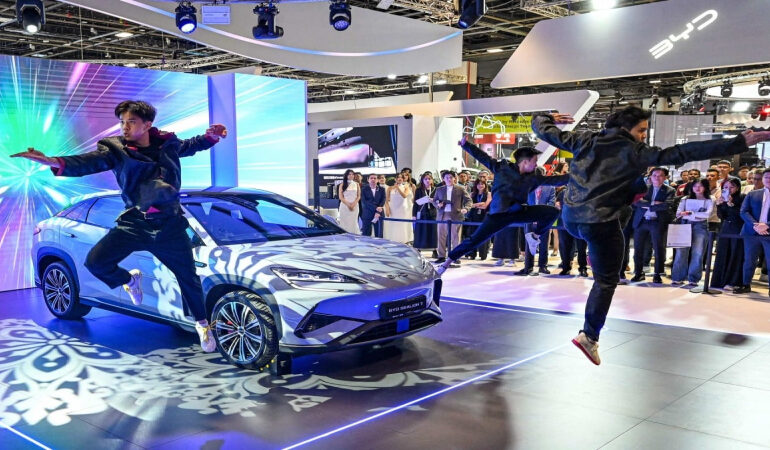
Strategic competition between the United States and China has intensified in early 2026 as economic rivalry, political uncertainty, and diverging technological trajectories converge into a more volatile relationship. Recent developments highlight a widening imbalance in the electric vehicle sector, where Chinese manufacturers continue to scale rapidly while US firms struggle with cost pressures, supply chain bottlenecks, and uneven policy support. Chinese brands have expanded their global footprint across Asia, Europe, and emerging markets, reinforcing perceptions that Beijing has secured a durable lead in next generation mobility. This shift has become a focal point in Washington policy debates, where concerns are mounting that domestic industrial strategies are failing to keep pace. The EV gap is increasingly framed not only as a commercial issue but as a strategic vulnerability with implications for jobs, energy security, and long term technological leadership.
Beyond industry, political risk has re emerged as a defining variable in bilateral ties. The prospect of renewed volatility in US governance has prompted growing unease among policymakers, investors, and foreign governments assessing the durability of American commitments. Chinese analysts have pointed to recent signals from Washington as evidence of policy inconsistency, arguing that shifts in leadership could once again disrupt diplomacy, trade flows, and global institutions. This uncertainty has reinforced Beijing’s emphasis on strategic self reliance and diversification away from US linked systems. At the same time, cultural and academic exchanges have produced contrasting outcomes, with Chinese observers noting selective engagement where cooperation aligns with US domestic interests while restrictions persist in sensitive fields. The resulting landscape is one of fragmented interaction, where competition dominates even as limited cooperation continues in narrowly defined areas.
The broader consequence is a relationship increasingly defined by risk management rather than integration. For multinational firms and third countries, US China dynamics now represent a central macro variable shaping investment decisions, regulatory planning, and supply chain design. Chinese officials have signaled that they expect a prolonged period of friction, marked by episodic confrontations and minimal trust. In response, Beijing has accelerated efforts to strengthen domestic innovation, deepen ties with non aligned economies, and assert influence in global governance arenas. Meanwhile, US policymakers face mounting pressure to reconcile strategic ambition with economic realities at home. As 2026 unfolds, the intersection of industrial rivalry, political unpredictability, and global perception suggests that US China relations are entering a phase where miscalculation risks are rising and stabilizing mechanisms remain weak.