China Signals Reset in UK Economic Engagement
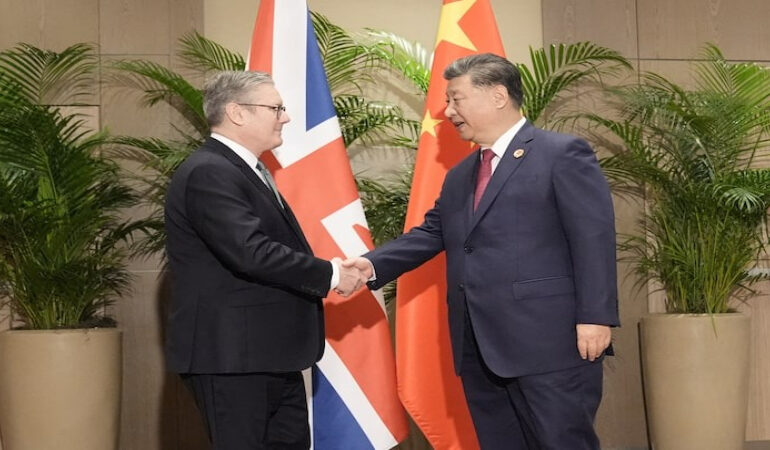
China has indicated readiness to deepen economic cooperation with the United Kingdom, framing renewed engagement as a stabilising force amid global uncertainty. The Chinese foreign ministry said Beijing is willing to work with Britain on the basis of mutual respect to promote trade ties and improve the business environment. The remarks come as both sides explore the revival of structured business dialogue following several years of cautious relations. Officials characterised economic cooperation not as a political gesture but as a pragmatic alignment of interests that could inject predictability into global markets. This framing reflects a broader diplomatic tone in which China is positioning economic engagement as a counterweight to fragmentation rather than a return to expansive partnership rhetoric seen in earlier phases of bilateral relations.
Discussions around reviving a UK China CEO level dialogue signal an attempt to re establish institutional channels that had fallen dormant amid geopolitical tension. The council was originally launched in 2018 during a period of closer engagement, but progress since then has been uneven. Current talks remain preliminary, with scope and participation still under negotiation. A potential visit by British Prime Minister Keir Starmer to Beijing would mark the first such trip by a UK leader in several years, underscoring the symbolic importance of renewed contact. However, both sides appear cautious about expectations. External political variables and unresolved issues continue to shape the pace of engagement, suggesting that any reset will be incremental and tightly managed rather than expansive or declarative.
For China Crunch, the significance lies less in diplomatic language and more in how economic ties are being reframed as functional infrastructure within foreign policy. China’s approach emphasises stability continuity and process driven cooperation over headline agreements. By prioritising business dialogue and regulatory predictability, Beijing is signalling interest in selective engagement that supports trade and investment flows without reopening broader strategic debates. This aligns with a wider pattern in China’s external economic strategy, where bilateral relationships are compartmentalised and managed through technocratic channels. Rather than pursuing a revival of past narratives, the current posture suggests a recalibration toward practical cooperation under constrained conditions. The outcome is likely to be measured in governance mechanisms and business access rather than sweeping political realignments.