Geely and Chery Fast-Track Solid-State Battery Plans With 2027 Vehicle Demonstrations in Sight
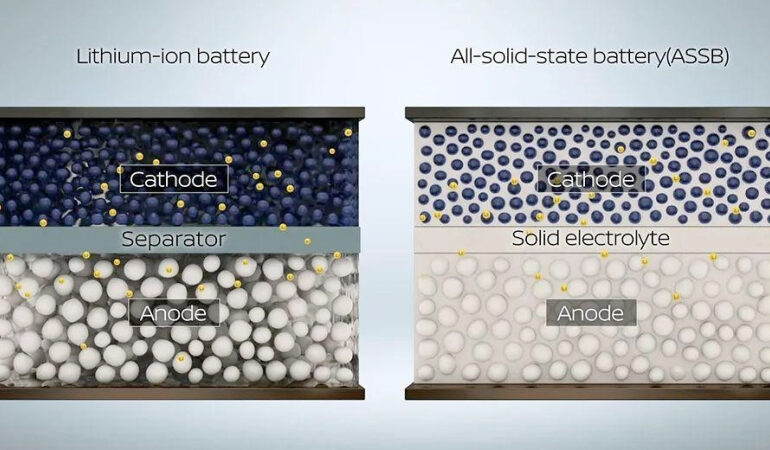
China’s leading automakers are accelerating development timelines for solid state batteries, with several companies outlining plans to move from pilot production to real vehicle demonstrations by 2027 as national standards and policy support begin to take shape.
Geely has mapped out multiple technological pathways in the solid state field, including polymer based, sulfide based and halide composite solutions aimed at addressing varied performance and cost targets. Company executives say Geely has developed high nickel ternary cathode materials tailored for solid state systems, along with composite electrolytes designed for improved flame resistance and self extinguishing properties. The firm has also disclosed work on in situ lithium dendrite repair technologies intended to enhance safety and durability.
Geely’s near term objective is to launch prototype vehicles equipped with solid state batteries by 2026, followed by around 1,000 demonstration vehicles in 2027 under a small scale industrialization plan. Longer term, the company aims to complete a full industrial layout by 2030, targeting energy densities above 500 watt hours per kilogram for high end models while seeking to control bill of materials costs at competitive levels.
Chery Automobile has outlined a similar timeline. The company plans to establish a 0.5 gigawatt hour pilot production line in 2026 and complete pack level samples, with continuous production of 60 ampere hour class solid state cells. Vehicle level demonstration work is scheduled for 2027, marking a shift from laboratory scale validation to real world testing.
Other industry players are also advancing. BYD has indicated that sulfide based solid state batteries are a key focus area, with expectations of small batch production by 2027. Battery manufacturer Sunwoda has reported progress on semi solid state batteries already in scaled production, while fully solid state versions are targeted for mass production around 2027. Earlier this year, FAW Group announced that a Hongqi branded prototype vehicle equipped with solid state battery cells had rolled off its production line, highlighting advances in sulfide electrolytes and high temperature safety performance.
Policy developments are providing additional momentum. China is moving toward formal national standards for automotive solid state batteries, with draft guidelines covering terminology and classification expected to be finalized and released later this year. Officials have also emphasized the importance of strengthening supply chain autonomy and accelerating breakthroughs in core technologies, including next generation batteries.
Despite rapid progress, executives and researchers caution that significant scientific and engineering hurdles remain. Challenges include interface stability, electrolyte film control and long term cycle life. Industry analysts expect a phased evolution from scaled semi solid state production to limited fully solid state deployment before large scale commercialization becomes viable.
As competition intensifies in the global electric vehicle market, solid state batteries are increasingly viewed as a strategic frontier where performance, safety and cost efficiency could reshape industry dynamics.