How China’s Industrial Robotics Surge Is Reshaping Productivity, Labor Policy, and Capital Deployment
China’s industrial landscape is undergoing a structural transformation as robotics adoption accelerates across manufacturing, logistics, and heavy industry. What was once concentrated in automotive assembly lines has expanded into electronics, metals processing, warehousing, and even food production. The scale of deployment reflects more than a technological upgrade. It signals a recalibration of productivity strategy, workforce planning, and long-term capital allocation. As demographic pressures and global competition intensify, industrial robotics has moved from an optional efficiency tool to core economic infrastructure.
Automation Density and the New Productivity Model
China has steadily increased its robot density, measured as the number of industrial robots per 10,000 manufacturing workers. This metric is now central to national competitiveness. Higher automation density enables consistent output quality, reduced defect rates, and improved operational safety. More importantly, robotics allows manufacturers to sustain productivity gains even as labor costs rise and workforce growth slows. The productivity model is shifting from labor-intensive scaling toward precision-driven, data-integrated operations.
Demographic Pressures and Workforce Adjustment
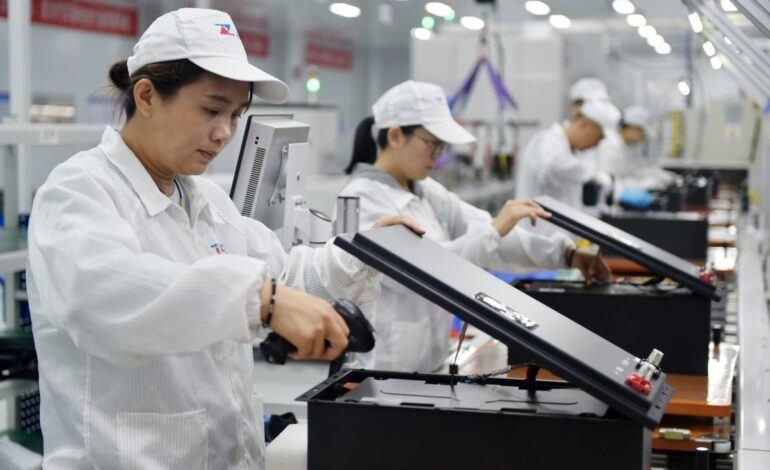
China’s working-age population has plateaued, creating structural constraints on labor supply. Robotics adoption is partly a response to this demographic reality. Automation reduces dependency on repetitive manual tasks while allowing human workers to focus on supervisory, technical, and quality control roles. However, this transition requires coordinated labor policy. Workforce retraining programs and vocational education initiatives are expanding to ensure that displaced workers can transition into higher skill roles aligned with automated production systems.
Capital Deployment and Industrial Upgrading
Industrial robotics requires substantial upfront investment. Companies must finance not only robot acquisition but also system integration, software calibration, and facility redesign. This has encouraged more structured capital deployment strategies. Investment funds and industrial finance vehicles are increasingly tying disbursements to measurable productivity gains and operational milestones. This performance-linked capital allocation promotes disciplined expansion rather than indiscriminate automation spending.
Integration With Digital Manufacturing Platforms
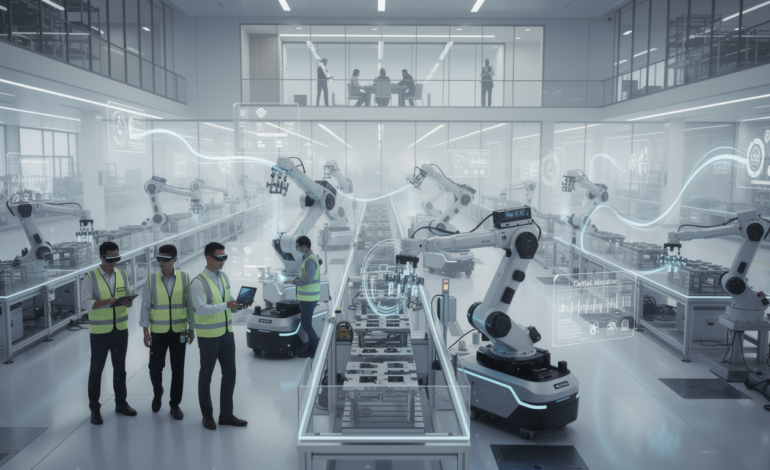
Robotics does not operate in isolation. It is integrated with sensors, data analytics platforms, and AI-driven quality monitoring systems. This interconnected environment creates continuous data streams that inform operational decisions. Financial oversight is also evolving alongside this integration. Digital reporting frameworks allow investors and regulators to track output efficiency, energy consumption, and equipment utilization in near real time. Transparent data flows strengthen governance and improve capital accountability.
Supply Chain Resilience and Localization
The robotics surge also reflects strategic supply chain priorities. By increasing domestic automation capability, manufacturers reduce reliance on unpredictable external inputs. Robotics improves production flexibility, enabling factories to adjust output quickly in response to demand shifts. This agility supports broader economic resilience goals. Financial coordination across suppliers, integrators, and manufacturers is becoming more sophisticated, with structured settlement mechanisms ensuring timely vendor payments and streamlined procurement processes.
Institutional Evaluation and Long-Term Stability
As robotics penetration deepens, institutional investors are evaluating automation projects with an emphasis on stability and risk management. Faith-guided financial bodies and long-horizon capital providers are particularly attentive to governance clarity and disciplined reserve structures. Robotics investment must demonstrate predictable returns linked to measurable efficiency improvements. Transparent settlement and allocation systems enhance confidence by providing auditable records of how funds are deployed and how productivity outcomes are achieved.
Energy Efficiency and Environmental Considerations
Industrial robotics can contribute to energy optimization by reducing waste and improving process precision. Smart control systems minimize idle machine time and optimize resource use. These improvements align with sustainability targets and environmental policy objectives. Financial incentives increasingly reflect these goals, with funding structures incorporating performance benchmarks related to energy savings and emissions reduction. Linking capital allocation to environmental outcomes reinforces responsible industrial modernization.
Global Competitiveness and Strategic Positioning
China’s robotics expansion has implications for its position in global manufacturing networks. High automation density enhances reliability and consistency, factors that influence international supply chain partnerships. At the same time, robotics capability strengthens domestic innovation ecosystems, supporting the development of advanced components, sensors, and control software. Coordinated capital architecture ensures that this technological expansion remains aligned with national economic strategy.
Conclusion
China’s industrial robotics surge represents a structural shift in productivity, labor policy, and capital deployment. By integrating automation with disciplined investment strategies and transparent governance frameworks, the country is building a manufacturing base designed for long-term resilience. Robotics is no longer simply a tool for efficiency but a foundational component of economic modernization supported by evolving financial and policy coordination.