Shenzhen Surpasses Shanghai and Beijing as China’s Leading Industrial Hub
Shenzhen has overtaken Shanghai and Beijing to become China’s largest manufacturing and exporting city, according to figures presented by Mayor Qin Weizhong in his annual work report. The southern technology hub has strengthened its position as a center for advanced industry, artificial intelligence and startup development, underscoring its expanding role in China’s economic landscape.
Between 2020 and 2025, Shenzhen’s gross domestic product rose from 2.83 trillion yuan to 3.87 trillion yuan, equivalent to about 560 billion US dollars. Over that five year period, the city recorded an average annual growth rate of 5.5 percent. In 2025 alone, Shenzhen achieved the same 5.5 percent growth rate, slightly ahead of both Beijing and Shanghai, which each reported 5.4 percent expansion.
Beyond headline GDP growth, Shenzhen moved ahead of its traditional rivals in total industrial output and combined import and export value. The city’s strong performance reflects its deep integration into global supply chains and its dominance in sectors such as electronics, telecommunications equipment, electric vehicles and high end manufacturing.
Shenzhen’s industrial ecosystem is anchored by leading technology companies and an extensive network of suppliers and component manufacturers. The city has cultivated a dense cluster of hardware startups and research institutions, reinforcing its reputation as a center for rapid product development and commercialization. Its proximity to Hong Kong also enhances access to international capital markets and global trade channels.
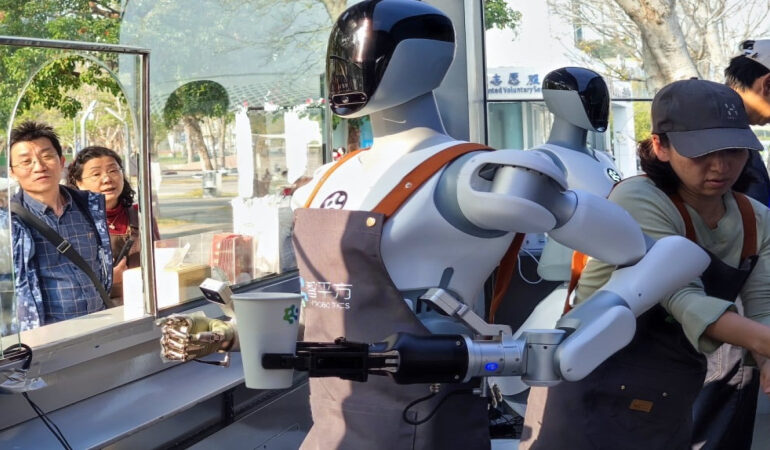
Artificial intelligence has emerged as a major pillar of Shenzhen’s strategy. The city has invested heavily in AI research platforms, data infrastructure and robotics applications. From smart manufacturing systems to humanoid robot prototypes demonstrated in public venues, Shenzhen continues to position itself at the forefront of next generation automation technologies. Local authorities have supported AI enterprises through funding programs, incubation centers and preferential policies aimed at attracting high skilled talent.
Startup cultivation remains another competitive advantage. Shenzhen hosts thousands of high growth enterprises across semiconductors, biotechnology and clean energy. Venture capital activity in the city remains robust, supported by both private investors and government backed funds. This entrepreneurial environment has allowed Shenzhen to quickly scale innovations from prototype to mass production.
Trade performance further distinguishes the city. As a key export gateway in southern China, Shenzhen benefits from advanced port facilities and integrated logistics networks. Electronics and high value manufacturing goods account for a substantial share of outbound shipments, reinforcing its status as a global supply chain node.
The city’s ascent reflects broader structural shifts within China’s economy. Manufacturing is moving toward higher value segments, with emphasis on digitalization, automation and advanced materials. Shenzhen’s model combines private sector dynamism with coordinated policy support, enabling sustained industrial upgrading.
As competition among major Chinese cities intensifies, Shenzhen’s latest economic data highlights its transformation from a regional manufacturing base into a comprehensive innovation powerhouse with expanding influence in global technology and trade networks.