Nvidia to Invest 4 Billion Dollars in Photonics Firms to Strengthen AI Chip Performance
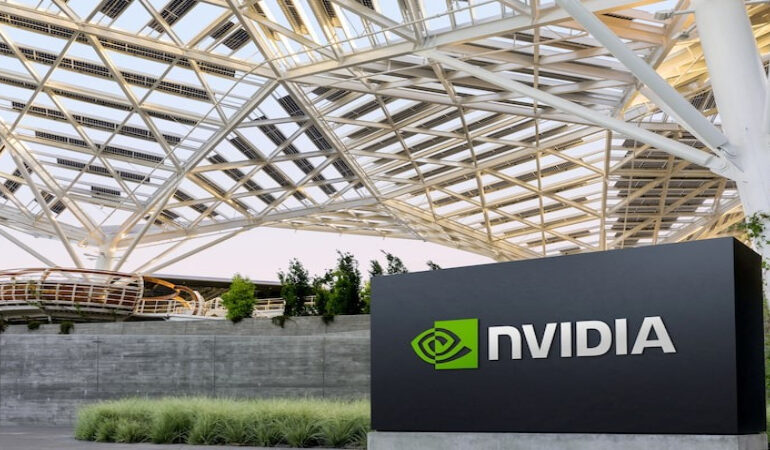
US chip giant Nvidia plans to invest 2 billion dollars each in photonics manufacturers Lumentum and Coherent as part of a broader strategy to enhance the speed and efficiency of its artificial intelligence processors.
The combined 4 billion dollar investment underscores Nvidia’s push to secure advanced optical networking and laser technologies that can support next generation data center infrastructure. As demand for large scale AI training and inference workloads accelerates, chipmakers are increasingly turning to photonics, which uses light instead of traditional electrical signals to transmit data between processors.
At a recent earnings call, Nvidia executives signaled that the company would deploy its significant cash reserves to strengthen the broader AI ecosystem and expand production capacity. The latest investments reflect that approach, pairing long term purchase commitments with access to advanced photonic components and manufacturing capacity.
Shares of both Lumentum and Coherent rose following the announcement, reflecting investor confidence that the partnerships will deepen their roles within the rapidly expanding AI hardware supply chain. The agreements include multibillion dollar purchase commitments and provide Nvidia with priority access to advanced laser and optical networking products.
Photonics has emerged as a critical technology in addressing data bottlenecks within AI systems. As models grow larger and inference workloads become more complex, faster and more energy efficient interconnects are essential to maintain performance gains. Optical links can reduce latency and power consumption while enabling higher bandwidth between graphics processing units and data center clusters.
The move also comes as competition intensifies in the AI semiconductor market. Major cloud providers are increasingly designing custom silicon tailored to their own AI workloads. Rival chipmakers are pursuing similar photonics strategies to stay competitive. Marvell Technology previously acquired semiconductor startup Celestial AI in a multibillion dollar deal aimed at strengthening its optical interconnect capabilities.
Nvidia’s leading customers are also diversifying their chip suppliers. Meta recently signed a major deal with Advanced Micro Devices to expand its AI hardware portfolio, adding pressure on Nvidia to continue advancing performance and ecosystem integration.
The investments are expected to support expanded research and development, increased fabrication capacity and stronger domestic manufacturing in the United States. Lumentum’s chief executive has indicated plans to build a new fabrication facility to boost production capabilities, reflecting broader efforts to scale advanced manufacturing on US soil.
For Nvidia, securing photonic supply and innovation partnerships may help sustain its technological lead as AI infrastructure spending rises globally. As training clusters and inference platforms scale to unprecedented levels, integrating optical networking into chip architecture is becoming a central priority.
The partnerships highlight how the AI race is reshaping semiconductor strategy, linking chip designers more closely with component manufacturers to ensure both performance improvements and resilient supply chains.